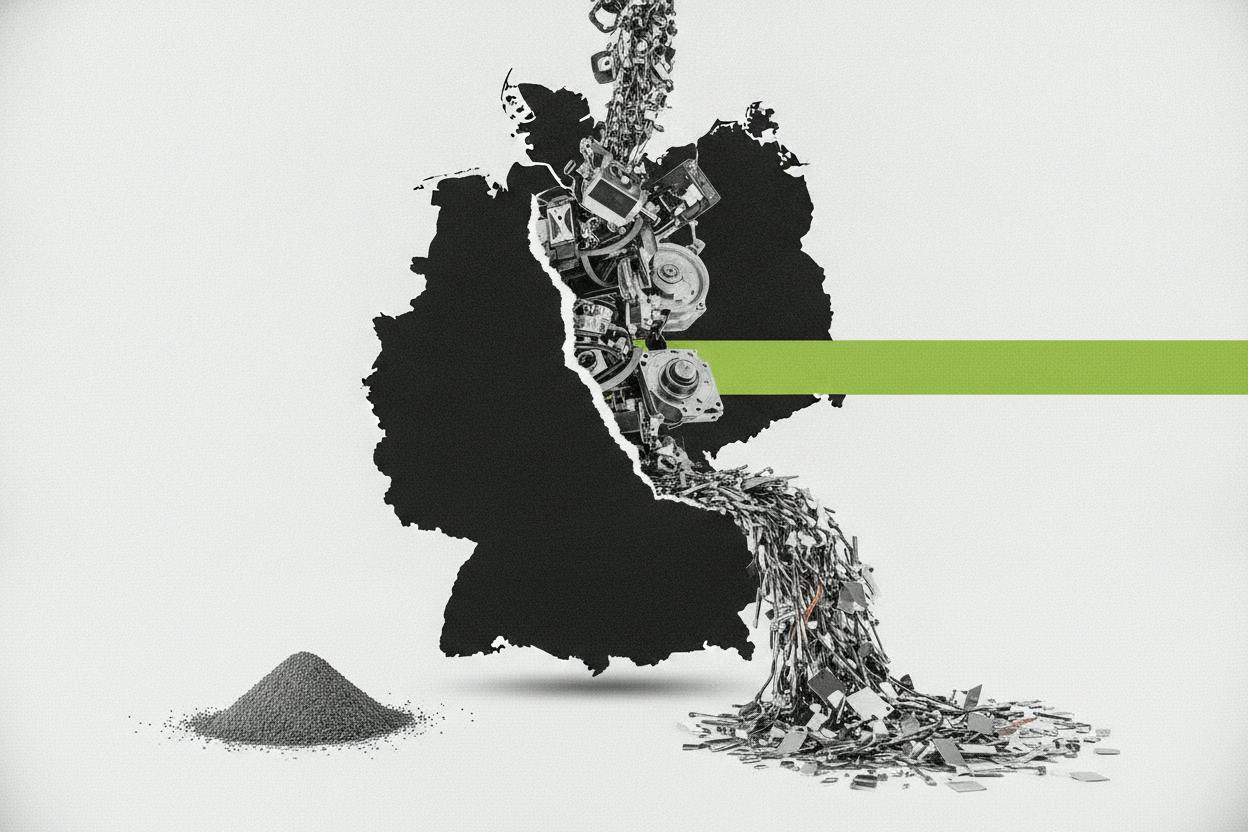
Cyclic Materials, a startup focused on recycling rare earth elements, has chosen Germany for its first European facility. The company, backed by tech and auto giants Microsoft, Amazon, and BMW, plans to turn old motors and hard drives into valuable rare earth materials at a new site near Leipzig, with operations expected to begin by 2028.
The move is part of a broader Western push to reduce reliance on China, which currently processes the majority of the world's rare earths. Rare earths are critical components in everything from electric vehicle motors to wind turbines and consumer electronics, making supply chain security a growing concern for governments and industries alike.
From scrap to supply chain
Cyclic Materials' approach is to recycle rather than mine. The company collects scrap metal—such as discarded electric motors, hard drives, and other electronic waste—and extracts rare earth oxides, which can be refined into metals used in magnets and other high-tech applications.
The planned Schkopau facility, located near Leipzig, is expected to be similar in size to the company's Arizona plant, which opened in September and can process up to 25,000 metric tons of scrap per year. The German site will be the first of five planned European collection plants, all feeding into one larger chemical processing hub.
The company's edge, according to CEO Ahmad Ghahreman, is cost. Unlike some competitors, Cyclic Materials does not rely on government-backed minimum price guarantees. Instead, it sells more than just rare earth content from the same scrap stream. From 25,000 tons of input, the company estimates it can produce about 225 tons of rare earth oxides, along with roughly 14,000 tons of steel, 4,600 tons of aluminum, and 3,000 tons of copper. These non-rare earth metals contribute an estimated 40% to 50% of revenue.
This "byproduct credit" model means the extra metals help pay for the rare earth output, making the business less vulnerable to swings in magnet and oxide prices than a traditional mine or refinery that sells mostly one product.
What it means for investors
For investors, Cyclic Materials' strategy could have broader implications for the rare earth market. By generating a significant portion of revenue from byproducts, the company can offer rare earth oxides at prices closer to prevailing market levels, even when rare earth prices are weak. This could pressure higher-cost non-China projects that depend on guaranteed minimum prices to attract customers, such as MP Materials in the United States.
Automakers and industrial buyers negotiating long-term supply contracts may find Cyclic's model appealing, as it could lead to more stable and competitive pricing. For everyday investors, this highlights the growing importance of recycling and circular economy approaches in the critical minerals sector, which is increasingly seen as a strategic investment area.
The German facility is also a sign of Europe's determination to build its own rare earth supply chain. The region has been actively seeking to diversify away from Chinese dominance, and projects like this are likely to attract government support and private investment.
However, challenges remain. Scaling up recycling operations to meet industrial demand is complex, and the economics depend on consistent scrap supply and efficient processing. Still, with backing from major corporations and a clear cost advantage, Cyclic Materials is positioning itself as a key player in the Western rare earth supply chain.
For investors, the story is about more than one company. It's about the broader shift toward resource independence and the opportunities that come with it. As Western nations push to secure critical materials, companies that can innovate and reduce costs will be well-positioned to benefit.