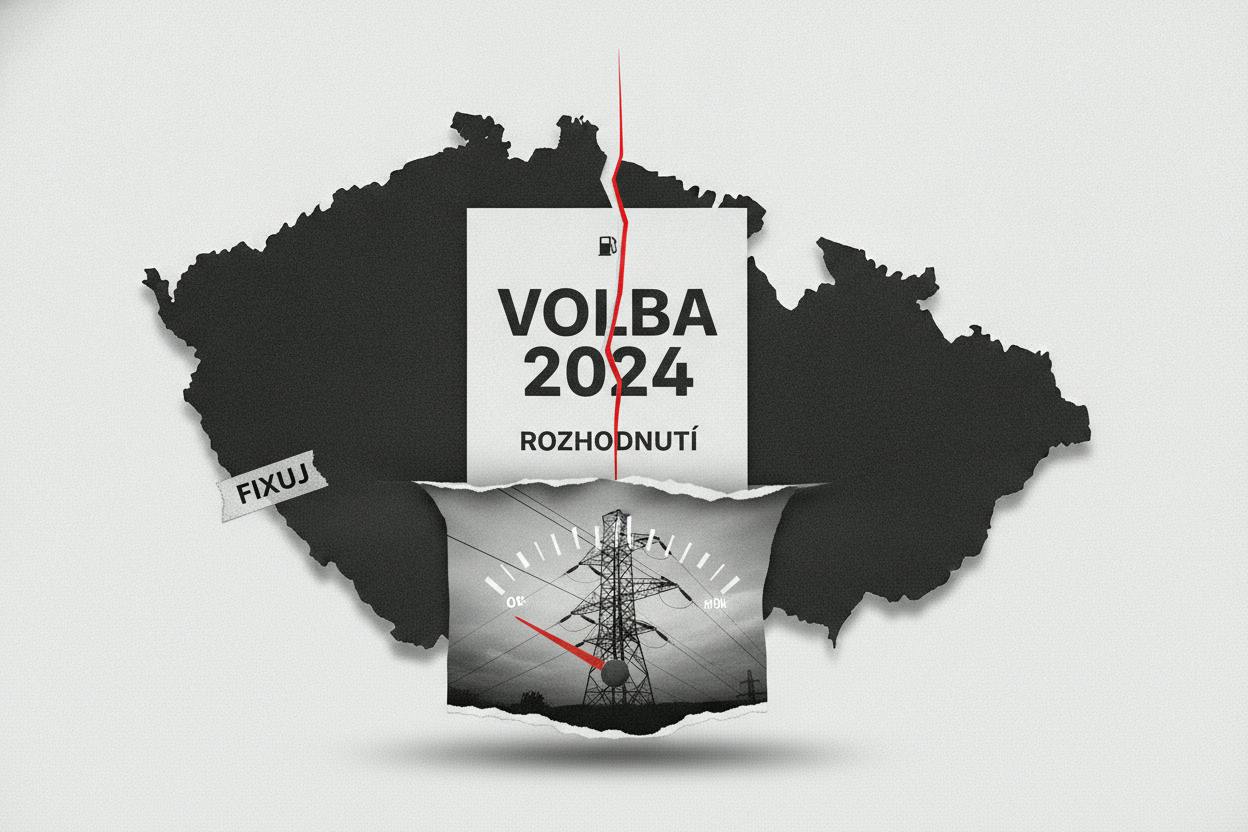
The Czech National Bank (CNB) is navigating a delicate balancing act. Minutes from its November 5 policy meeting, released this week, show a razor-thin 4-3 vote in favor of a quarter-point interest rate increase. The decision came as policymakers weighed the risk that surging energy prices could push inflation back above the central bank's 2% target.
The split vote underscores just how uncertain the outlook has become. While the central bank's own forecast sees inflation ticking up early next year before gradually easing back toward target, the board's hawks argued that the risks are skewed to the upside. Their main concern: higher fuel and power costs could spill into broader prices through so-called 'second-round effects'—for example, companies raising prices to protect margins, or workers demanding higher wages to compensate for a higher cost of living.
Doves on the board pushed back, pointing out that this spillover has not yet shown up clearly in domestic inflation data. They argued that the economy may still be too fragile to absorb another rate increase, and that tightening too aggressively could choke off growth.
Why a quarter-point hike matters
For everyday investors, a quarter-point move might sound small, but in the world of central banking, it's a meaningful signal. The CNB's key interest rate now stands at a level that directly influences borrowing costs for mortgages, business loans, and savings accounts in the Czech Republic. A higher rate typically cools inflation by making borrowing more expensive and encouraging saving, but it can also slow economic activity.
The 4-3 vote is notable because it shows the central bank is not united. In recent months, many central banks around the world have been moving in sync—either hiking aggressively or holding steady—but the Czech board is clearly divided. That division suggests future decisions could go either way, depending on incoming data.
This isn't just a domestic story. The Czech Republic is a small, open economy heavily integrated with the eurozone, and its central bank's actions are closely watched by investors in European markets. A surprise move in either direction could ripple through regional currencies and bond yields.
Energy prices and second-round effects
The core of the debate is energy. Oil, gas, and electricity prices have been volatile globally, and the Czech Republic is no exception. When energy costs jump, they directly raise the prices of fuel, heating, and electricity—items that appear in every household's budget. But the bigger worry for central bankers is whether those one-off price increases become entrenched.
Second-round effects happen when higher energy costs lead to higher wages, which then push up prices for other goods and services, creating a self-reinforcing cycle. Central banks often describe this as the difference between a 'transitory' inflation spike and a 'persistent' one. The hawks on the CNB board fear the latter; the doves believe the former is more likely.
For investors, the key takeaway is that the CNB is prepared to act if inflation proves sticky. That means Czech interest rates could stay higher for longer, which would affect everything from government bond yields to the profitability of local banks.
What it means for investors
For those with exposure to Czech assets—whether through stocks, bonds, or the koruna currency—the split vote is a reminder that policy is data-dependent. If inflation surprises to the upside, expect further hikes; if it cools, the central bank could pause or even reverse course.
In the broader context, this decision echoes similar debates at other central banks. In the eurozone, the European Central Bank has been wrestling with how to handle energy-driven inflation, while the U.S. Federal Reserve has signaled a more cautious approach to rate cuts. The Czech situation is a microcosm of a global challenge: how to respond to supply-side shocks without derailing growth.
For everyday investors, the practical implication is to keep an eye on inflation data and central bank communications. A central bank that is split is often a sign that markets could be in for volatility. As always, diversification remains a prudent strategy, especially in times of policy uncertainty.
The CNB's next meeting will be closely watched, and any hints about the future path of rates will move markets. For now, the message from Prague is clear: the fight against inflation is not over, but the path forward is far from unanimous.