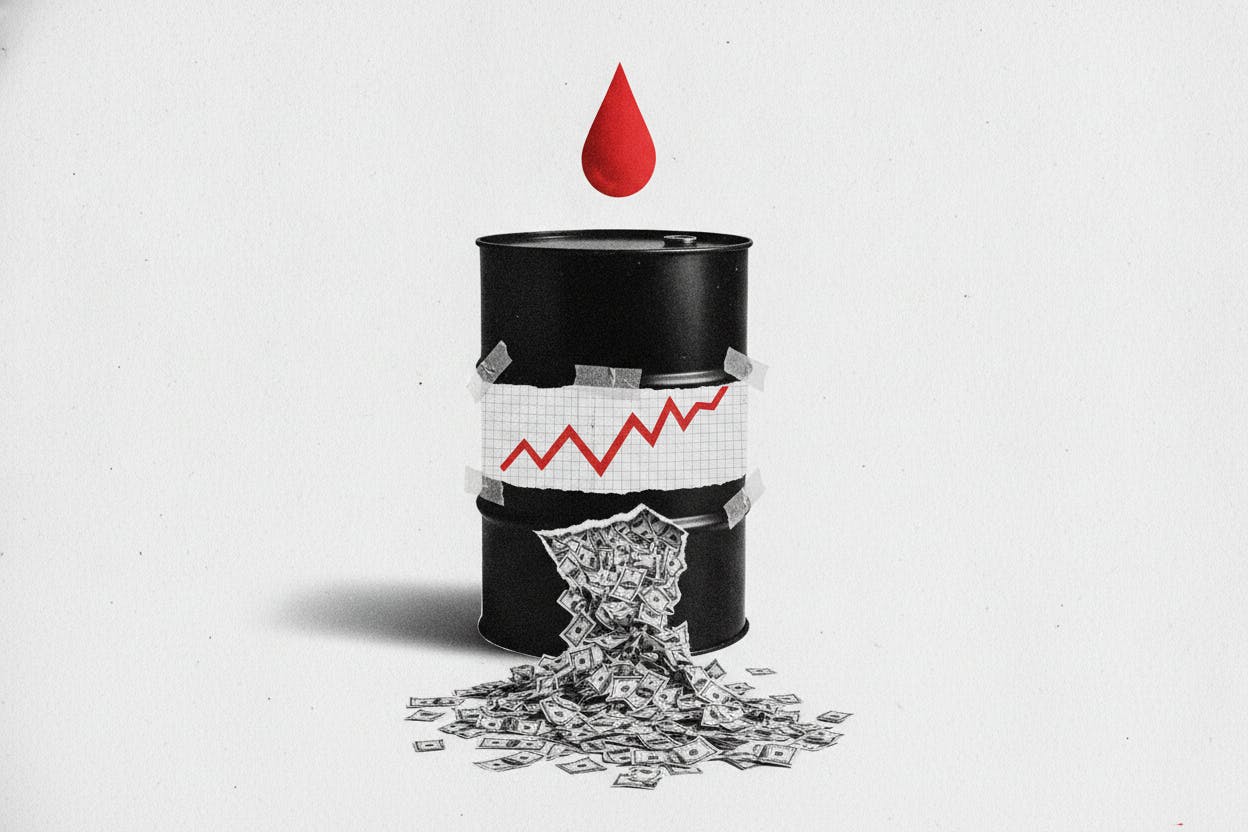
Germany's benchmark DAX index slipped 0.51% on Tuesday, dragged lower by a sharp drop in chemicals giant BASF and broader headwinds from rising oil prices and weak eurozone factory data. The move underscores how even solid top-line growth can fail to impress investors when cash flow turns negative.
BASF's Mixed Quarter
BASF, one of the world's largest chemical makers, saw its shares fall nearly 3% after reporting preliminary second-quarter results that showed sales climbing to €17.2 billion from €14.8 billion a year earlier. That 16% revenue jump might look encouraging at first glance, but the market focused on a different number: free cash flow turned negative.
Free cash flow is the cash a company has left after paying for operating expenses and capital investments like factories or equipment. When it's negative, the business must dip into existing cash reserves or borrow to fund itself. For a cyclical company like BASF, which is heavily exposed to swings in raw material costs and industrial demand, negative free cash flow can signal strain, especially if the economy softens.
Investors often view free cash flow as a measure of financial health because it shows how much cash a company can return to shareholders through dividends or buybacks, or use to pay down debt. A negative reading, even alongside higher sales, can raise questions about working capital management or whether the company is spending too much to chase growth.
Oil Prices Rise on US-Iran Tensions
Adding to the cautious tone in European markets, oil prices climbed as geopolitical tensions between the United States and Iran escalated. The rise in crude costs is a double-edged sword for the broader economy: it boosts energy stocks but raises input costs for manufacturers and transport companies, squeezing margins across many industries.
For a chemicals firm like BASF, higher oil prices directly affect raw material costs, particularly for petrochemicals. If the company cannot pass those costs on to customers quickly enough, profitability can suffer. The oil price move also contributed to a decline in mining and industrial stocks, as seen in the FTSE 100 slip on similar dynamics.
Eurozone Factory Data Disappoints
Eurostat, the European Union's statistics office, flagged that industrial output in the eurozone weakened in May. While the exact figure was not detailed in the brief, the signal alone was enough to reinforce concerns about the health of the region's manufacturing sector, which has been under pressure from high interest rates, weak global demand, and lingering supply chain issues.
Weaker factory output is particularly relevant for Germany, Europe's largest economy, where manufacturing is a key driver. The DAX is heavily weighted toward industrial and chemical companies, so any sign of slowing production tends to weigh on the index. This is part of a broader pattern seen in other regions, such as Canada's record factory sales, which highlight the uneven global recovery.
What It Means for Investors
For everyday investors, the DAX's decline and BASF's cash burn offer a reminder that revenue growth alone does not guarantee a healthy business. When evaluating a company, it is important to look beyond the top line at cash flow, debt levels, and how the business is funding its operations. Negative free cash flow can be a temporary issue—for example, if a company is investing heavily in new capacity—but it can also signal deeper problems.
The broader market moves also highlight how interconnected global risks are. Rising oil prices from geopolitical tensions can hurt industrial stocks, while weak economic data can compound the pressure. Investors should consider how their portfolios are diversified across sectors and regions to manage these kinds of cross-currents.
Looking ahead, markets will be watching for BASF's full second-quarter report, due later this month, for more detail on its cash flow and outlook. The company's ability to generate positive free cash flow in the coming quarters will be a key test. Meanwhile, the trajectory of oil prices and eurozone industrial data will continue to influence sentiment across European equities.
In the broader context, the DAX's slip is part of a mixed picture for global markets, where some sectors are benefiting from lower inflation and resilient consumer spending, as seen in recent US stock gains, while others face headwinds from geopolitical and economic uncertainty. For now, caution appears to be the prevailing mood in Frankfurt.