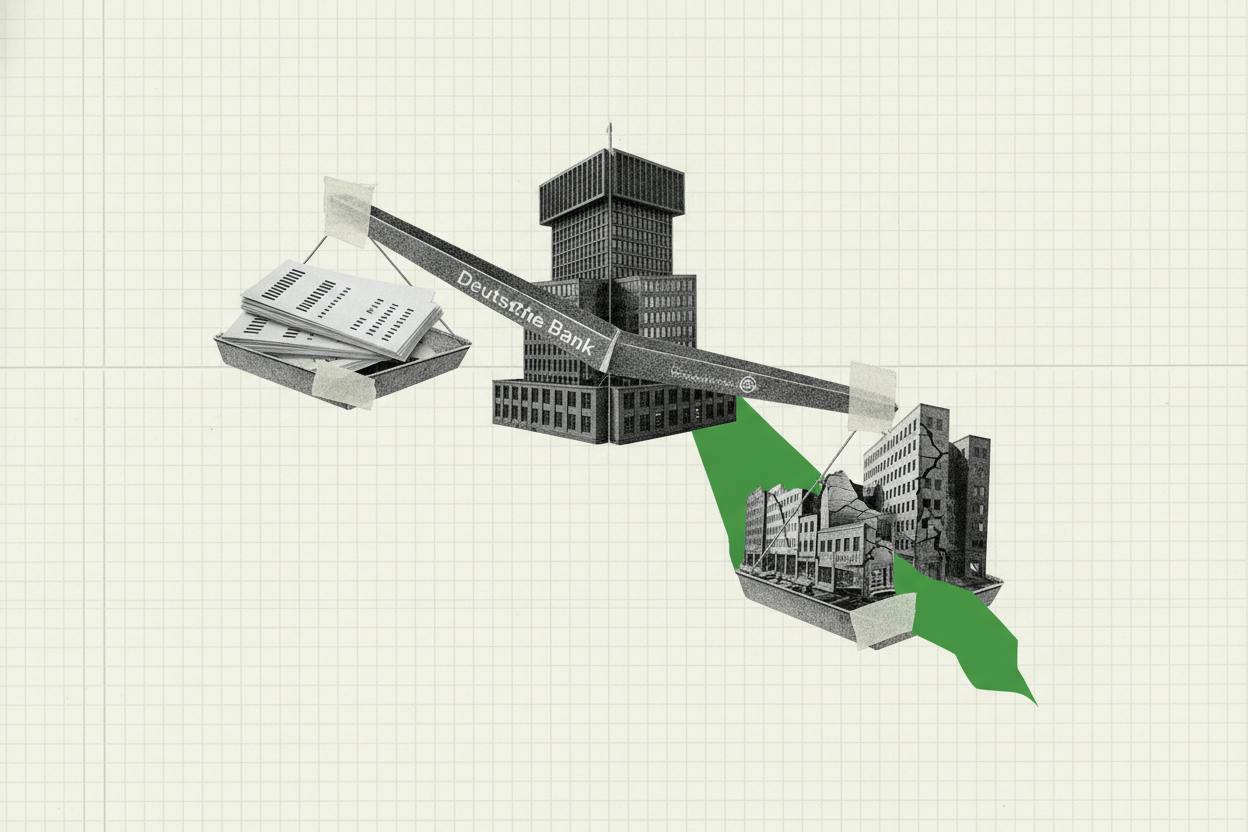
When Deutsche Bank reports third-quarter results on October 28, investors may see a familiar tug-of-war: revenue ticking up, but money set aside for bad loans pulling the other way. Analyst firm Metzler, a German brokerage, expects net revenue to edge up to €8.23 billion, but also forecasts loan loss provisions of €490 million as the bank trims risk from its commercial real estate portfolio.
Loan loss provisions are funds a bank sets aside to cover loans that might not be repaid. They are a direct hit to profit, so even a small revenue gain can be wiped out if credit costs rise. The key question for Deutsche Bank is whether this quarter's provisioning is a one-time cleanup or the start of a higher, more permanent level of credit losses.
What Metzler expects
Metzler kept its hold rating and a price target of €31 per share on Deutsche Bank. A hold rating means the analyst sees the stock as fairly valued, neither a strong buy nor a sell. The €31 target suggests limited upside from current levels, reflecting caution about the bank's near-term earnings power.
The brokerage trimmed its longer-term profit outlook for Deutsche Bank. While it still believes the bank can hit its 2026 net revenue target of €33 billion, it now assumes a stickier level of credit losses. That means provisions may stay elevated for longer, even if higher net interest income—the money banks earn from the gap between lending and deposit rates—could provide some support later on.
Why provisions matter more than revenue
For bank stocks, valuations often hinge less on a small revenue beat or miss and more on how risky the loan book looks. If investors conclude that the €490 million provision figure reflects a lasting step-up in credit losses tied to commercial real estate, they may lower their expectations for future profits and the pace at which the bank can build capital.
That's why Metzler can keep its €31 target unchanged even while forecasting higher revenue. A higher assumed provisioning baseline can cap how much stronger revenue translates into medium-term earnings. In other words, the market may care more about the quality of the loan book than the top line.
Commercial real estate has been a weak spot for many banks, as higher interest rates and changing office usage patterns have pressured property values. Deutsche Bank has been working to reduce its exposure to this sector, but the process often involves setting aside more money for potential losses.
What it means for investors
For everyday investors, Deutsche Bank's report is a reminder that bank earnings are not just about revenue growth. The cost of credit risk is a major driver of profitability, and a single quarter's provision number can shape the narrative for months.
If the €490 million provision is seen as a one-off, the stock could rally on the revenue beat. But if analysts and investors view it as the start of a higher run rate, the shares may struggle even if revenue comes in as expected. The market will be listening for management's comments on the outlook for credit quality, especially in commercial real estate.
Deutsche Bank is not the only lender facing these questions. Across Europe, banks are navigating a delicate balance between higher interest income and rising credit costs. The outcome of this earnings season could set the tone for the sector.
For now, Metzler's stance suggests patience. The bank's long-term targets remain intact, but the path to them may be bumpier than previously thought. Investors will get more clarity when Deutsche Bank releases its full results later this month.