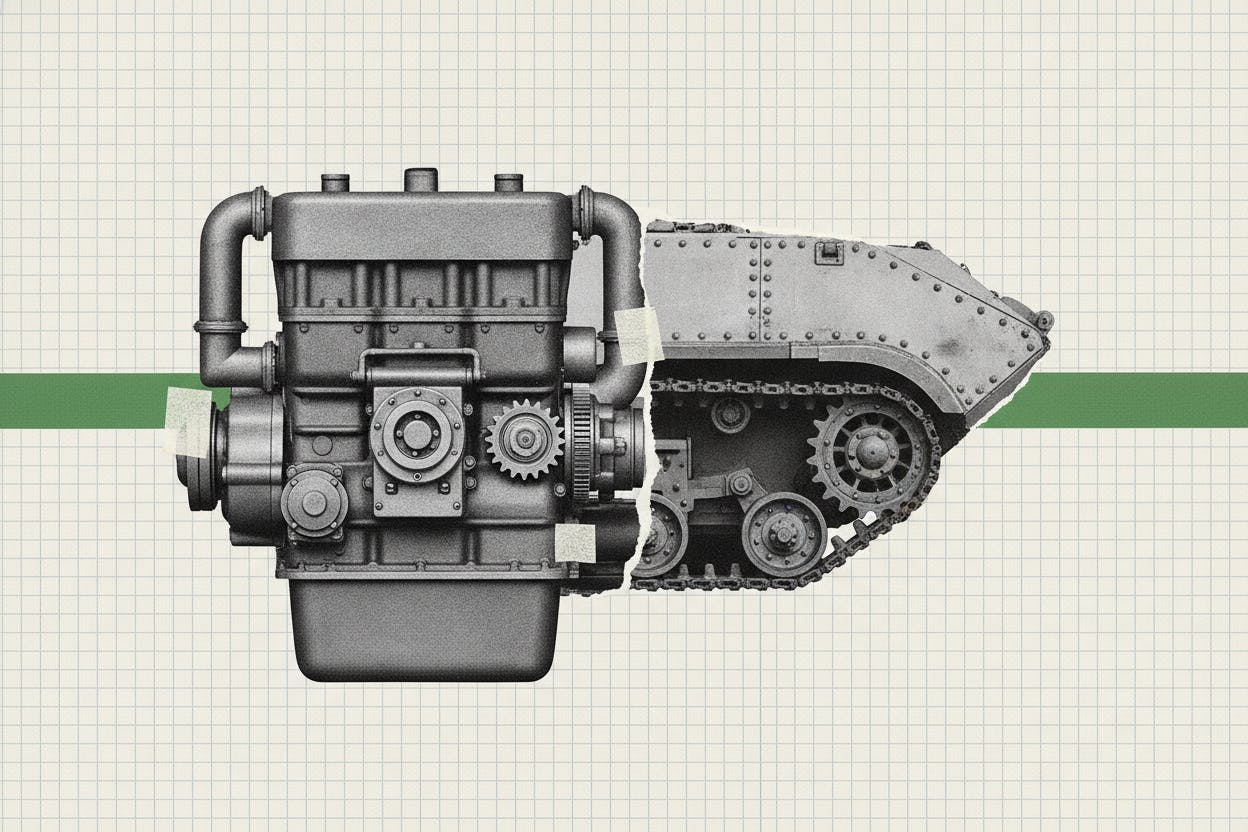
German engine manufacturer Deutz has agreed to acquire military vehicle builder FFG Flensburger Fahrzeugbau Gesellschaft for €1.6 billion ($1.83 billion), marking a significant strategic pivot toward the defense sector. The deal comes as European governments ramp up military spending, creating a growing market for armored vehicles and related equipment.
What the Deal Involves
Deutz is best known for producing engines used in construction and agricultural machinery—businesses that tend to rise and fall with private-sector investment. Buying FFG shifts a larger portion of the company's revenue toward government procurement, where demand is tied to defense budgets and contract awards rather than the usual industrial cycle.
FFG builds military vehicles and provides maintenance and upgrade services for existing fleets. That makes it a direct beneficiary of Europe's push to modernize its armed forces, a trend that has accelerated since the war in Ukraine began. The €1.6 billion price tag reflects the value of that long-term demand, even if it comes in irregular chunks.
Why This Matters for Investors
For Deutz, the acquisition is about more than adding a new product line. It's an attempt to change how the company is judged by the market. Industrial engine makers are typically valued based on quarterly volume swings and exposure to economic cycles. Defense contractors, by contrast, are often assessed on their order books—the work already contracted—and the reliability of government spending plans.
Defense contracts can make revenue “lumpy” from one period to the next, but once a program is funded and an order is booked, future sales are often easier to forecast. That could give Deutz a more predictable earnings profile, less vulnerable to sudden slowdowns in machinery demand and more dependent on the pace of tenders, production schedules, and deliveries.
European countries have been increasing military outlays, which is creating a longer pipeline of vehicle upgrades, maintenance, and new orders. As Europe's defense programs expand, more mid-sized manufacturers may look for similar deals to lock in longer-lived demand and smoother planning visibility, even if headline revenues arrive in chunks.
Broader Context
The deal fits into a wider pattern of corporate moves tied to geopolitical shifts. European defense spending has been rising steadily, and companies that supply military equipment are seeing increased interest from investors seeking exposure to government-backed demand. Deutz's move mirrors similar strategies in other industries where firms have diversified into defense to reduce cyclical risk.
For everyday investors, the key takeaway is that Deutz is trying to be seen less as a cyclical industrial firm and more as a defense supplier. That typically shifts the focus from quarter-to-quarter volume swings to order books, delivery timing, and how reliably governments renew multi-year spending plans. It also means the company's fortunes will become more tied to political decisions about military budgets than to the health of the construction or farming sectors.
Deutz's acquisition of FFG is a bet that Europe's rearmament is not a temporary spike but a long-term trend. If that bet pays off, the company could enjoy steadier growth and a higher valuation. If defense budgets tighten, however, the shift could expose Deutz to a different kind of risk: dependence on government contracts that can be delayed or canceled.
For now, the deal signals that Deutz sees more opportunity in armored vehicles than in agricultural tractors—and that it's willing to pay €1.6 billion to make that bet.