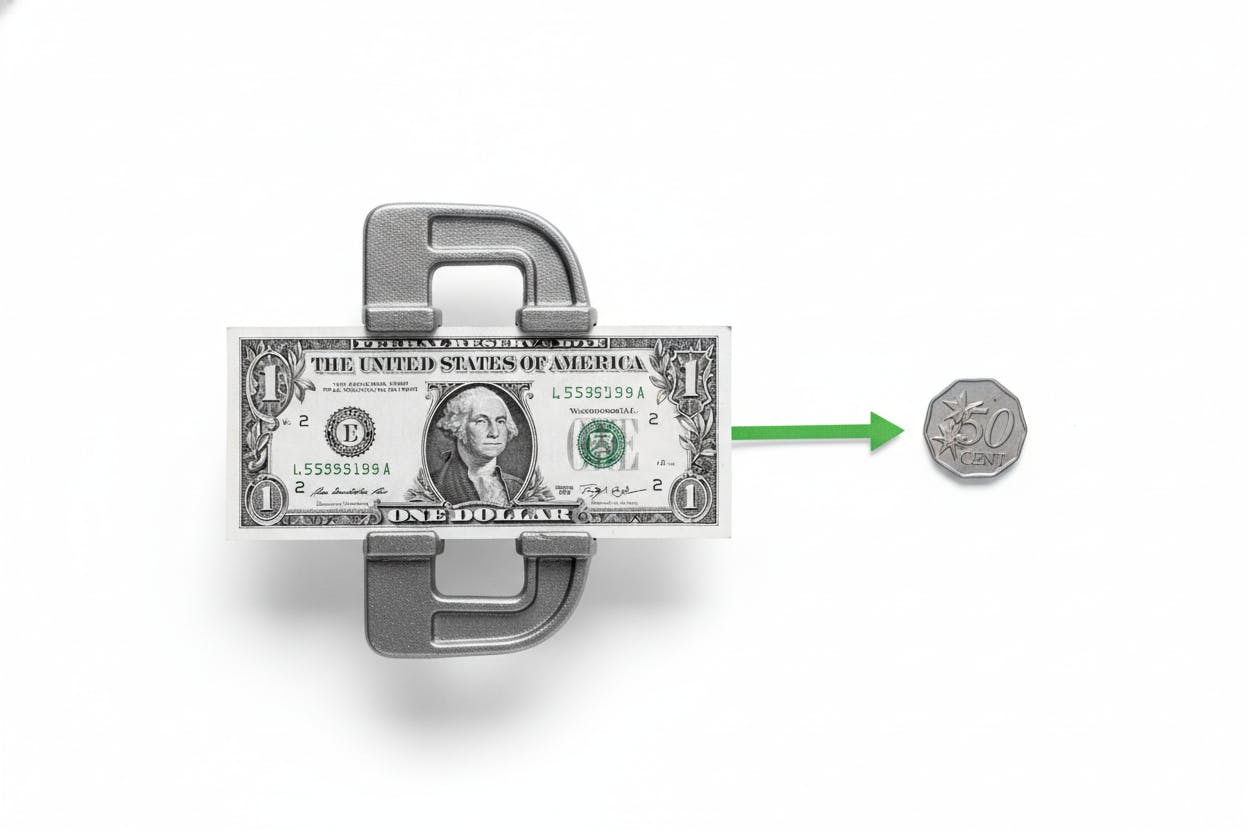
The US dollar was little changed in Asian trading on Wednesday, as investors held their fire ahead of two events that could set the tone for interest rates for months: July's personal consumption expenditures (PCE) inflation report and a keynote speech from Federal Reserve chair Kevin Warsh at the central bank's annual Jackson Hole symposium on Friday.
The greenback, measured by the dollar index (DXY), has been hovering near a three-month low. Currency markets have been unusually quiet, with traders reluctant to place big bets until they see the latest inflation data and hear what Warsh signals about the path of US monetary policy.
Why the dollar is stuck in neutral
Currencies often drift when the next major catalyst is a known quantity on the calendar. Here, two big ones are landing back-to-back: the PCE price index, which is the Fed's preferred inflation gauge, and Warsh's address at Jackson Hole, an annual gathering of central bankers that has historically been used to telegraph major policy shifts.
The PCE report, due Thursday, is expected to show whether price pressures continued to cool in July. A lower-than-expected reading could reinforce bets that the Fed will cut interest rates soon, which tends to weaken the dollar. A hot number, by contrast, could push rate-cut expectations back and lend support to the currency.
Warsh's speech on Friday is the other half of the equation. Markets will be listening for any hints about the Fed's thinking on inflation, employment, and the timing of potential rate moves. Jackson Hole speeches have a track record of moving markets, so traders are staying cautious until the words are out.
The Treasury's yield-curve move adds a twist
One factor weighing on the dollar is a recent step by the US Treasury to cap long-term bond yields. By limiting how high long-term Treasury yields can go, the move can reduce the return advantage that US assets offer relative to other countries. That yield advantage has been a key support for the dollar, so capping yields tends to take some of the wind out of the currency's sails.
Lower long-term yields also make US bonds less attractive to foreign investors, which can reduce demand for dollars. This is part of why the DXY has been stuck near its lowest level in three months, even as the broader economy continues to churn out data.
What it means for investors
For everyday investors, the dollar's direction matters more than it might seem. A weaker dollar can boost the value of overseas investments when converted back into US dollars, and it can also support multinational companies that earn revenue abroad. On the flip side, a stronger dollar can drag on those same companies' earnings.
The PCE report and Warsh's speech are also important for anyone with a mortgage, a savings account, or a bond portfolio, because they will shape expectations for where the Fed's benchmark interest rate is headed. Lower rates tend to be good for stocks and bonds, while higher rates can pressure both.
Investors should also keep an eye on other data points that have been moving markets recently. For example, US consumer confidence slipped in August, though markets took it in stride. And Nvidia's earnings and rising yields have already set up a busy week for markets.
In the currency market, the Australian dollar was a notable mover on Wednesday, rising 0.3% to $0.7183 after the country's "trimmed-mean" consumer inflation data came in stronger than expected. That's a reminder that inflation reports are moving currencies around the world, not just in the US.
The road ahead
Between now and Friday, expect the dollar to remain range-bound as traders wait for the two big catalysts. Once the PCE data and Warsh's speech are out, the market will have a clearer picture of whether the Fed is leaning toward cutting rates, holding steady, or even hiking again.
For now, the message from the currency market is simple: nobody wants to make a big move until the Fed's intentions are clearer. That caution is likely to persist until the data and the speech are in the rearview mirror.



