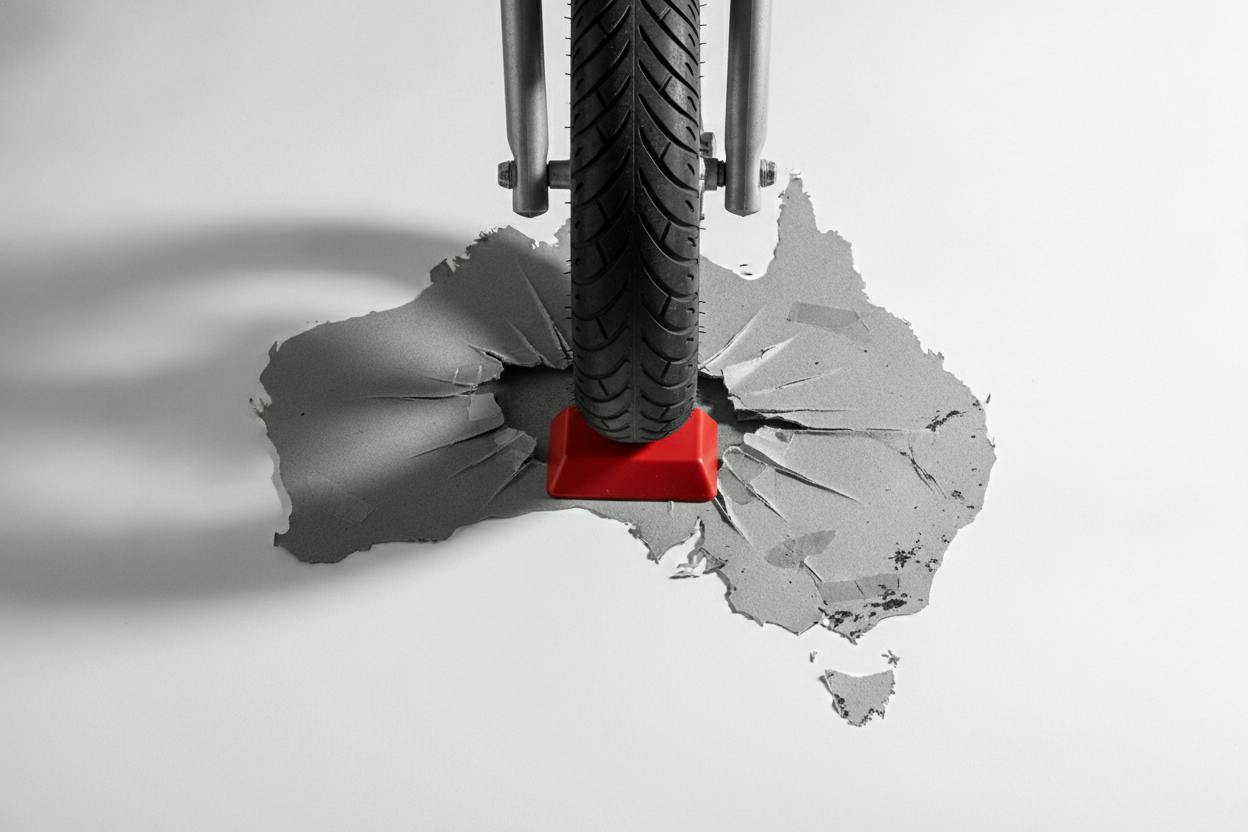
Domino's Pizza's international growth story hit a speed bump this week after its main operator in Australia and several other markets reported a 5.8% decline in same-store sales during a seven-week update. The news has prompted investment bank Jefferies to trim its expectations for the pizza giant's international performance, signaling that the road to recovery may be longer than some investors hoped.
What happened
Domino's Pizza Enterprises (DPE), which runs Domino's stores across Australia, New Zealand, Europe, and parts of Asia, said same-store sales fell 5.8% in the latest seven-week period. Same-store sales are a key retail metric that measures revenue from locations open at least a year, stripping out the impact of new store openings. A decline here means existing stores are selling less than they did a year earlier.
Jefferies, a global investment bank, believes DPE was a major drag on Domino's Pizza's international results in the most recent quarter. The bank now expects international same-store sales growth for 2026 to be roughly flat, down from its earlier forecast of low single-digit gains. The timing of DPE's update is significant because it overlapped with much of the parent company's reported quarter, giving investors a useful read on how the region is trending.
Why promotions matter
Domino's Pizza's CEO said DPE's pullback in promotions hurt order counts "pretty significantly," highlighting how discounting still drives a lot of demand in the delivery business. For years, pizza chains have used deals and coupons to attract customers, and cutting back on those offers can quickly cool demand.
DPE has been pursuing a "profitability first" strategy, aiming to improve margins by raising menu prices and reducing reliance on deep discounts. But the trade-off is becoming clear: when orders fall, store-level fixed costs—like labor, rent, and delivery capacity—get spread over fewer pizzas. That can squeeze margins even if the average price per pizza is higher.
Jefferies says it wants to see improving same-store sales once the pricing reset has been in place long enough for comparisons to get easier. In other words, the bank is looking for evidence that DPE can rebuild order volumes without resorting to heavy discounting.
What it means for investors
For everyday investors, this is a reminder that pizza delivery is a high fixed-cost business at the store level. Traffic matters almost as much as pricing. If cutting promotions reduces orders, profitability can actually become harder to prove because the cost per order rises.
Jefferies' shift to roughly flat international same-store sales growth for 2026 is more than a small forecast tweak. It implies that investors may need more evidence that DPE can rebuild order volumes before they can confidently model a sustained re-acceleration in Domino's Pizza's international growth.
The news also comes amid a broader slowdown in pizza demand. Earlier, Domino's trimmed its sales outlook as pizza demand stayed soft, a sign that the challenges are not unique to Australia. For investors watching the sector, the key question is whether DPE's "profitability first" approach can eventually win back customers without sacrificing margins.
For now, the market will be watching DPE's next updates closely. If same-store sales start to improve as comparisons ease, it could signal that the strategy is working. If not, the flat growth forecast may prove optimistic.
For those looking at the broader consumer landscape, the news fits a pattern of cautious spending and shifting habits. Discounts have been lifting retail sales in some areas, but the pizza delivery business shows that relying on promotions can be a double-edged sword.
As always, investors should consider their own financial goals and risk tolerance. This is not a recommendation to buy or sell any stock, but rather an explanation of what the numbers mean and why they matter.