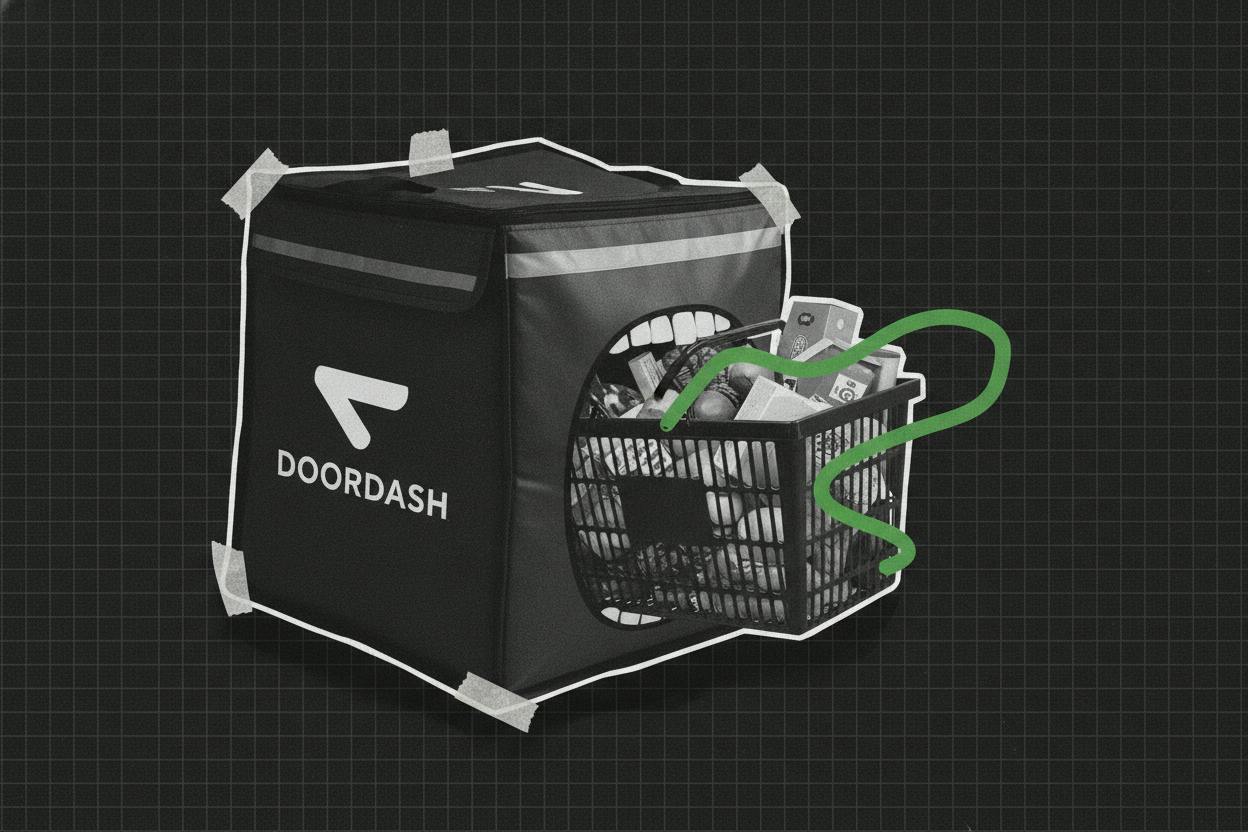
DoorDash has announced plans to acquire Instacart's parent company, Maplebear, in a deal valued at roughly $17 billion. The proposed tie-up would create a dominant force in U.S. food and grocery delivery, combining DoorDash's restaurant delivery network with Instacart's extensive supermarket partnerships.
The announcement came alongside DoorDash's third-quarter earnings, which beat Wall Street expectations and sent its shares higher. The company's revenue and order growth were stronger than analysts had forecast, giving investors some confidence in the deal's timing.
Why DoorDash wants Instacart
DoorDash has been expanding beyond its core restaurant delivery business for years, and groceries are one of the few categories large enough to meaningfully boost its growth. Instacart brings established relationships with major U.S. grocery chains, a large base of shoppers, and a fast-growing advertising business.
By combining, DoorDash could spread its fixed costs—like logistics technology, customer support, and driver infrastructure—across a much larger volume of orders. That could improve efficiency and profitability over time. The deal also gives DoorDash a stronger position in the grocery market, where it has been competing with Amazon, Walmart, and other delivery apps.
Instacart's advertising platform is another key attraction. Grocery ads are a high-margin revenue stream, and DoorDash has been building its own ad business. Combining the two could create a more compelling offering for consumer brands looking to reach shoppers at the moment of purchase.
Market reaction: mixed signals
The initial market response was telling. DoorDash's stock rose on the earnings beat and the ambitious deal, while Instacart's shares slipped. That divergence reflects a common pattern in acquisitions: the buyer's stock often gains if investors see strategic logic, while the target's stock may fall if the deal price is seen as too low or if there are concerns about the deal closing.
But the mixed reaction also highlights the risks. Acquisitions of this size can be difficult to integrate, and they often dilute near-term profits as companies absorb new costs and debt. DoorDash will need to convince investors that the combined company can deliver on its promises without disrupting its existing operations.
What it means for investors
For everyday investors, the deal is a reminder that big acquisitions carry both opportunity and risk. On the plus side, DoorDash could gain significant scale in a large and growing market. Grocery delivery is still a relatively small slice of overall grocery sales, so there is room for growth. If DoorDash can execute well, the deal could boost its long-term earnings power.
On the downside, integration is hard. Merging two large platforms, managing different cultures, and retaining key customers and partners takes time and money. There is also regulatory scrutiny to consider—antitrust regulators may review the deal to ensure it doesn't harm competition. Any delays or conditions could weigh on the stock.
Investors should also watch how DoorDash finances the deal. If it takes on significant debt, that could increase financial risk. If it uses stock, existing shareholders could see dilution.
Privacy risk in the background
While DoorDash's deal grabbed headlines, another story underscored a different kind of risk for investors. General Motors, one of the largest U.S. automakers, agreed to pay $220 million to settle claims that it sold drivers' behavior and location data without proper consent.
The settlement is notable not for the one-time payment, but for what it signals about stricter enforcement around data privacy. Regulators and lawsuits are increasingly focusing on how companies collect and share personal data. If companies are forced to obtain clearer opt-ins, their ability to collect and monetize data could shrink. Sharing rules could tighten, and compliance costs could rise.
For investors, this means that revenue streams built on data monetization may become less predictable. Companies that rely on selling or sharing user data may face higher legal and regulatory risks, which can lead to a larger risk discount on their future cash flows. The GM case also adds friction for insurers and other companies that have relied on purchased driving data, as the pipeline of such data could become harder to maintain and verify.
The bigger picture
The DoorDash-Instacart deal is part of a broader trend of consolidation in the delivery and gig-economy space. As growth slows in some areas, companies are looking to combine forces to cut costs and expand their reach. For investors, this means keeping an eye on how these deals play out—not just in the short term, but over the long haul.
For those interested in the broader delivery landscape, DoorDash's grocery push is a key development. And for a look at how other companies are navigating big strategic moves, Thrive Capital's take-private of ADT offers another example of large-scale dealmaking. Meanwhile, Ares' $31 billion raise shows how investors are still pouring money into alternative assets, and Shell's profit and buyback highlights the ongoing strength in energy.
As always, the key for investors is to focus on the fundamentals: how the deal affects the company's earnings power, balance sheet, and competitive position. The market's initial reaction is just the beginning of a long process.