Canadian agribusiness Eat Well Investment Group has struck a deal to clear a hefty chunk of its balance sheet. The company says it will settle CA$45 million in obligations using just CA$100,252 in cash and newly issued shares, rather than paying out the full amount in cash. The move is aimed at simplifying its capital structure and removing hard-to-value claims that have weighed on the company.
What's being settled?
The bulk of the settlement involves net profits interest (NPI) shares tied to Eat Well's 2021 acquisition of Belle Pulses. NPI shares are a type of contract that gives the holder a claim on a portion of a company's future profits, rather than a fixed dividend or repayment. Eat Well issued these to Novel Agri-Technologies as part of the Belle Pulses deal, and they have been recorded as a large liability on its books.
Under the new agreement, Eat Well will redeem those NPI shares by issuing five million common shares at a deemed price of CA$0.10 each. The company says this eliminates a significant recorded obligation. In addition, it will settle about CA$3.34 million in accrued compensation owed to directors, officers, and service providers. That portion will be paid with CA$100,252 in cash plus 2.3 million common shares.
Management's pitch is straightforward: replace complex, open-ended claims with a clearer share count. Instead of an uncertain future payout tied to Belle Pulses' performance, the company will have a fixed number of new shares outstanding.
Why this matters for investors
For anyone holding Eat Well stock, the immediate effect is dilution. Issuing more shares means each existing share represents a smaller slice of the company. With the stock recently trading around CA$0.08 on the Canadian Securities Exchange, the new shares are being issued at a slight premium to the market price, but the overall share count will rise.
Still, the company argues that cleaning up the balance sheet could make it more attractive to future lenders and investors. When a company has complex liabilities like NPI shares, it can be harder for outsiders to assess its true financial position. Those claims can also limit flexibility, because they may require cash payouts in the future. By converting them into equity, Eat Well removes that uncertainty.
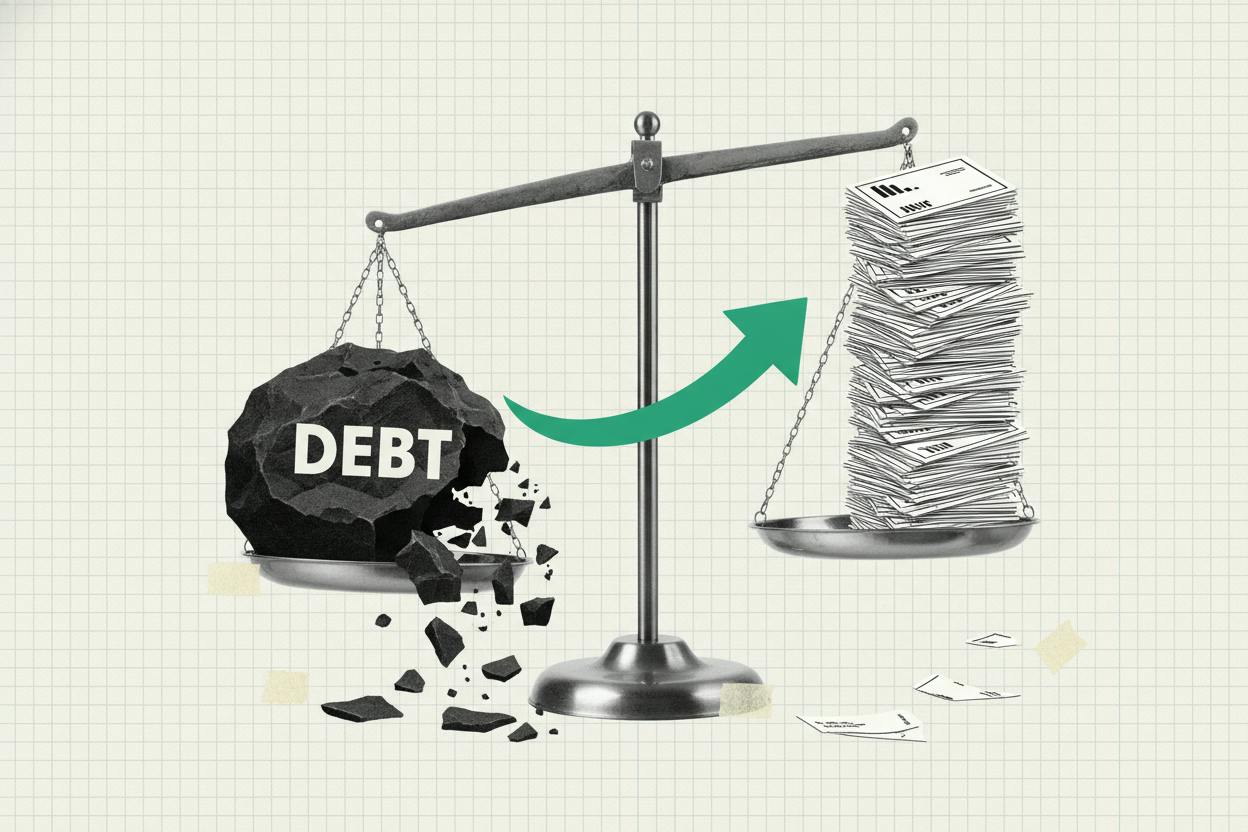
“This is a classic debt-for-equity swap,” said a corporate finance analyst who follows small-cap agribusinesses. “The company is trading future cash obligations for current dilution. It's a bet that a cleaner balance sheet will unlock better financing terms down the road.”
For everyday investors, the key takeaway is that Eat Well is prioritising balance sheet simplicity over preserving the current share count. The move could reduce the risk of a cash crunch, but it also signals that the company is not in a position to pay off these obligations with cash on hand.
What to watch next
Investors will be watching how the market reacts to the news and whether the company can secure new financing or improve operations at Belle Pulses. The NPI shares were tied to the performance of that business, so their elimination removes a potential overhang. But the company still faces the challenge of generating enough cash flow to support its ongoing operations.
Eat Well's stock has been under pressure, trading around CA$0.08, and the dilution from this deal could keep a lid on any near-term rally. However, if the cleaner balance sheet leads to new investment or better terms from lenders, the long-term picture could improve.
For context, other small-cap companies have used similar tactics to reset their capital structures. The trade-off is always the same: give up a piece of the future to fix the present. Whether that trade pays off depends on whether the company can grow into its new share count.
As always, investors should consider their own risk tolerance and do their own research before making any decisions. This article is for informational purposes only and does not constitute financial advice.