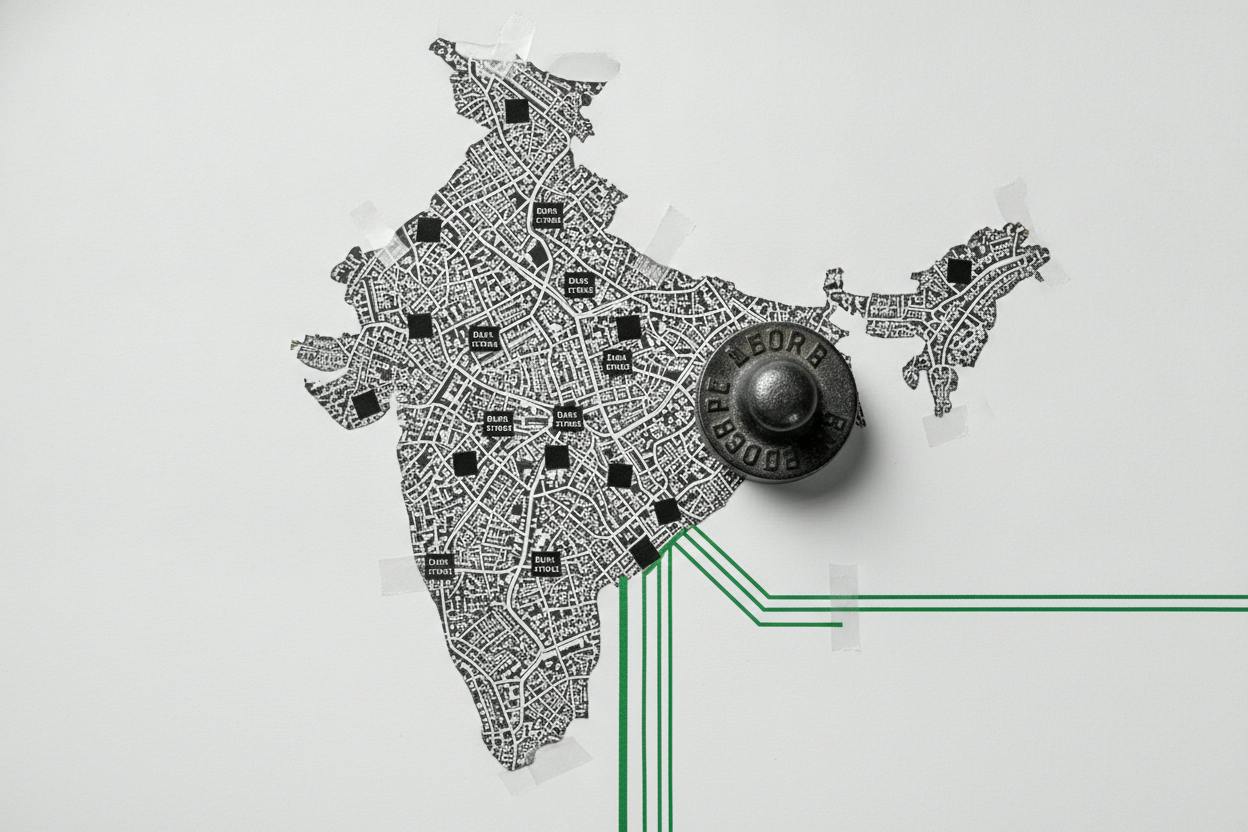
India's Eternal, the parent company of quick-commerce platform Blinkit and food-delivery app Zomato, says it will speed up its store rollout starting in the December quarter. The company is targeting roughly 5,000 “dark stores” by March 2028, and it insists this faster expansion won't come at the cost of profitability.
The announcement is an attempt to reassure investors who have worried that the rapid growth of quick commerce—delivering groceries and essentials in minutes—would force companies into a costly race for market share. Eternal's message: the competitive landscape is becoming more predictable, so it can build more stores without reopening the kind of losses that plagued the sector in its early days.
What are dark stores and why do they matter?
Dark stores are small, warehouse-like fulfillment centers located close to customers. They are not open to the public; instead, workers pick and pack online orders for delivery within minutes. The more dark stores a company has, the faster it can deliver and the wider its coverage area.
But building and operating these stores is expensive. Rent, staffing, and the logistics of managing inventory across many small locations can eat into margins. That's why investors have been watching Eternal's expansion plans closely—every new store adds revenue potential but also adds fixed costs.
Eternal's confidence that it can grow without squeezing margins suggests it believes the market is settling down. In the early days of quick commerce, companies often subsidized prices and delivery fees to win customers, a strategy that burned cash. Now, with fewer players and more rational pricing, the economics are improving.
What this means for investors
For everyday investors, the key takeaway is that Eternal is trying to balance growth and profitability. If it succeeds, it could mean stronger long-term returns as the company captures more of India's fast-growing online grocery market. If it fails, the faster expansion could drag on earnings.
The company's statement that competition is “more predictable” is a signal that it sees less risk of a price war. That's important because a price war would force Eternal to spend more on discounts and marketing, hurting margins.
Investors should also note that the December quarter is when the accelerated rollout begins. That means the next few earnings reports will be closely watched for signs that the expansion is indeed not hurting profitability. Any slippage could spook the market.
Eternal's dual business—quick commerce and food delivery—gives it some diversification. But quick commerce is the growth engine, and its success will largely determine the company's valuation.
For context, other companies in the sector have also been expanding, but Eternal's scale and brand recognition give it an edge. Still, the costs of rapid expansion are real, and the company's ability to manage them will be tested.
Looking ahead
The next few quarters will be crucial. Investors will want to see that the new dark stores are generating healthy order volumes and that the company isn't sacrificing its unit economics to hit its store count target.
Eternal's plan is ambitious, but it's also a bet on the maturity of the quick-commerce market. If competition remains rational, the company could emerge as a dominant player with strong margins. If not, the expansion could become a drag.
For now, the market seems to be taking a cautious but hopeful view. The stock will likely react to each earnings report as investors gauge whether the promise of growth without margin pain is being delivered.