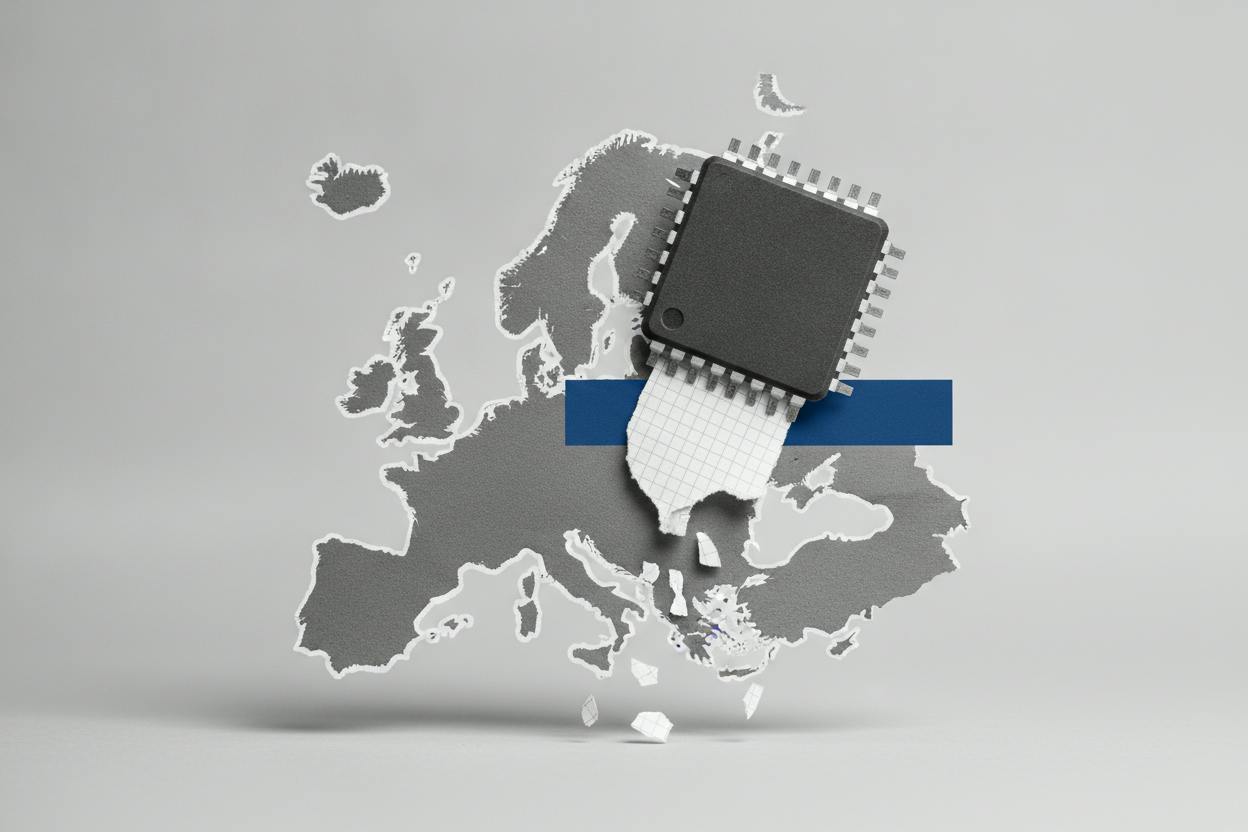
European shares edged higher on Monday as technology stocks recovered some ground from last week's sharp selloff, offering a tentative sign that the worst of the AI-driven market turbulence may be easing. The pan-European STOXX 600 index rose 0.3%, with chip equipment makers leading the rebound.
After the STOXX 600 fell nearly 6% last week, investors are now asking a key question: is the pullback in AI-linked shares over, or is there more pain ahead? The concern that triggered the selloff hasn't gone away. Companies and governments are pouring billions into artificial intelligence infrastructure, but the returns from that spending may take longer to materialise than markets had hoped.
Monday's action hinted at a pause in that de-risking. Europe's technology sector climbed 1.3%, with chip equipment firms ASML, ASM International, and BE Semiconductor all rising between roughly 2.8% and 4%. Germany's DAX, which is heavily weighted toward industrial and tech names, added 0.3%.
Why chip stocks matter
ASML and its peers are often seen as a bellwether for the entire tech supply chain. These companies make the advanced lithography machines and other equipment used to fabricate semiconductors, so their share prices tend to move on expectations for future chip demand. When investors worry that AI spending is slowing or that the payoff will be delayed, these stocks are usually among the first to fall. When sentiment improves, they often bounce the hardest.
Last week's selloff was part of a broader global retreat from AI-related assets. Similar moves were seen in other markets, with futures pointing to a steadier open in the US and Asian indices also feeling the pressure. The selloff even spilled into other asset classes, with oil prices slipping as investors reduced risk across the board.
Julius Baer falls despite higher profit
Not all stocks joined the rebound. Swiss wealth manager Julius Baer slid even though it reported higher profit. The decline suggests that investors are focusing on other aspects of the results, such as the outlook for client activity or the cost of managing money in a volatile environment. For wealth managers, market swings can be a double-edged sword: they may boost trading volumes, but they can also make clients more cautious about deploying capital.
Julius Baer's move is a reminder that even good news on the bottom line isn't always enough to lift a stock if the broader picture is uncertain. In a week when markets are still digesting a sharp selloff, investors tend to be picky about which earnings beats they reward.
What it means for investors
For everyday investors, the key takeaway is that volatility in AI-related stocks is likely to continue. The debate over AI spending is far from settled. On one hand, the long-term potential of artificial intelligence remains enormous, and companies are still committing significant resources to it. On the other, valuations have run up sharply, and any sign that the expected returns might be delayed can trigger sharp pullbacks.
Diversification remains important. If you're heavily concentrated in tech or AI-themed funds, last week's drop was a reminder of how quickly sentiment can shift. A portfolio that also includes other sectors, bonds, or international exposure can help cushion the blow when one area of the market stumbles.
It's also worth watching how central banks and economic data evolve. Upcoming inflation data could influence interest rate expectations, which in turn affect how investors value growth stocks like chipmakers. Higher rates tend to weigh on companies whose profits are expected far in the future, which is exactly the profile of many AI names.
Finally, don't overreact to a single day's move. Monday's bounce is encouraging, but it doesn't necessarily signal the end of the correction. Markets often take time to find a bottom after a sharp drop, and there could be more volatility ahead. The best approach for most investors is to stay the course, keep a long-term perspective, and avoid making impulsive changes based on short-term market noise.