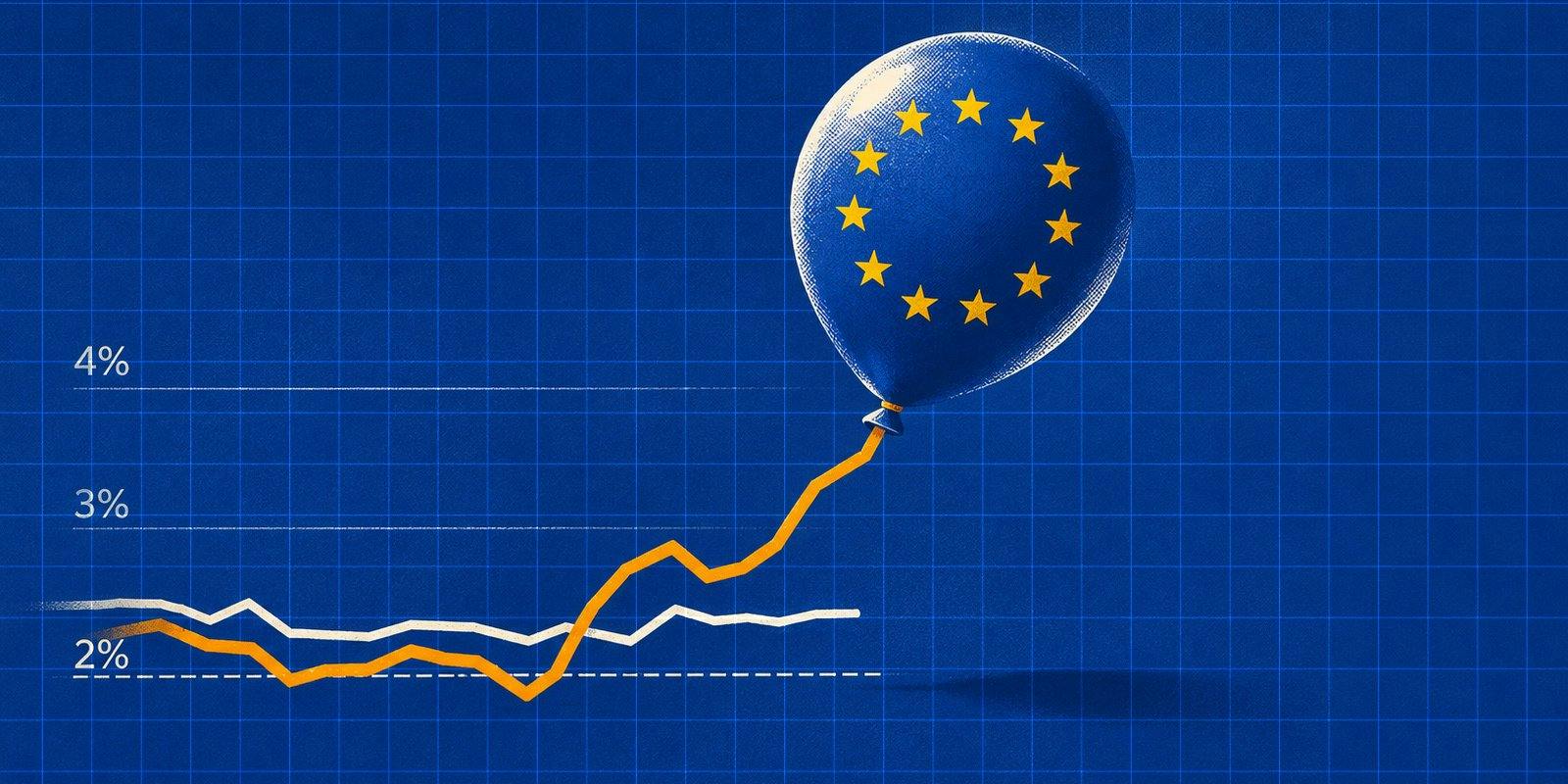
Consumer prices across the eurozone are running hot again, with inflation hitting 4% in October — double the European Central Bank's (ECB) 2% target. That marks the fourth consecutive monthly acceleration and the fastest annual pace since September 2023, according to the latest data.
The main culprit: energy. Prices for energy goods and services surged nearly 21% from a year earlier, the biggest annual jump since January 2023. Ongoing conflicts in the Middle East and Ukraine continue to disrupt supply chains and keep oil and gas prices elevated, feeding directly into household bills and business costs.
Strip out volatile food and energy prices, and the picture looks a bit cooler. Core inflation, which policymakers watch closely as a signal of underlying price pressures, came in at 2.5% — still above target but well below the headline number.
Why inflation is climbing again
For much of 2024 and 2025, eurozone inflation had been drifting downward, giving the ECB room to start cutting interest rates. But the recent rebound shows how fragile that progress was. Energy costs, which had been a drag on inflation earlier in the year, have turned back into a major driver.
Geopolitical tensions are the key factor. Wars in the Middle East and Ukraine have repeatedly disrupted energy markets, and any escalation can quickly push prices higher. Even without new shocks, the base effect — comparing current prices to unusually low levels a year ago — can make annual inflation figures look worse.
Core inflation at 2.5% suggests that underlying price pressures are not yet fully contained. Services costs, wages, and rents tend to be stickier than goods prices, and they can keep inflation above target even when energy prices stabilize.
What this means for the ECB and your money
The ECB has a single mandate: keep inflation at 2% over the medium term. With headline inflation at double that, the central bank faces a tough balancing act. It could keep interest rates higher for longer to cool demand, but that risks slowing an already fragile eurozone economy. Alternatively, it could look past the energy spike and focus on the cooler core reading, but that would risk letting inflation become entrenched.
For everyday investors, the stakes are real. Higher inflation erodes the purchasing power of cash and fixed-income investments. If the ECB keeps rates elevated, that can be good for savers earning interest on deposits but painful for borrowers with variable-rate mortgages or business loans. It also tends to put downward pressure on stock valuations, especially for growth companies that rely on future earnings.
On the other hand, if the ECB decides the energy shock is temporary and cuts rates anyway, that could boost risk assets in the short term but might reignite inflation expectations. Markets will be watching the ECB's December meeting closely for clues.
What investors should watch next
The immediate focus is on the ECB's next policy decision, expected in December. Policymakers have signaled they are data-dependent, so upcoming inflation prints and economic growth figures will be crucial. Any sign that core inflation is also accelerating would make a rate cut less likely.
Energy markets are another key variable. If oil and gas prices keep climbing, headline inflation could stay elevated for months. Conversely, a de-escalation in conflicts could bring energy prices down quickly, pulling inflation back toward target.
For investors with exposure to European assets, the inflation picture is a reminder to stay diversified. Energy stocks may benefit from higher prices, but consumer discretionary and rate-sensitive sectors could struggle. Bonds, meanwhile, face headwinds if inflation forces the ECB to keep policy tight.
The broader global context matters too. The eurozone is a major trading partner for the U.S. and China, so its inflation and interest rate path can ripple through global markets. A prolonged period of high inflation in Europe could weigh on global growth and corporate earnings.
Ultimately, today's data is a wake-up call that the fight against inflation is not over. For investors, it underscores the importance of staying informed and not assuming that the recent trend of cooling prices will continue uninterrupted.