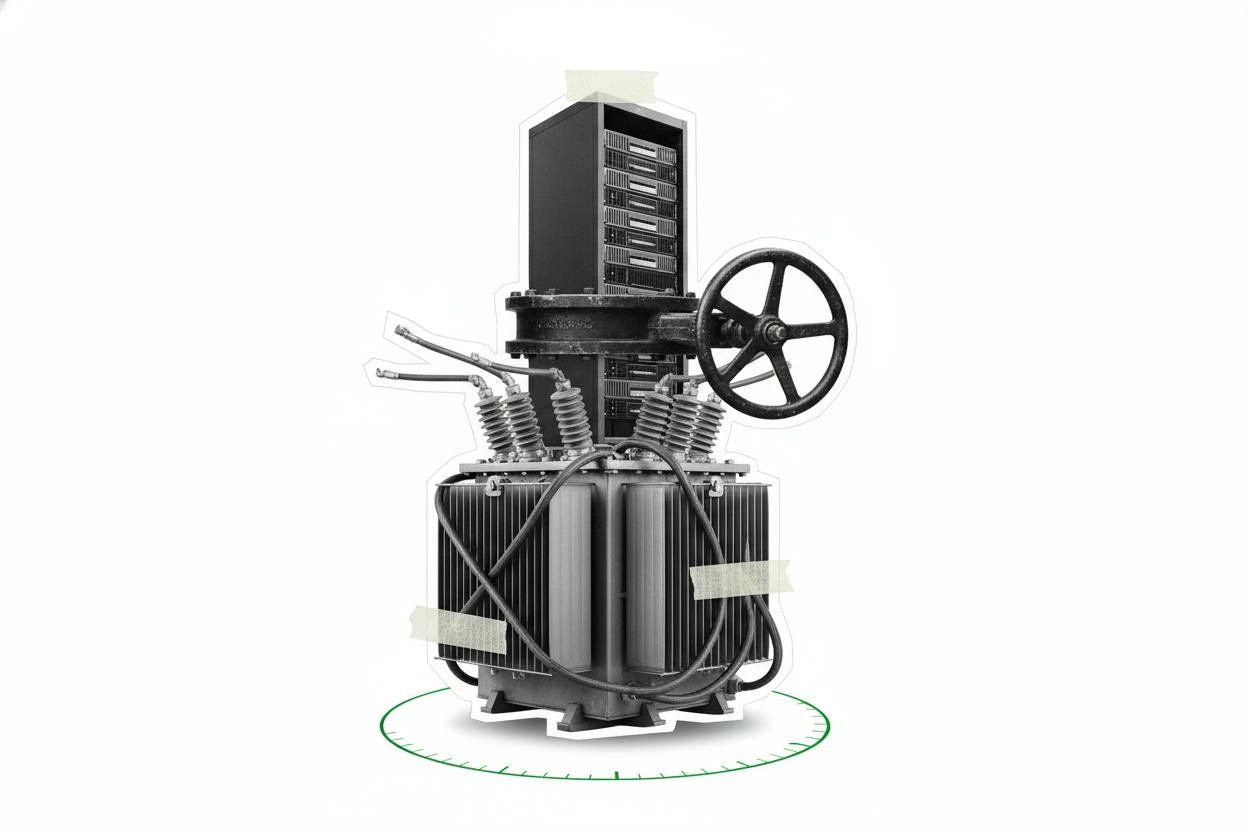
FirstEnergy is expected to report stronger third-quarter earnings later this month, helped by continued spending on its electricity grid and recently approved rate changes, according to a preview from Bank of America. The investment bank forecasts core earnings of $0.90 per share when the Ohio-based utility reports results on October 27 after the market close.
The expected lift comes from several sources: transmission and distribution work, Pennsylvania's Distribution System Improvement Charge (DSIC)—a mechanism that lets utilities recover certain spending more quickly—and new rates implemented in Ohio and West Virginia. These factors are seen supporting near-term results even as the company faces longer-term questions about how quickly regulators allow it to recoup its investments.
Why grid spending matters for utilities
For a regulated utility like FirstEnergy, earnings growth is closely tied to the size of its “rate base”—the pool of assets on which regulators allow the company to earn a set return. When a utility invests in upgrading wires, substations, and other infrastructure, that spending can expand the rate base, which in turn can boost profits if regulators approve the associated cost recovery.
However, the timing of that recovery is critical. Tools like Pennsylvania's DSIC allow utilities to recover some costs faster, providing a more immediate earnings benefit. In contrast, full rate cases—where regulators review and set new rates—can take longer and introduce uncertainty. That's why Bank of America sees near-term support in the third quarter but remains cautious about the years ahead.
Data center demand: a potential growth driver
A key focus for investors is the growing demand for electricity from data centers, which are being built to support artificial intelligence and cloud computing. FirstEnergy has said it has roughly 8 gigawatts of contracted data center load, compared with 4 gigawatts assumed in its current capital plan. That gap suggests there could be significant additional investment opportunities if the demand materializes.
Bank of America says this data center pipeline could shape FirstEnergy's next capital plan update, expected in February. If the company raises its spending plans, that could signal faster earnings growth down the road. But the bank also notes that the benefit depends on whether regulators allow the associated costs to be recovered quickly enough.
In a regulated utility, signing a data center contract doesn't automatically translate into higher profits. The earnings impact comes when state commissions—such as those in Pennsylvania, Ohio, and West Virginia—approve the spending into rates, either through mechanisms like DSIC or through full rate cases. That regulatory process can be slow and unpredictable.
What it means for investors
Bank of America maintained its 2026 earnings guidance for FirstEnergy of $2.62 to $2.82 per share and expects the company to target the high end of its 6% to 8% annual growth rate through 2030. However, the bank cut its price target to $47 from $53 and lowered its 2027 and 2028 earnings estimates to $2.92 and $3.16, respectively, citing regulatory uncertainty and the timing of when past and future investments get reflected in customer bills.
For everyday investors, the takeaway is that FirstEnergy's near-term results look solid, but the longer-term picture is clouded by regulatory risk. The company's ability to turn its data center pipeline into actual earnings growth will depend on how quickly regulators allow it to recover its spending. February's capital plan update will be a key checkpoint to watch.
Utilities are often seen as defensive investments because they provide essential services and pay steady dividends. But they are also heavily regulated, and changes in rate structures or regulatory decisions can have a significant impact on profitability. Investors should keep an eye on regulatory developments in FirstEnergy's key states, as well as the company's progress on its capital spending plans.
For more on how utilities are navigating the data center boom, see our coverage of Swift Energy's recent data center orders. And for a broader look at how companies are adjusting their outlooks, check out Domino's trimmed sales forecast.