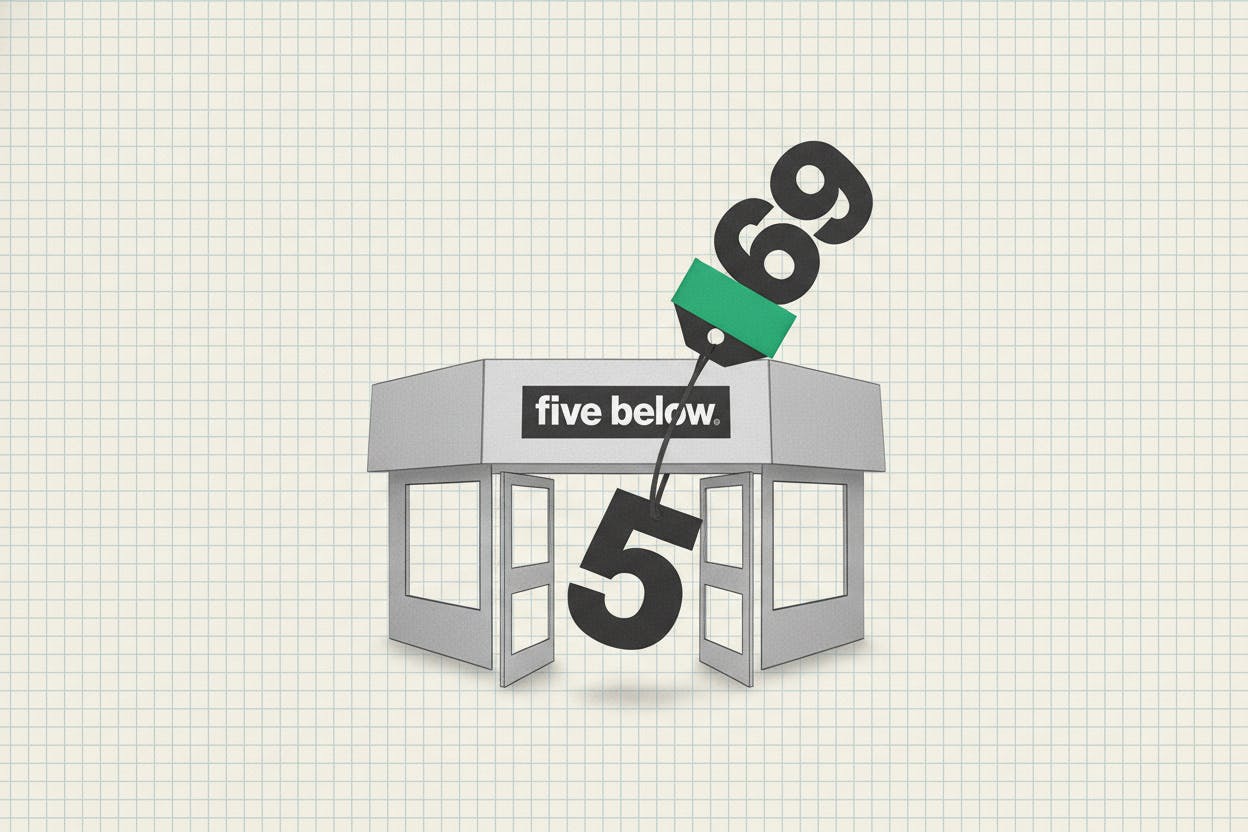
Discount retailer Five Below is heading into the second quarter with strong momentum, according to a new report from UBS Securities. The investment bank says the chain's average price per item reached a record $5.69 in June, even though the vast majority of products still cost $5 or less. That combination of higher spending per trip and steady foot traffic could translate into faster profit growth, UBS argues.
What's Driving the Higher Average Price?
Five Below built its brand on the promise that nearly everything in the store costs $5 or less. So a record average item price of $5.69 might seem like a contradiction. But UBS analysts say the increase is not a sign that Five Below is abandoning its core promise. Instead, the chain is using a mix of product selection and add-on purchases to nudge customers toward spending more per visit while keeping most shelf tags at $5 or below.
For example, a shopper might come in for a $5 toy but also pick up a small accessory or a snack that pushes the total basket higher. The average price per item rises because customers are buying more items, not because the store is raising prices on its core assortment. UBS notes that traffic remained strong in June, suggesting the strategy is resonating with budget-conscious consumers.
Why Operating Leverage Matters for Discount Retailers
Discount stores like Five Below have a cost structure that is heavy on fixed expenses—rent, utilities, and base staffing levels don't change much from week to week. When traffic is high and shoppers buy more, the extra revenue flows through to profit with relatively little additional cost. This dynamic, known as operating leverage, can make earnings grow faster than sales during good times.
UBS's bullish view hinges on this leverage. If Five Below can maintain strong traffic and a higher average item price, each additional dollar of sales becomes more profitable. The bank has set a price target of $285 on the stock, well above the $192.18 share price cited in the report. That implies significant upside if the company can sustain its current trajectory through the second quarter.
The Risk: Traffic Cools and Fixed Costs Bite
Operating leverage cuts both ways. If traffic slows or shoppers start spending less per trip, those fixed costs don't disappear. Rent and staffing remain, and profits can shrink faster than sales. That makes Five Below's earnings sensitive to small shifts in consumer behavior, even if the brand's $5 promise remains intact.
UBS's analysis suggests the risk is manageable for now, but investors should watch for any signs of weakening demand. The broader retail environment has been mixed, with some discounters benefiting from trade-down behavior as inflation pressures persist, while others face margin compression. Five Below's ability to keep most items at $5 or less while nudging the average sale higher gives it a potential edge, but it also means the company is walking a tightrope.
What It Means for Investors
For everyday investors, the key takeaway is that Five Below's stock performance may hinge less on any single product launch and more on whether traffic and the average item price hold up through the rest of the quarter. If the chain can maintain its current momentum, operating leverage could drive earnings growth that outpaces revenue growth. That would be a positive signal for the stock.
However, the flip side is that any slowdown in traffic could quickly expose the fixed-cost base, making results more volatile than the brand's simple $5 promise might suggest. Investors should monitor same-store sales trends and any commentary from management about customer behavior in the coming weeks.
UBS's report adds to a growing body of analysis on discount retailers. For context, other recent reports have highlighted similar dynamics in different sectors—for example, FleetPartners lifted its FY2026 growth outlook after a strong Q3, showing how operating leverage can work in other industries. Meanwhile, Plus500 shares tumbled 16% after its full-year forecast failed to excite, a reminder that expectations matter as much as performance.
Five Below's story is still unfolding, but the data so far suggests the $5 promise is holding up—and that could be good news for patient investors.