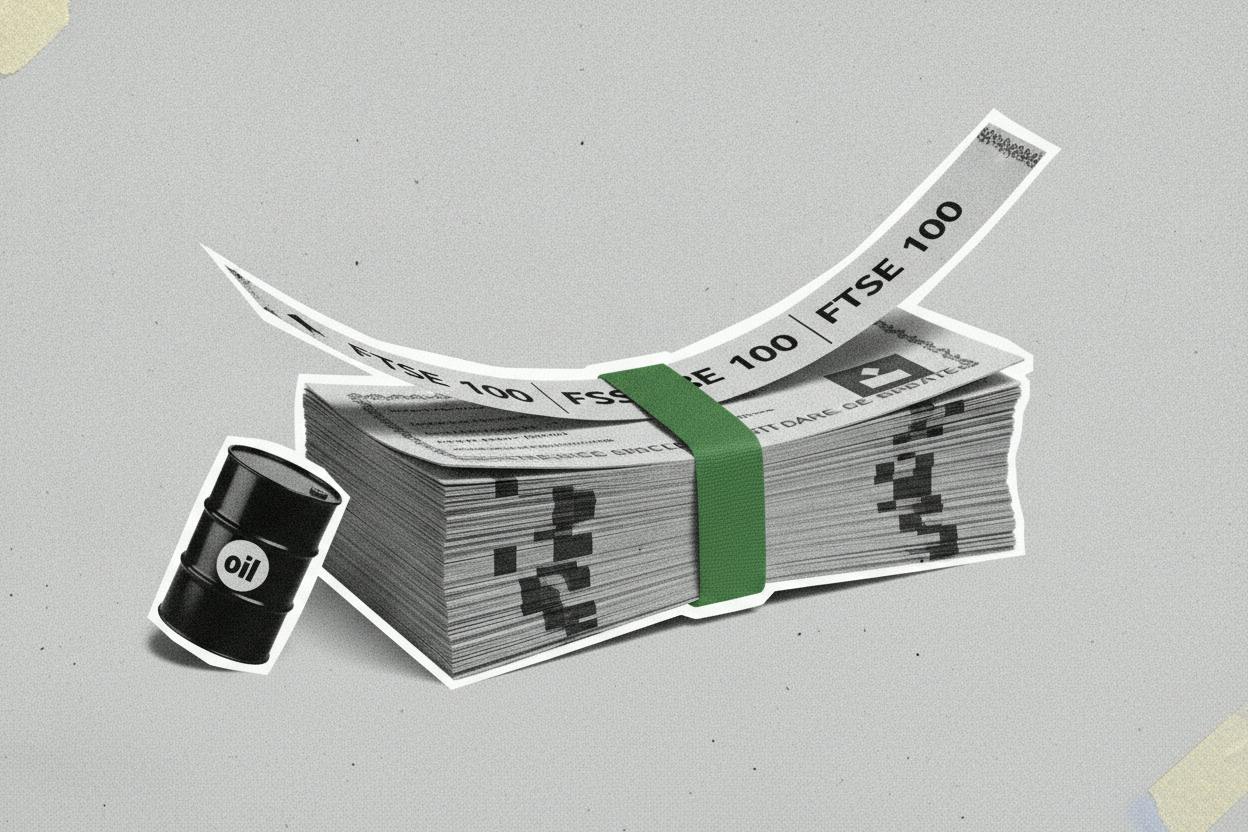
London's blue-chip index edged higher on Thursday, as a wave of upbeat company news—including a hefty share buyback from Rolls-Royce—outweighed a dip in oil and copper prices that weighed on energy and mining giants.
The FTSE 100 rose 0.34% and the mid-cap FTSE 250 added 0.25% by mid-morning, according to Reuters. The gains were led by industrial and healthcare heavyweights, while commodity-linked stocks pulled in the opposite direction.
Rolls-Royce buyback steals the show
Rolls-Royce shares climbed 2.8% after the engine maker reaffirmed its full-year forecast and announced a £1.5 billion share buyback. The move is the latest sign of confidence from a company that has been restructuring and cutting costs in recent years.
For investors, buybacks matter because they reduce the number of shares in circulation. If profits hold steady, spreading them across fewer shares tends to lift earnings per share—even without faster underlying growth. That can make a stock more attractive to investors who focus on per-share metrics.
There's also an index-level angle. Rolls-Royce is a large FTSE 100 member, and a company that consistently buys its own stock becomes a steady source of demand for its shares. That can help cushion the index on days when commodity-linked giants like Shell and BP drag it down.
In other words, the FTSE's daily direction may increasingly hinge on earnings and capital-return stories in industrials and healthcare, rather than moving in lockstep with crude and copper.
Strong earnings from retailers and builders
Outside the index's usual defensive names, company-specific news did the heavy lifting. Burberry jumped 9.4% after beating expectations on quarterly sales and profit, a rare bright spot for the luxury sector. Persimmon, one of the UK's largest housebuilders, gained 6.2% after talking up longer-term volumes. And discount retailer B&M surged 18.3% after saying annual profit could rise by up to 16%.
These moves show that even in a mixed economic environment, individual companies can deliver surprises that move their shares sharply. For everyday investors, it's a reminder that stock-picking and company fundamentals still matter, even when the broader market is flat.
Energy and mining drag
On the downside, Shell and BP each fell 0.6% as crude prices slipped. Miners also eased as copper weakened. These moves reflect the FTSE's heavy weighting in energy and materials, which can make the index sensitive to commodity price swings.
The broader economic backdrop was mixed. Britain's economy grew 0.7% in the third quarter, a solid pace, but a housing survey remained soft. The RICS house price balance came in at -36 in October, indicating that surveyors still see prices falling across much of the country.
That softness in housing is one reason housebuilders like Persimmon are watched closely—their fortunes are tied to the property market. Still, Persimmon's gain suggests investors are looking past near-term weakness and focusing on longer-term demand.
What it means for investors
For those with money in UK stocks, Thursday's session offers a few takeaways. First, earnings and capital returns can move markets even when the macro picture is mixed. Second, the FTSE 100 is not a single bet—it's a collection of very different sectors, and on any given day, some will shine while others stumble.
Buybacks, in particular, have become a popular way for companies to return cash to shareholders. They can be a sign that management believes the stock is undervalued, and they can support the share price over time. But they are not a guarantee of future performance, and investors should always consider the broader context.
As always, diversification remains a key principle. A portfolio that spans different sectors and regions can help smooth out the bumps that come from commodity price swings or a single company's earnings miss.
For now, the UK market's resilience in the face of weaker oil and copper suggests that corporate fundamentals are doing some of the heavy lifting. Whether that continues will depend on how earnings season unfolds and whether commodity prices stabilise.