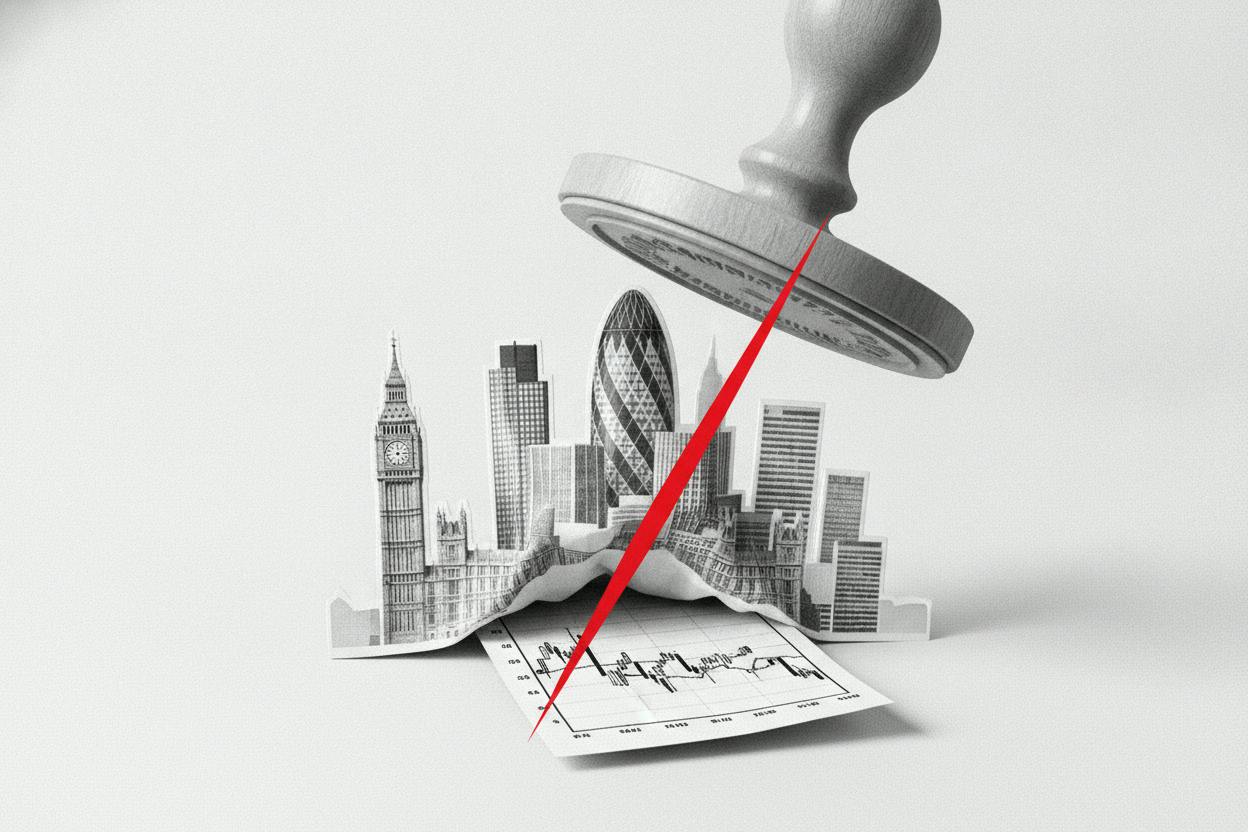
London's blue-chip index took a heavy hit on Friday, with the FTSE 100 sliding 2.2% to 10,540.78 by mid-morning. The drop came as investors digested a sharp selloff on Wall Street the previous day and fresh worries that US regulators could tighten the rules around artificial intelligence.
The mid-cap FTSE 250 also fell, losing 1.2%. The moves echoed a broader global retreat, with Europe's STOXX 600 down 1% and Asian markets also under pressure. The trigger was a US political shift this week that markets read as raising the odds of tougher AI regulation, which could slow data-center construction and curb spending by cloud giants.
What happened on Wall Street?
Thursday's session saw the S&P 500 and the Nasdaq Composite post their sharpest one-day falls since April 2025. According to Reuters, the scale of the damage was staggering: about $2.5 trillion of value was wiped from a major US index in a single day.
That kind of move doesn't stay contained. Big one-day drops can force selling far beyond the tech stocks that started the trouble. Many large, rules-based funds—such as volatility-targeting and risk-parity strategies—are programmed to cut equity exposure when market volatility spikes. They sell baskets of assets, not individual stories, so the pressure can spill from US mega-caps into UK and European shares, lifting correlations across sectors.
That helps explain why the FTSE 100 fell even though the original worry was about AI regulation. It also explains why even traditionally defensive sectors—pharma, personal care, and groceries—dropped around 3.5%, while energy stocks fell with oil prices. Precious metal miners were one of the few bright spots, as investors sought perceived hedges.
Why AI regulation matters for markets
AI has been a major driver of stock market gains over the past couple of years. Companies building data centers, making chips, and providing cloud services have seen their valuations soar on expectations of explosive growth. Any sign that governments might step in with stricter rules—on data use, model safety, or energy consumption—can quickly cool that enthusiasm.
The concern is that tighter regulation could slow the pace of data-center building and make cloud giants more cautious with their spending. That would hit not just AI companies but the entire supply chain, from equipment makers to construction firms and energy providers.
For everyday investors, the key takeaway is that AI-related risk is now a market-wide factor, not just a tech-sector story. A regulatory headline from Washington can move the FTSE 100 just as much as a UK economic data point.
What it means for your portfolio
If you hold a diversified portfolio, you might be wondering why your UK or European funds are falling when the original problem was US tech. The answer lies in how modern markets work. When volatility spikes, funds that manage risk by targeting a certain level of volatility often have to sell stocks across the board to bring their risk back in line. That can hit even solid, boring companies in defensive sectors.
It's also a reminder that no market is an island. A tech-led selloff in Asia or a plunge in AI stocks can quickly spread to London. The same AI worries have already hit New Zealand and other Asian markets.
For long-term investors, days like this are a normal part of market cycles. Sharp declines often create opportunities, but they also test your risk tolerance. If you're close to retirement or need your money soon, it's worth checking that your portfolio isn't overly concentrated in any single sector or region.
One way to reduce the impact of such swings is to hold a broadly diversified global fund, which spreads your money across many markets and sectors. As a single global ETF can simplify investing across world markets, it can also help smooth out the bumps when one region hits turbulence.
In the meantime, investors will be watching for any concrete policy moves from Washington, as well as earnings reports from major tech and cloud companies, to gauge whether the AI-driven growth story remains intact.