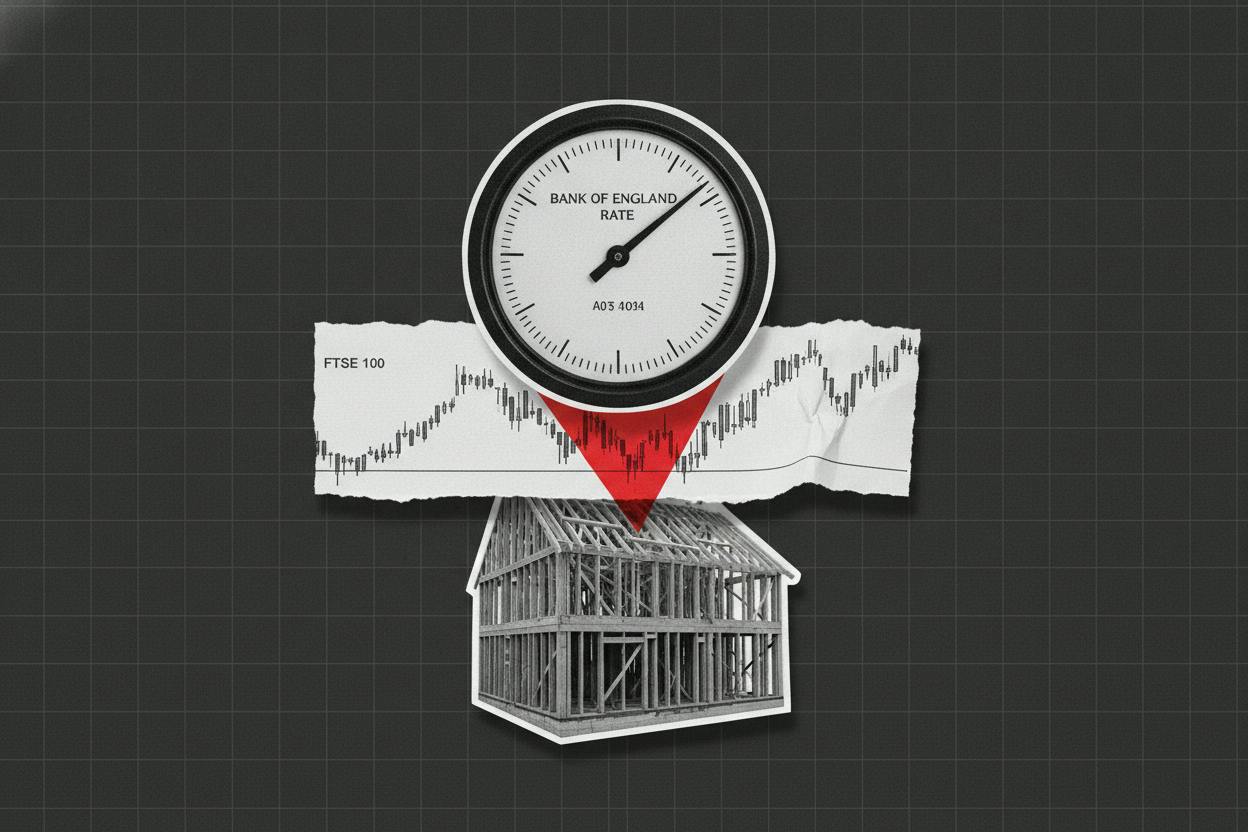
UK stocks slipped on Thursday as the Bank of England (BoE) resumed its rate-hiking cycle, lifting its key interest rate by 25 basis points to 4%. The FTSE 100 fell 0.53% on the day, while fresh data showed the country's construction sector contracting at a faster pace than expected.
The BoE's decision, passed by an 8-1 vote, marked its first increase since 2023. The central bank signaled renewed concern that inflation pressures could reheat, particularly as energy prices climb. This move comes after a period of holding rates steady, and it underscores the delicate balancing act policymakers face between curbing inflation and supporting economic growth.
Why higher rates weigh on stocks
When a central bank raises interest rates, the immediate effect is felt in borrowing costs: mortgages, business loans, and credit cards all become more expensive. But for investors, the impact runs deeper. Higher rates raise the "discount rate" used to value future profits, meaning the present value of a company's expected earnings falls. This tends to hit rate-sensitive and growth-oriented stocks hardest, as their valuations rely more heavily on cash flows expected years down the line.
The FTSE 100, however, has a unique characteristic: a large share of its constituents' revenue comes from overseas. That means the index's biggest companies—multinationals in sectors like energy, mining, and consumer goods—can appear more insulated from domestic rate hikes than smaller, UK-focused firms. So while the headline index dipped, the pain may be more pronounced beneath the surface.
Construction PMI signals deepening weakness
Adding to the gloomy picture, the S&P Global UK Construction Purchasing Managers' Index (PMI) fell to 43.6 in October, below forecasts. A reading under 50 signals contraction, and this marks a further deterioration in building activity. The construction sector is often a bellwether for the broader economy, as it reflects confidence in housing, commercial development, and infrastructure spending.
The combination of tighter monetary policy and weaker building demand typically squeezes housing-linked activity first. Homebuilders, property developers, and suppliers of building materials tend to feel the pinch as orders slow. Lenders with heavy exposure to mortgages and construction loans may also face headwinds, as slower loan growth and potentially strained borrowers raise credit risk.
This dynamic is not unique to the UK. Across Europe, central banks are grappling with similar inflation pressures, and some have resumed hiking cycles of their own. The BoE's move echoes that broader trend, even as other regions, like Malaysia and China, hold rates steady or provide liquidity support.
What it means for investors
For everyday investors, a 4% base rate makes weak construction data more market-moving. When policy rates climb, investors typically reset valuations by applying a higher hurdle rate to future cash flows, which can compress prices even if profits haven't changed yet. Pair that with a construction PMI of 43.6—a clear sign that activity is shrinking—and the pressure tends to concentrate in UK rate-sensitive corners: homebuilders and housing-adjacent firms, property companies that rely on rent-like cash flows, and domestically geared banks that face slower loan growth and potentially more strained borrowers.
So a down day for the FTSE 100 can hide a bigger hit under the surface in the UK-focused parts of the market. Investors with diversified portfolios may see less impact, but those with heavy exposure to UK domestic stocks could feel more pain.
The BoE's decision also has implications for the currency. A higher rate often supports the pound, as it attracts foreign capital seeking better yields. That can be a double-edged sword for the FTSE 100: a stronger pound reduces the value of overseas earnings when converted back to sterling, which can weigh on multinational stocks.
Looking ahead, markets will be watching for signals on the BoE's next moves. The bank's statement suggested it remains vigilant about inflation, particularly with energy prices rising. If inflation proves sticky, further hikes could follow, prolonging the pressure on rate-sensitive sectors. Conversely, if economic data weakens sharply, the bank may pause again.
For now, the message is clear: the era of cheap money is firmly in the rearview mirror, and investors need to factor in a higher-for-longer rate environment. As traders brace for more central bank speeches, the focus will remain on how policymakers balance inflation fighting with growth support.
In the meantime, the construction sector's woes serve as a reminder that rate hikes have real-world consequences. For those invested in UK property, banking, or building materials, the coming months could be challenging. But for the broader market, the FTSE 100's global earnings base offers some cushion, even as domestic headwinds persist.