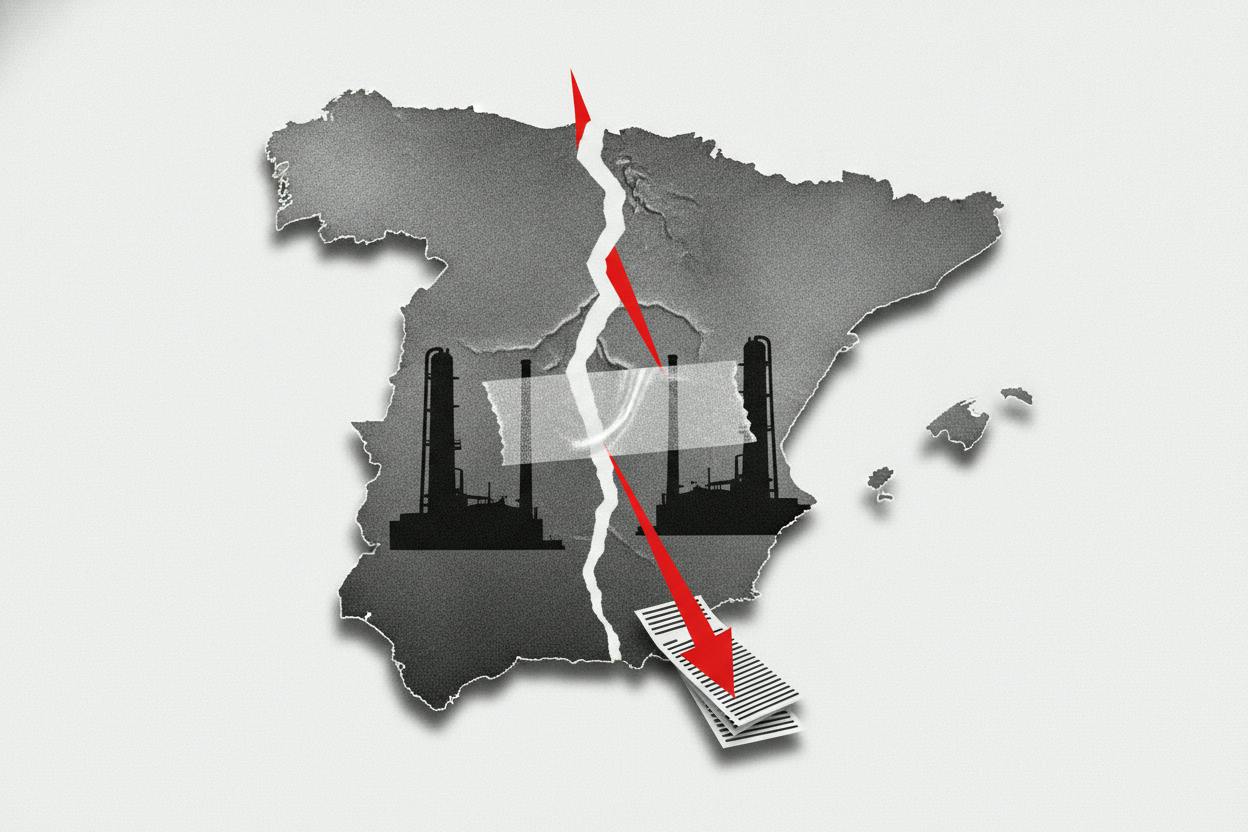
Portugal's Galp Energia and Spain's Moeve have ended discussions to combine parts of their refining and fuel retail businesses, a move that sent Galp shares down 7.5% even as the company reported a sharp jump in quarterly profit.
The two companies had signed a non-binding agreement in January to explore two joint ventures: one linking Galp's Sines refinery with Moeve's Huelva and Algeciras sites, and another covering a combined network of roughly 3,500 service stations across Spain and Portugal. But after months of talks, neither side gave a detailed reason for the collapse, though a source familiar with the discussions said energy-market volatility made it difficult to agree on valuations. The source added there is no plan to restart talks soon.
Why the market reacted
The immediate share price drop reflects more than just the loss of a potential deal. Analysts at Royal Bank of Canada noted that investors had begun to view the tie-up as a stepping stone that could make Galp an easier acquisition target down the road. When that 'next step' disappears, the takeover premium that had been built into the stock tends to fade.
That dynamic helps explain why Galp's shares fell even as the company reported a 68% jump in third-quarter adjusted net profit, helped by unusually strong refining margins and higher oil prices. In other words, the market was not reacting to the company's underlying earnings but to the reduced likelihood of a near-term corporate transaction.
This is a common pattern in energy and other sectors: when a deal is seen as a possible precursor to a larger acquisition, the stock often trades at a premium to its peers. If that optionality disappears, the valuation gap can compress quickly, regardless of how healthy the core business looks.
What it means for investors
For everyday investors, the key takeaway is that Galp's share price may now be more sensitive to the cyclical swings of the refining business. Refining margins can move sharply when fuel demand, refinery outages, or crude oil prices change. With the deal catalyst gone, the stock is likely to trade more on those fundamentals than on takeover expectations.
Investors will also be watching how quickly refining conditions cool from their recent strength. The 68% profit jump was flattered by an unusually favourable environment, and such conditions rarely last indefinitely. Beyond refining, Galp's growth projects in Brazil and its renewable energy portfolio will become more important in determining the company's long-term value.
The collapse also highlights broader uncertainty in the energy sector. Oil prices have been volatile, and that volatility can make it hard for companies to agree on what assets are worth. For Moeve, the end of talks may shift focus back to its own low-carbon transition strategy, which it has said it will continue.
Looking ahead
For Galp, the question now is whether another buyer or partner emerges. The company's refining assets and service station network are still attractive, but the failed talks may make potential suitors cautious. In the meantime, investors will likely pay closer attention to quarterly earnings and operational updates.
The broader lesson for investors is that deal-driven premiums can be fragile. When a potential transaction falls through, the stock can drop even if the underlying business is performing well. That is why it is important to understand what part of a company's valuation is based on fundamentals and what part is based on market speculation about future deals.
As always, no one can predict whether talks will resume or a new buyer will appear. But for now, Galp's shares are trading on the company's own merits, and those merits will be tested by the next round of refining margins and project milestones.