Gap Inc. trimmed its sales and profit outlook for the current fiscal year after holiday-season demand got off to a slower start than the company anticipated, and it announced a leadership change aimed at reviving its struggling Athleta brand.
The San Francisco-based retailer, which operates the Gap, Old Navy, Banana Republic, and Athleta chains, said the quarter began slowly before improving in recent weeks. That pattern echoes a broader split in the retail sector: off-price chains like TJX Companies are benefiting from shoppers hunting for deals, while big-box retailer Target has flagged continued weakness in apparel.
What the numbers show
Gap now expects fiscal 2026 sales to be roughly flat, down from its previous forecast of 1% to 1.5% growth. That revised guidance also falls short of the 1.4% growth analysts had been expecting, according to LSEG, a financial data provider.
The company also narrowed and lowered its adjusted earnings outlook to a range of $2.29 to $2.34 per share. For the crucial holiday quarter, Gap guided sales to be flat to down 1% versus analysts' expectations for a 2.6% increase.
These are meaningful revisions for a retailer that had been showing signs of recovery after several years of uneven performance. Investors watch holiday guidance closely because the period typically accounts for a large share of annual sales and profits.
Athleta: the key swing factor
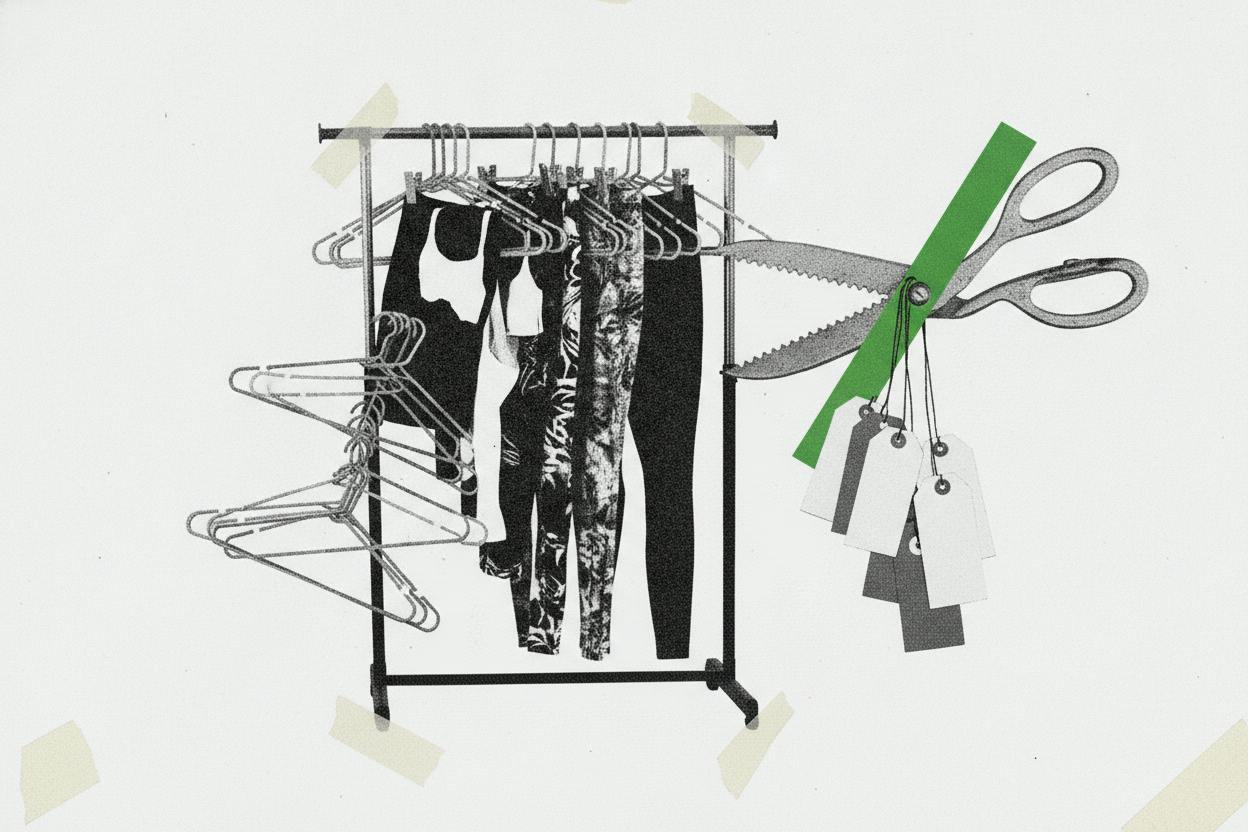
A central piece of the story is Athleta, Gap's smallest banner by revenue. The activewear brand has been struggling with excess inventory after comparable sales—sales at stores open at least a year—fell 15% in the third quarter.
To address the problems, Gap has tapped Ashley Kechter, a former executive, to lead Athleta's turnaround. Kechter previously held leadership roles at the company, and her return signals that Gap is looking for someone familiar with its operations to fix the brand's product mix and inventory issues.
The challenges at Athleta are part of a larger pattern. Earlier this year, Gap made management changes at Old Navy, its largest banner, after similar struggles. The underlying lesson: even when shoppers are still spending, the wrong product mix can force retailers into heavy discounting that erodes profits.
What it means for investors
Gap's flat-to-down holiday sales guide hints at heavier markdowns. When demand starts slow and inventory is high, retailers typically clear racks with promotions rather than wait for shoppers to show up. That inventory-clearance path can pressure gross margin, even if sales improve late in the quarter.
That's why Gap's profit outlook matters as much as its revenue guide. The trimmed adjusted EPS range of $2.29 to $2.34 reflects the risk that Athleta's excess product keeps discounting elevated. For investors, the key question is whether Gap can clear that inventory without destroying profitability.
The flip side is that a more promotional backdrop can be a relative tailwind for off-price chains like TJX Companies, which tend to attract shoppers when branded apparel is widely marked down. This dynamic is part of a broader retail environment where consumer spending remains resilient but increasingly selective.
For everyday investors, the takeaway is that retail earnings are often a tale of two halves: companies that get their product mix right can thrive, while those that miss can see profits vanish in a sea of discounts. Gap's revised guidance is a reminder that even well-known brands are not immune to the whims of holiday shoppers.
As the holiday season unfolds, investors will be watching whether Gap's late-quarter improvement continues and whether Athleta's turnaround gains traction. The company's ability to manage inventory and protect margins will be critical to meeting its revised targets.