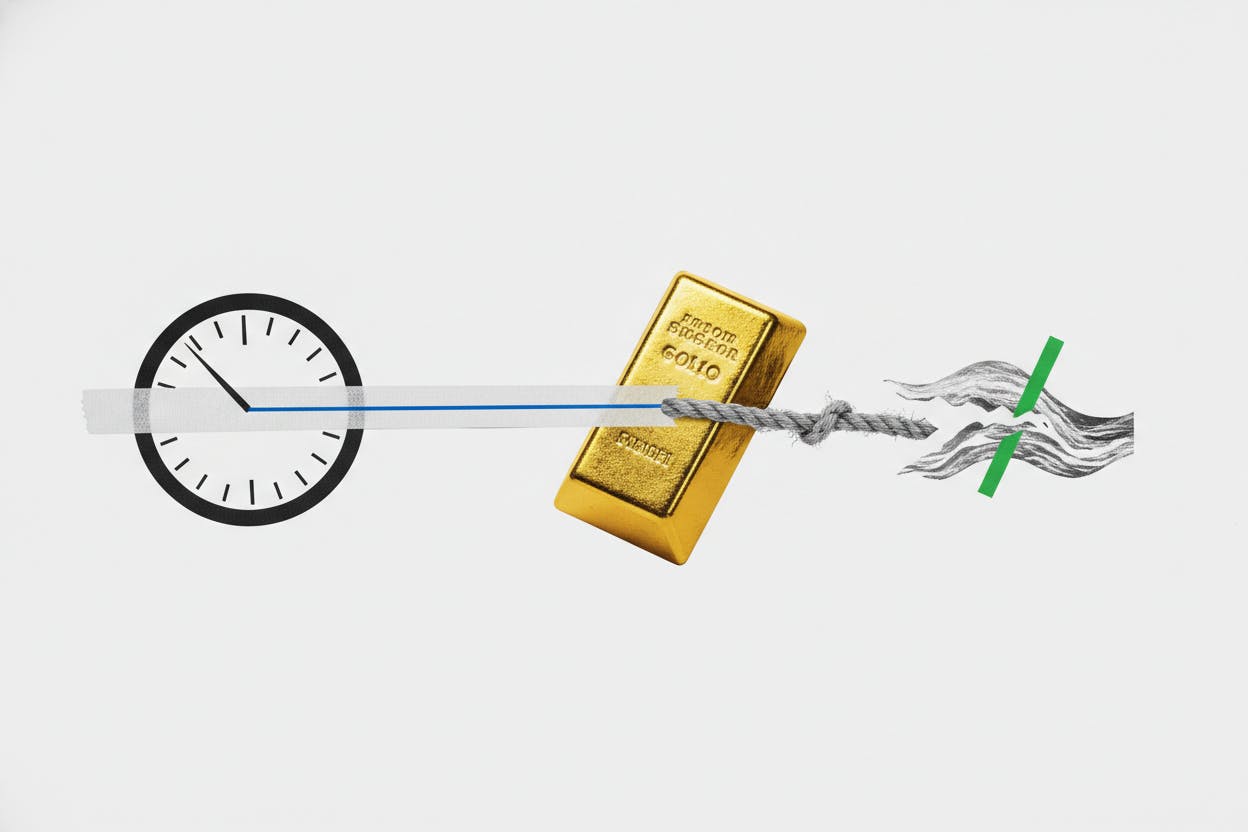
Gold prices edged up to a two-week high on Tuesday, as investors weighed escalating Middle East tensions against the prospect that the Federal Reserve will keep interest rates higher for longer. The move reflects a classic tug-of-war in the gold market: safe-haven buying versus the headwind of elevated borrowing costs.
What's driving gold higher?
The immediate catalyst for gold's bounce is renewed geopolitical risk in the Middle East. Shipping disruptions in the Red Sea have intensified, stoking fears of supply chain disruptions and broader regional instability. Historically, gold tends to benefit from such uncertainty, as investors seek a store of value outside of currencies or equities.
This dynamic is also visible in other markets. Oil prices have climbed to a five-week high on similar concerns, and gold miners have rallied as the metal's price lifts their profit outlook.
The Fed factor: higher for longer
Offsetting some of that safe-haven demand is the growing expectation that the Federal Reserve will keep interest rates elevated for an extended period. Gold pays no interest or dividends, so when yields on bonds and other safe assets rise, the opportunity cost of holding bullion increases. That typically weighs on gold prices.
A recent Reuters poll showed that most economists expect the Fed to hold rates steady for the rest of 2026. However, a growing number of respondents now see a rate hike this year as a real possibility — a notable shift from just a month ago. That hawkish tilt has kept a lid on gold's gains, even as geopolitical risks mount.
The U.S. dollar has also held near a one-week high, adding further pressure on gold. A stronger dollar makes gold more expensive for buyers using other currencies, which can dampen demand.
What it means for everyday investors
For ordinary investors, gold's recent move is a reminder of how two powerful forces — geopolitics and monetary policy — can pull the metal in opposite directions. When tensions flare, gold often shines as a hedge. But when the Fed signals it will keep rates high, the metal's appeal fades relative to yield-bearing assets like Treasury bonds.
Investors should watch for two key signals in the weeks ahead. First, any escalation in Middle East tensions could push gold higher, as it did in the recent surge in gold miners. Second, the Fed's next policy meeting and any commentary from officials will be critical. If the central bank signals a pause or a pivot, gold could rally further. If it leans hawkish, the metal may struggle to hold its gains.
Gold is often viewed as a portfolio diversifier and a hedge against inflation and uncertainty. But it's not without risk. Prices can be volatile, and the metal's performance depends heavily on the interest rate environment and global risk appetite.
The broader picture
Gold's two-week high is a microcosm of the current market environment: a world where geopolitical shocks compete with central bank policy for investor attention. While the Middle East situation remains fluid, the Fed's path is equally uncertain. For now, gold is caught in the middle, and its next move will likely depend on which force wins out.
Investors with exposure to gold — whether through bullion, ETFs, or mining stocks — should stay alert to both developments. As always, diversification and a long-term perspective remain key.



