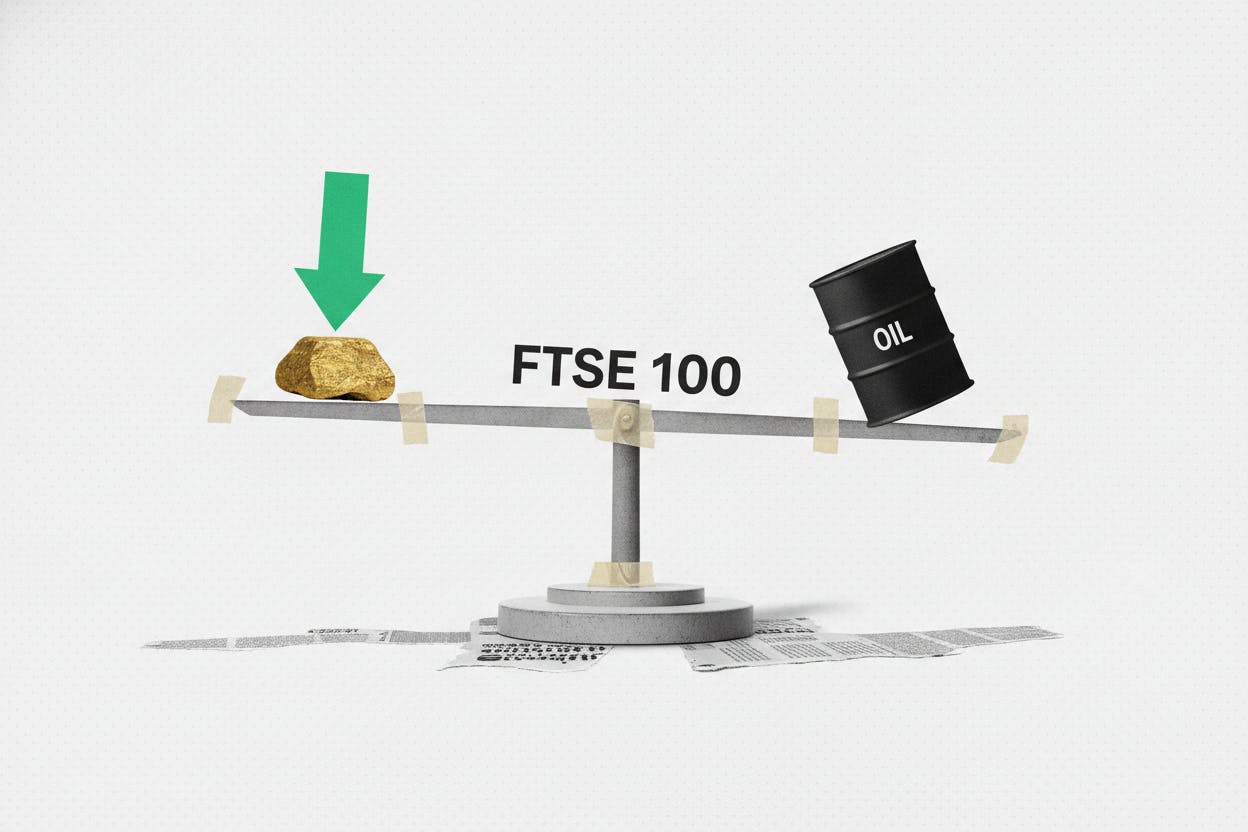
London's blue-chip index extended its winning streak on Friday, closing up 0.3% as a surge in gold prices powered mining stocks higher, more than offsetting a slide in oil majors. The FTSE 100's commodity-heavy composition meant that the day's moves were largely a tale of two metals: gold shining bright, crude fading.
Gold's Glow Lifts Miners
Gold prices climbed, and that translated directly into gains for the UK-listed miners that dig it out of the ground. Shares of Hochschild Mining, Fresnillo, and Endeavour Mining all rose between 4% and 6% on the day. These companies' profits are closely tied to the price of the precious metal, so when bullion rallies, investors tend to bid up their shares.
For everyday investors, this is a reminder of how directly commodity prices can move the stocks of producers. A miner's revenue is essentially the amount of metal it sells times the price it fetches. So a jump in gold can quickly boost earnings expectations, even if the company's operations haven't changed at all.
Oil Stocks Slip as Hormuz Tensions Ease
On the other side of the ledger, oil stocks dragged. Shell fell 1.1% and BP dropped 0.5% as crude prices retreated. The trigger was growing optimism that tensions around the Strait of Hormuz—a critical chokepoint for global oil shipments—were cooling. When the risk of supply disruption fades, oil prices tend to soften, and that hits the share prices of the big producers.
This dynamic is a classic example of geopolitical risk premium. When investors fear a conflict could cut off oil supplies, they push crude prices higher. When those fears ease, the premium deflates. For holders of oil majors, that means their investments can be as much about geopolitics as about the underlying business of pumping and refining.
What It Means for Investors
Friday's session underscores a key feature of the FTSE 100: it's heavily weighted toward natural resources. That gives the index a different flavor from, say, the S&P 500, which is dominated by technology and consumer names. When gold and oil move in opposite directions, as they did on Friday, the index can end up roughly flat even as individual sectors swing sharply.
For investors, this highlights the importance of diversification. If you own a broad UK index fund, you're effectively making a bet on commodity prices, whether you realize it or not. That can be a good thing when metals are hot, but it also means your portfolio may be more sensitive to global events—like a flare-up in the Middle East or a shift in central bank policy—than you might expect.
Gold's rise is also worth watching for what it says about investor sentiment. The metal is often seen as a safe haven, and its strength can signal caution about the broader economic outlook. But it can also simply reflect demand from central banks or jewelry buyers. Either way, the miners' gains show how a single commodity can ripple through an entire index.
Looking ahead, investors will be keeping an eye on whether gold's momentum continues and whether oil prices stabilize. Any further news on the Strait of Hormuz could quickly reverse Friday's moves. For now, the FTSE's winning streak remains intact, but it's riding on the back of a metal that can be as volatile as the geopolitics that drive it.
For more on how gold miners are reacting to global data, check out our earlier piece on weak US jobs data lifting gold miners. And for a look at how oil prices are affecting other markets, see oil prices jumping but Suncor slipping.