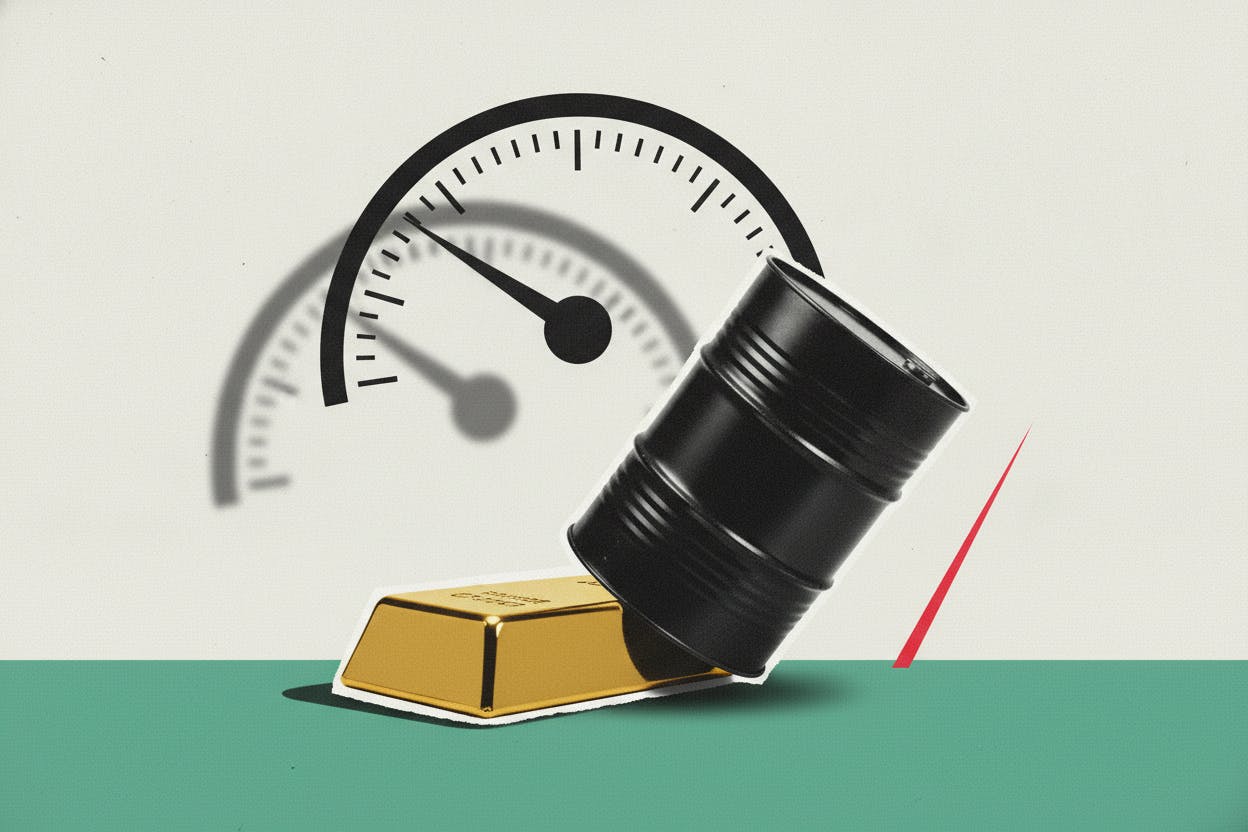
Gold prices rebounded on Friday, recovering from a midweek dip, as a sharp pullback in oil prices and anticipation of next week's Federal Reserve rate decision drove trading. Spot gold rose 0.6% to approximately $4,073 an ounce, while Brent crude slid more than 4% after a sudden spike tied to renewed Red Sea shipping attacks.
Oil's retreat eases inflation fears
The drop in oil prices was a key factor supporting gold. Brent crude's decline followed a volatile session where prices surged on concerns about supply disruptions. Higher energy costs can keep inflation worries alive, which tends to push interest rates higher and make non-yielding assets like gold less attractive. Friday's pullback in oil helped reverse that pressure.
This relationship between oil and gold is closely watched by investors. When crude prices fall, it can reduce the likelihood of sustained inflation, which in turn supports gold as a store of value. The recent spike in oil had raised fears that central banks might need to keep rates elevated for longer, but Friday's retreat offered some relief.
Fed decision in focus
The bigger driver for gold remains the path of U.S. interest rates. Investors are largely expecting the Federal Reserve to hold rates steady at its meeting next week, but the focus will be on any signals about future moves. Markets are pricing in a high probability of no change, but the tone of the Fed's statement and Chair Jerome Powell's press conference could shift expectations.
Gold is sensitive to interest rates because it offers no yield. When rates are high, investors can earn income from bonds or savings accounts, making gold less appealing. Conversely, when rates are expected to fall, gold often gains as the opportunity cost of holding it declines.
This week's data on inflation and employment has done little to change the outlook. The Fed has emphasized it needs more evidence that inflation is sustainably moving toward its 2% target before cutting rates. Next week's decision will be parsed for any hints about the timing of potential cuts later this year.
What it means for investors
For everyday investors, the gold rebound and oil pullback highlight how interconnected markets are. A drop in oil can ease inflation fears, which supports gold and other assets that benefit from lower rate expectations. But the Fed's decision remains the central event.
Investors should watch for any shift in the Fed's language. If policymakers signal they are closer to cutting rates, gold could rally further. If they push back against rate cuts, gold might give back its gains. The oil market also remains volatile, with geopolitical risks from the Red Sea and other regions keeping prices elevated compared to earlier this year.
Gold has been a popular hedge against uncertainty, and its recent moves reflect the tug-of-war between inflation concerns and rate expectations. For those with exposure to gold or gold-related investments, the next week could be pivotal.
Broader market implications are also worth noting. Lower oil prices can benefit consumers and businesses by reducing input costs, which could support corporate profits. But if the Fed stays hawkish, that could weigh on stocks and other risk assets. The interplay between these factors will be a key theme in the weeks ahead.
As always, investors should focus on their long-term goals and not overreact to short-term market moves. The gold and oil markets are notoriously volatile, and next week's Fed decision is just one of many factors that will shape the outlook for both.