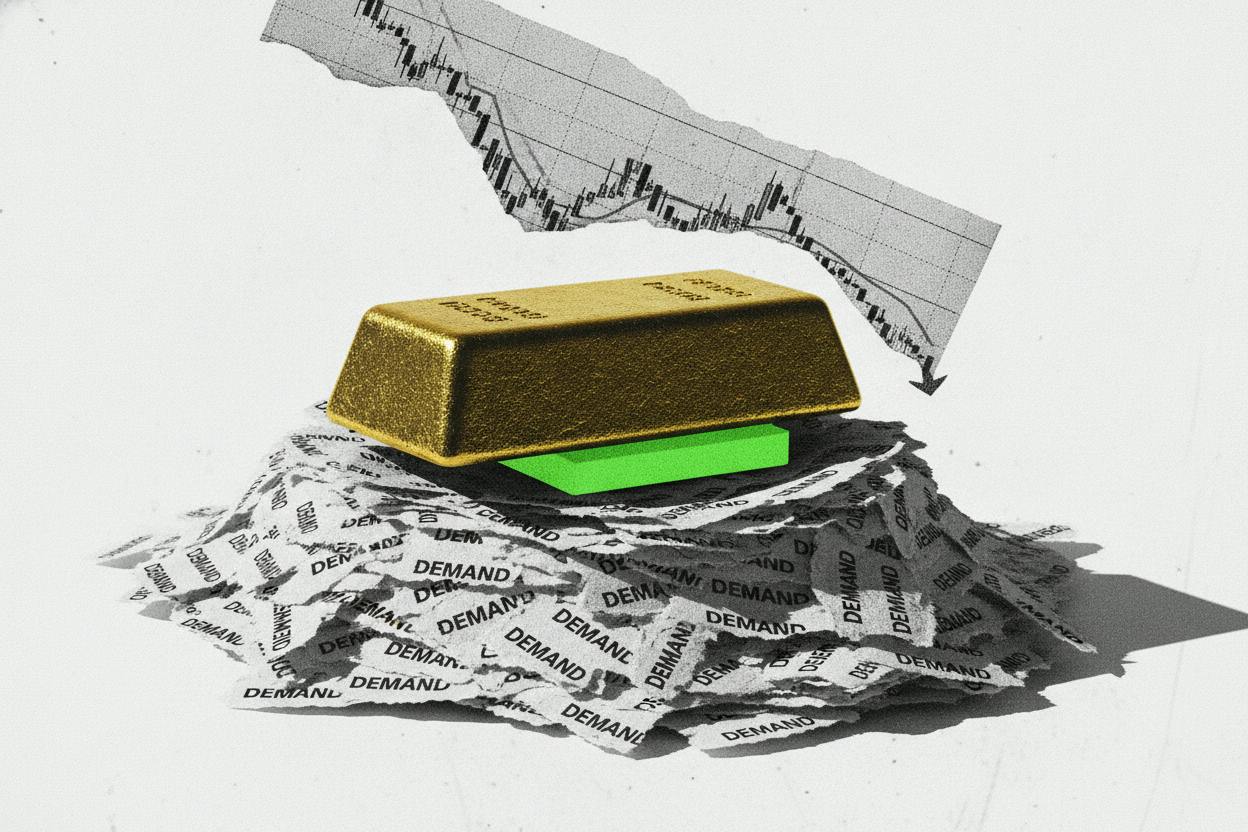
Gold is fighting to hold the $4,000-an-ounce line after dipping below it late last month and then rebounding back above it. The metal's recent swings are drawing attention because they look less like a classic “inflation hedge” trade and more like a cousin of broader risk markets, according to a column by Clyde Russell for Reuters Open Interest.
When stocks wobble, some investors sell whatever is liquid to raise cash, and gold can get dragged down in that first wave even if nothing has changed about the metal itself. That dynamic has been on display in recent weeks, as equity volatility has spilled into the gold market.
What's driving the price action?
The key point is that gold's latest moves are being pulled in two directions. On one side, speculative, fast-money trading has made gold more sensitive to equity market sentiment. On the other, demand from longer-term buyers has stayed firm when prices cool.
World Gold Council data show central banks bought 321.2 tonnes in the latest reported period, a sign that official-sector demand remains a steady pillar. Exchange-traded funds (ETFs) and jewelry buyers have also continued to add exposure, providing a buffer against sharp sell-offs.
This mix of influences means gold is not behaving like the safe-haven asset many investors expect. Instead, it is acting more like a risk asset that can be sold in a broad market downturn, even while its fundamental support remains intact.
Why $4,000 matters
The $4,000 level has become a psychological marker for investors. Crossing below it can trigger technical selling, while holding above it can attract buyers who see it as a support level. The fact that gold has rebounded above it suggests there is enough demand to absorb selling pressure, at least for now.
For everyday investors, the takeaway is that gold's price is being influenced by two very different forces. Short-term traders may push it around based on stock market moves, but longer-term buyers are providing a floor. That divergence can create volatility, but it also means that a dip below $4,000 is not necessarily a sign of a fundamental shift.
What it means for investors
For those holding gold as part of a diversified portfolio, the recent swings are a reminder that gold does not always move in the opposite direction of stocks. In a liquidity crunch, even traditional safe havens can be sold. But the steady demand from central banks and other institutional buyers suggests that the metal's long-term support remains in place.
Investors should also watch how gold behaves relative to other metals. Copper, for example, has been lifted by election calm and a weaker dollar, as seen in recent metals market moves. If risk appetite improves broadly, gold could benefit as well, but if equities sell off again, gold may face renewed pressure.
The broader backdrop also includes a mixed picture for industrial metals. Iron ore has steadied as China's hot metal output holds, easing some demand fears. Meanwhile, copper has lifted metals markets even as oil dropped on Iran talks. These dynamics show that commodity prices are being driven by a complex mix of supply, demand, and macro sentiment.
For gold specifically, the next test will be whether it can hold above $4,000 in the face of any further equity market turbulence. If it does, that would confirm that the floor is real. If it breaks below again, it could signal that the risk-asset dynamic is dominating, at least in the short term.
Ultimately, gold's role in a portfolio has not changed. It remains a store of value and a hedge against uncertainty. But investors should be aware that its price can be volatile in the short run, and that a dip below a round number like $4,000 is not necessarily a reason to panic.