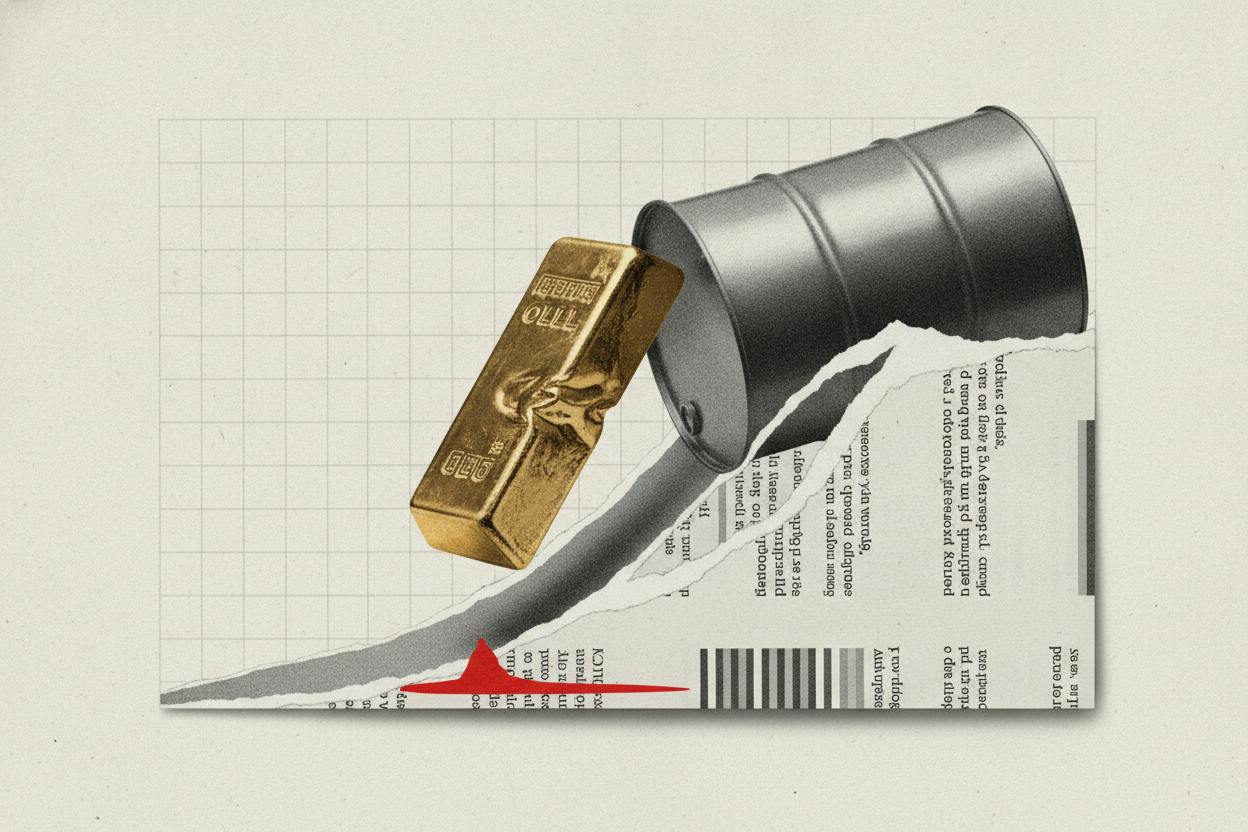
Oil prices climbed above $110 a barrel on Monday, and that move rippled through other markets. Gold slipped as traders weighed the implications of higher energy costs and what they might mean for central bank policy.
Brent crude, the international benchmark, crossed the $110 threshold, a level not seen in about five months. The rise comes amid ongoing supply concerns and adds another layer of complexity to the global inflation picture.
Why oil matters for gold
Gold and oil often move in opposite directions, and Monday's trading was a clear example. The reason comes down to inflation and interest rates.
Higher oil prices tend to push up inflation expectations because energy costs feed into everything from shipping and manufacturing to household heating and fuel bills. When inflation expectations rise, markets often assume that central banks will need to keep interest rates higher for longer to cool price pressures.
That scenario tends to be a headwind for gold. Gold doesn't pay interest or dividends, so when yields on bonds and other safer assets rise, the opportunity cost of holding gold increases. In other words, investors may prefer assets that generate income when rates are high.
Higher interest rates also tend to strengthen the US dollar, and since gold is priced in dollars, a stronger dollar makes the metal more expensive for buyers using other currencies. That can further dampen demand.
All eyes on the Federal Reserve
The immediate focus for investors is the Federal Reserve's policy meeting scheduled for October 27-28. The central bank is widely expected to discuss its next steps on interest rates, and any signals about the pace of future hikes will move markets.
If the Fed sounds hawkish, meaning it signals more rate increases ahead, that could put additional pressure on gold. Conversely, if policymakers hint at a pause or a slower path, gold could find some support.
The oil price jump adds another variable to the Fed's calculus. While the central bank typically focuses on core inflation, which excludes food and energy, sustained high energy costs can eventually feed into broader price pressures. That could make the Fed's job harder.
Investors are also keeping an eye on other data points, including inflation reports and consumer confidence figures. Recent surveys have shown that inflation expectations are climbing, which reinforces the market's sensitivity to energy prices.
What it means for investors
For everyday investors, the relationship between oil, gold, and interest rates is a reminder that markets are interconnected. A move in one commodity can have knock-on effects across asset classes.
If you hold gold or gold-related investments, it's worth understanding that the metal is sensitive to real interest rates, which are bond yields adjusted for inflation. When real yields rise, gold often struggles. When they fall, gold tends to shine.
Oil's rise also has broader implications. Higher energy costs can squeeze corporate profit margins, particularly for industries that rely heavily on transportation or raw materials. That could show up in earnings reports and stock prices.
For those with diversified portfolios, the current environment underscores the importance of balancing assets that respond differently to inflation and rate changes. While gold is often seen as an inflation hedge, its performance in a rising-rate environment can be mixed.
As always, the key is to stay informed and avoid making impulsive moves based on short-term price swings. The Fed's meeting later this month will likely provide more clarity on the direction of rates, and that will shape how both oil and gold trade in the weeks ahead.
In the meantime, traders will be watching oil inventories, geopolitical developments, and any comments from Fed officials for hints about the central bank's thinking.
For now, the message from the markets is clear: oil is up, gold is down, and everyone is waiting to see what the Fed does next.