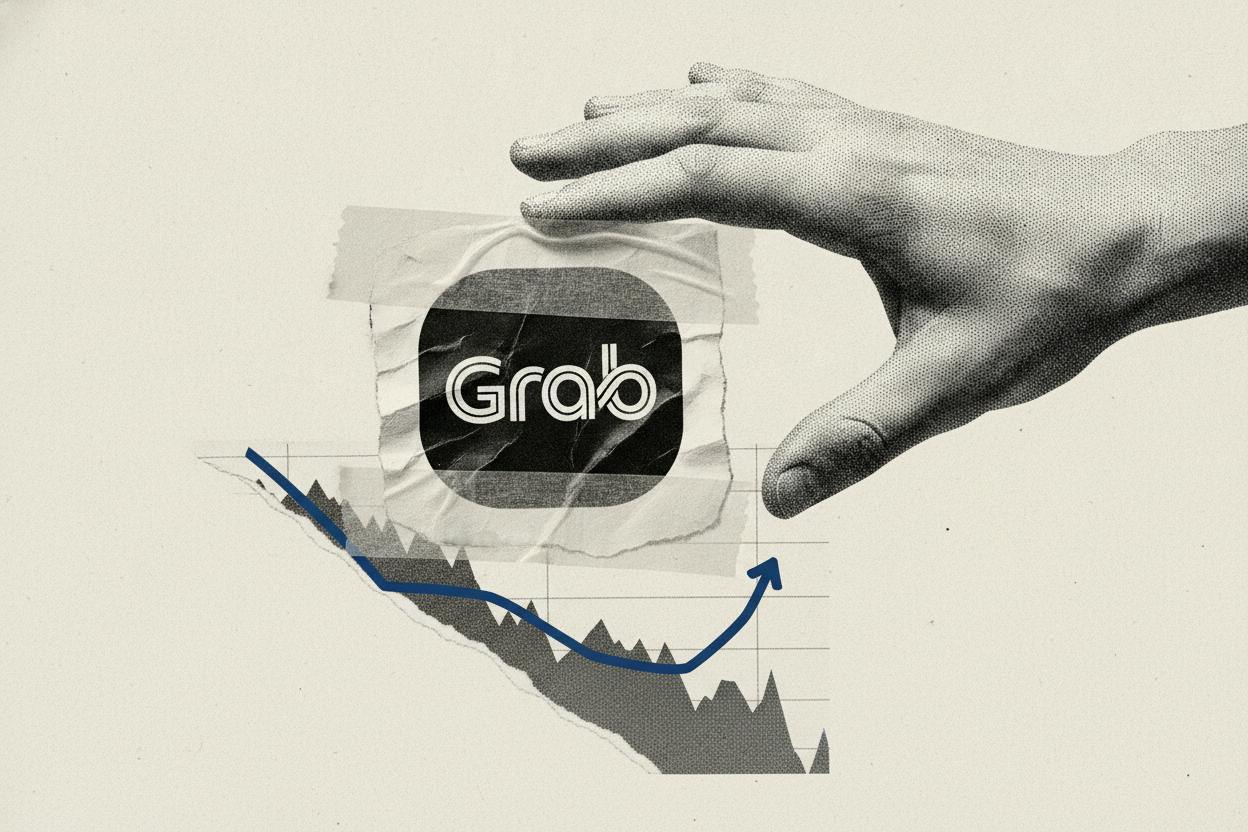
Grab Holdings, the Southeast Asian ride-hailing and delivery giant, is trying to reassure investors after its shares tumbled to a more than three-year low. Chief executive Anthony Tan personally bought $30 million worth of stock, and the company unveiled a share repurchase program worth roughly $900 million over the next 12 months.
The moves come after Grab's shares fell about 50% over the past year, recently touching $2.74. The latest drop followed Grab's agreement to acquire Atome Financial, a buy-now-pay-later (BNPL) firm, in a deal that could value the target at up to $4.5 billion. Investors have questioned the price and the execution risks of expanding into a competitive and often unprofitable sector.
Why the stock has been under pressure
Grab operates across several Southeast Asian markets, offering ride-hailing, food delivery, and digital payments. The company has been working to turn a profit, but its share price has been volatile as investors weigh growth against rising costs and competition. The Atome deal adds a BNPL business, which lets consumers pay for purchases in installments, often with interest or fees. While BNPL can drive user engagement, it also carries credit risk and has faced regulatory scrutiny in some regions.
The selloff reflects broader concerns about Grab's ability to integrate Atome and generate returns from the acquisition. Analysts often point out that deals in new business lines can distract management and take time to deliver value. The company's response—insider buying and a buyback—is a classic signal that management believes the stock is undervalued.
What insider buying and buybacks signal
When executives buy shares with their own money, it can be seen as a vote of confidence. Anthony Tan's $30 million purchase is a significant personal investment, and president Alex Hungate also bought stock, though the brief doesn't specify the amount. Such moves often reassure investors that those closest to the business see long-term value.
Share buybacks, where a company repurchases its own shares, can also support the stock price by reducing the number of shares in circulation and signaling that management thinks the shares are cheap. Grab's plan to spend about $900 million over the next year is a substantial commitment, roughly equal to a meaningful portion of its market value.
What it means for everyday investors
For ordinary investors, insider buying and buybacks are not guarantees of a rebound. They are signals, not certainties. The stock could still fall if the Atome deal fails to deliver or if the broader market turns against growth stocks. But these actions suggest that management is willing to put money where its mouth is, which can be a positive sign.
Investors should also consider the bigger picture. Grab is a high-growth company in a region with a large, young population and rising internet usage. But it faces intense competition from rivals like GoTo and Sea Limited, and profitability has been elusive. The Atome acquisition adds another layer of complexity.
If you own Grab shares, the buyback and insider purchases may provide some comfort, but they don't change the fundamental risks. If you're considering buying, it's worth watching how the Atome integration progresses and whether the company can show improving financials in the coming quarters.
For context, other companies have used similar tactics during rough patches. For instance, a turnaround story like Everest Group can attract attention when insiders act. And in the broader market, consumer spending trends can influence how growth stocks perform.
Grab's next earnings report will be closely watched for signs that the Atome deal is paying off and that the buyback is being executed. Until then, the stock's direction may depend on market sentiment and the company's ability to reassure investors that it can manage its expansion without diluting shareholder value.