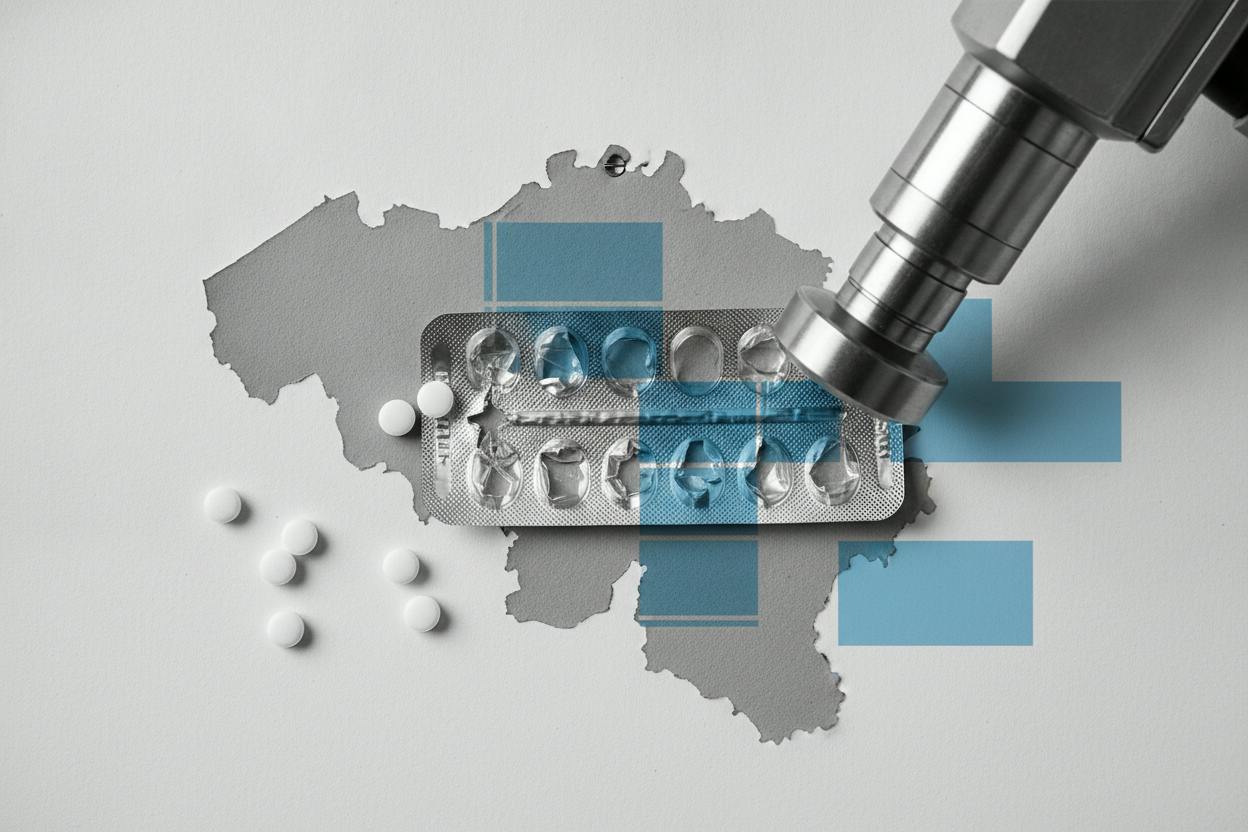
Drugmaker GSK has announced that up to 1,217 jobs in Belgium could be affected as part of a broader cost-cutting program. The company says it will use more automation and digital tools to reshape how it runs research, manufacturing support, and back-office work at its sites in Rixensart, Wavre, and Gembloux. The move is part of a three-year effort to save £1.9 billion.
The announcement is the first clear sign of CEO Luke Miels' cost-cutting drive, which was launched in July. It comes as investors look ahead to a "patent cliff" for GSK's HIV medicine dolutegravir, when cheaper generic rivals could bite into sales. By simplifying operations, GSK hopes to protect its margins and stay competitive.
What's behind the job cuts?
GSK says the changes are about making its Belgian operations more efficient. The company plans to increase the use of automation and digital tools across its sites, which will reshape roles but not affect factory-floor staff. The affected positions are likely to be in research support, manufacturing support, and administrative functions.
Belgium is a key hub for GSK, with its vaccine and biologics manufacturing playing a significant role in the company's global supply chain. The sites in Rixensart, Wavre, and Gembloux are central to that work. However, the company is now looking to streamline how these sites operate, which will inevitably lead to job losses.
This is not the first time GSK has cut jobs in Belgium. In recent years, the company has made similar moves to reduce costs and improve efficiency. But this latest round is part of a larger, company-wide effort to save £1.9 billion by 2027.
Why is GSK cutting costs?
The cost-cutting program is driven by several factors. One of the biggest is the upcoming patent cliff for dolutegravir, a key HIV treatment. When a drug loses patent protection, generic competitors can enter the market, often at much lower prices, which can significantly reduce sales. GSK is preparing for that by trimming its cost base.
Another factor is the broader pressure on pharmaceutical companies to keep prices in check while still investing in research and development. By using more automation and digital tools, GSK hopes to do more with less, freeing up resources for its most promising drug candidates.
The company has said it wants to simplify its operations, which means cutting layers of management and consolidating roles. This is a common strategy in the industry, as companies look to become more agile and responsive to market changes.
What does this mean for investors?
For investors, the job cuts are a sign that GSK is serious about controlling costs. In the short term, this could help support the company's profit margins, which is important as it faces the patent cliff. However, job cuts can also be a double-edged sword. If they are too deep, they can hurt morale and lead to a loss of expertise, which could affect the company's long-term innovation.
Investors will be watching to see how GSK manages this transition. The company has said it will try to minimize the impact on employees, but the reality is that some jobs will go. The key question is whether the savings will be enough to offset the expected decline in dolutegravir sales.
GSK is not alone in this. Many pharmaceutical companies are turning to automation and digital tools to cut costs. For example, Kroger is cutting 3,000 corporate jobs as AI reshapes its operations, and Helmerich & Payne is betting on rig automation beyond Exxon. The trend is clear: automation is changing the workforce across industries.
For GSK, the success of this cost-cutting program will be measured in how well it can maintain its pipeline of new drugs while keeping costs down. The company has a strong portfolio, but it needs to deliver on its savings targets to reassure investors.
What's next?
GSK will now begin consultations with employee representatives in Belgium, a process that could take several months. The final number of job cuts may change depending on the outcome of those talks. The company has said it will try to offer redeployment opportunities where possible, but it is clear that some roles will be eliminated.
Investors will be looking for more details on the cost-saving program in the coming months, including how the savings will be achieved and what impact they will have on the company's financial performance. The next earnings report will be a key moment to see if the plan is on track.
For now, the announcement is a reminder that even large, successful companies like GSK are not immune to the pressures of the market. By cutting costs and embracing automation, GSK is trying to position itself for the future, but it comes at a human cost that will be felt by many of its employees in Belgium.