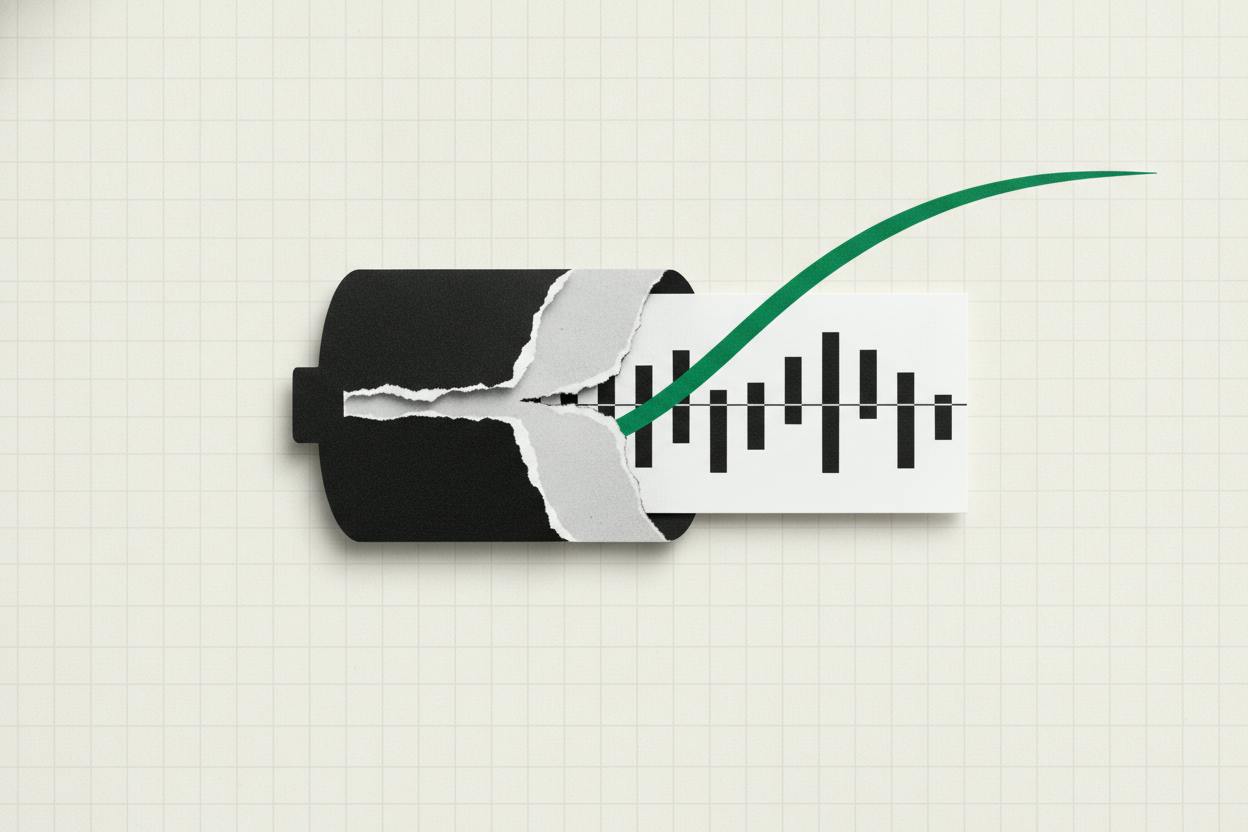
China's Guangzhou Futures Exchange announced on Friday that it will launch lithium hydroxide futures on November 26, with options following on November 27. The new contracts give the battery-metals market a second hedging tool, joining the exchange's existing lithium carbonate futures, which have been trading since July 2023.
Lithium hydroxide and lithium carbonate are both key ingredients in lithium-ion batteries, but they are not interchangeable. Lithium hydroxide is often used in high-nickel cathodes, which offer higher energy density, while lithium carbonate is more common in lower-cost batteries. Their prices can diverge significantly, so having a dedicated futures contract for each allows producers and buyers to hedge more precisely.
How the new contracts are designed
The exchange has set the initial margin at 11%, meaning traders must post 11% of the contract value as collateral to open a position. That is a relatively moderate margin level, designed to make the market accessible while still protecting against default risk. The first-day daily price limit is set at 18%, a wider band than usual, which gives prices room to move without triggering a halt on the opening session.
The first tradable contracts will be for delivery in June through November 2027. That means the market will start with longer-dated contracts rather than near-term ones. This is a deliberate choice: it allows the exchange to build a forward curve that can serve as a reference for future pricing, even before physical trading in the near months develops.
The launch follows a report from Reuters in July that the exchange wanted to add a second lithium contract by the end of the year. The goal is to broaden hedging tools for China's battery supply chain and strengthen the country's influence over regional lithium pricing. China is the world's largest producer and consumer of lithium chemicals, and having a liquid futures market gives it a say in how prices are set globally.
Why this matters for investors
For companies and traders exposed to lithium hydroxide, the new contract is a significant improvement. Until now, many used lithium carbonate futures as a stand-in hedge. That approach, known as a cross-hedge, carries basis risk: if hydroxide and carbonate prices move in different directions, the hedge may not fully offset losses. A dedicated hydroxide futures contract should make hedging more precise.
The addition of options adds another layer of flexibility. Options give the buyer the right, but not the obligation, to buy or sell the underlying futures at a set price. That allows companies to protect against adverse price moves while still benefiting from favorable ones, without having to commit to a full futures position. For investors, this means more tools to manage volatility in a market that has seen sharp swings in recent years.
If trading volume builds, the forward curve could start to be used as a reference price in physical supply contracts. That is how an exchange evolves from a risk-management tool into a benchmark. For everyday investors, this is worth watching because it could affect the pricing of lithium-related stocks and ETFs, as well as the broader electric vehicle supply chain.
The launch also fits into a broader trend of Chinese exchanges expanding their commodity offerings. Earlier this year, for example, China's copper smelters faced the prospect of negative term pricing, a sign of how futures markets can influence physical markets. Similarly, the new lithium contract could help smooth out price discovery in a market that has been volatile.
For now, the key question is whether the contract will attract enough liquidity. New futures markets often struggle in their early months, and the exchange's choice of 2027 delivery dates suggests it is looking to build a long-term curve rather than chase immediate volume. If participation grows, the contract could become a standard hedging tool for the battery industry and a reference point for global lithium prices.
For investors, the launch is a reminder that commodity markets are evolving to meet the needs of the clean-energy transition. Lithium is a critical metal, and having a transparent, liquid futures market can help reduce uncertainty for producers and consumers alike. While no one should expect overnight success, the new contract is a step toward more mature pricing in a sector that will only grow in importance.