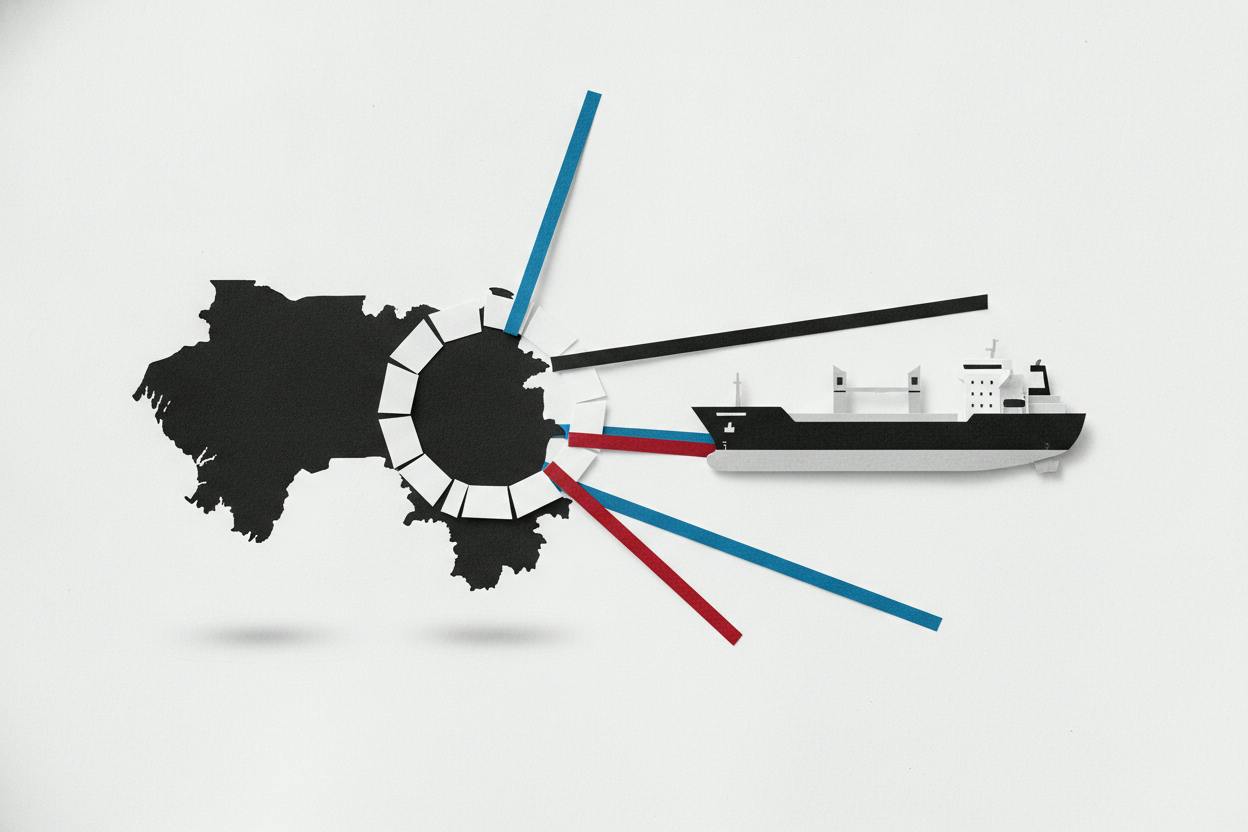
Guinea is moving ahead with plans to build a $1.9 billion deep-water port that would be able to accommodate the world's largest cargo ships, a project tied directly to the country's ambitions around its massive Simandou iron ore deposits. The government says feasibility studies are complete and is now courting a mix of international lenders and investors, including the US International Development Finance Corporation, the World Bank, and other multilateral institutions.
What is the Simandou connection?
Simandou is one of the largest untapped iron ore reserves on the planet, located in southeastern Guinea. For years, development was stalled by legal disputes, infrastructure gaps, and political instability. But recent progress has revived hopes that the region could become a major supplier of high-grade iron ore, which is increasingly sought after by steelmakers looking to reduce emissions.
The port is not just about exporting ore. Guinea's Mines Minister Bouna Sylla said the government wants to use the project to build broader trade infrastructure, not just a one-off terminal for mining companies. That means the port could eventually handle other goods and commodities, helping diversify an economy heavily dependent on mining.
How the financing would work
The government plans to fund construction through a special-purpose vehicle (SPV). An SPV is a separate legal entity created for a single project, which helps isolate financial risk. In this case, the SPV would ring-fence the port's assets and liabilities, making it easier to attract investors who might be wary of Guinea's broader fiscal situation.
By using an SPV, the government can also bring in private capital without putting the entire national budget on the line. This structure is common in large infrastructure projects across Africa and other emerging markets, where governments often lack the upfront cash but want to retain long-term ownership.
Why Capesize ships matter
The port is designed to handle Capesize vessels, which are the largest bulk carriers afloat, typically around 200,000 metric tons. These ships are too big to pass through the Suez Canal and must route around the Cape of Good Hope, but they offer significant economies of scale for transporting commodities like iron ore.
Being able to load Capesize ships directly from Guinea would cut shipping costs per ton, making the country's ore more competitive on global markets. Currently, many West African ports can only handle smaller vessels, forcing miners to transship or use lightering, which adds time and expense.
Global interest and geopolitical angles
The involvement of both US and Chinese institutions highlights the strategic importance of Guinea's mineral wealth. China is the world's largest buyer of iron ore, and its steel industry relies heavily on imports from Australia and Brazil. Securing new sources like Simandou could give Chinese buyers more leverage in price negotiations.
The US, through its development finance arm, is increasingly backing infrastructure projects in Africa as a counterweight to Chinese lending. The World Bank's participation would signal confidence in the project's governance and economic viability, though it also comes with strict environmental and social standards.
What it means for investors
For everyday investors, this is a story about the long-term demand for steel and the raw materials that go into it. Iron ore prices have been volatile in recent years, but the push for greener steel and infrastructure spending in emerging markets could keep demand firm.
If the port gets built, it could lower the cost of bringing Simandou ore to market, potentially benefiting the mining companies involved. However, investors should note that large infrastructure projects in developing countries often face delays, cost overruns, and political risks. The SPV structure helps, but it doesn't eliminate those risks.
For those with exposure to global mining stocks or commodities funds, the progress of this project is worth watching. A successful port could reshape the iron ore trade, while a failure would be a setback for Guinea's economic ambitions.
Broader context
Guinea's port plan comes amid a wave of infrastructure spending across Africa, from innovative financing like blue bonds to large-scale mining and energy projects. The continent is seen as a key frontier for commodities that will power the energy transition, including copper, lithium, and iron ore.
At the same time, global banks are navigating a wave of refinancing, and investors are increasingly selective about where they put money. Multilateral backing can help de-risk projects like this one, but it also means the project will face scrutiny over environmental impact and local benefits.
For now, Guinea is making a strong pitch. The question is whether it can turn a $1.9 billion vision into a working port that delivers on its promise.