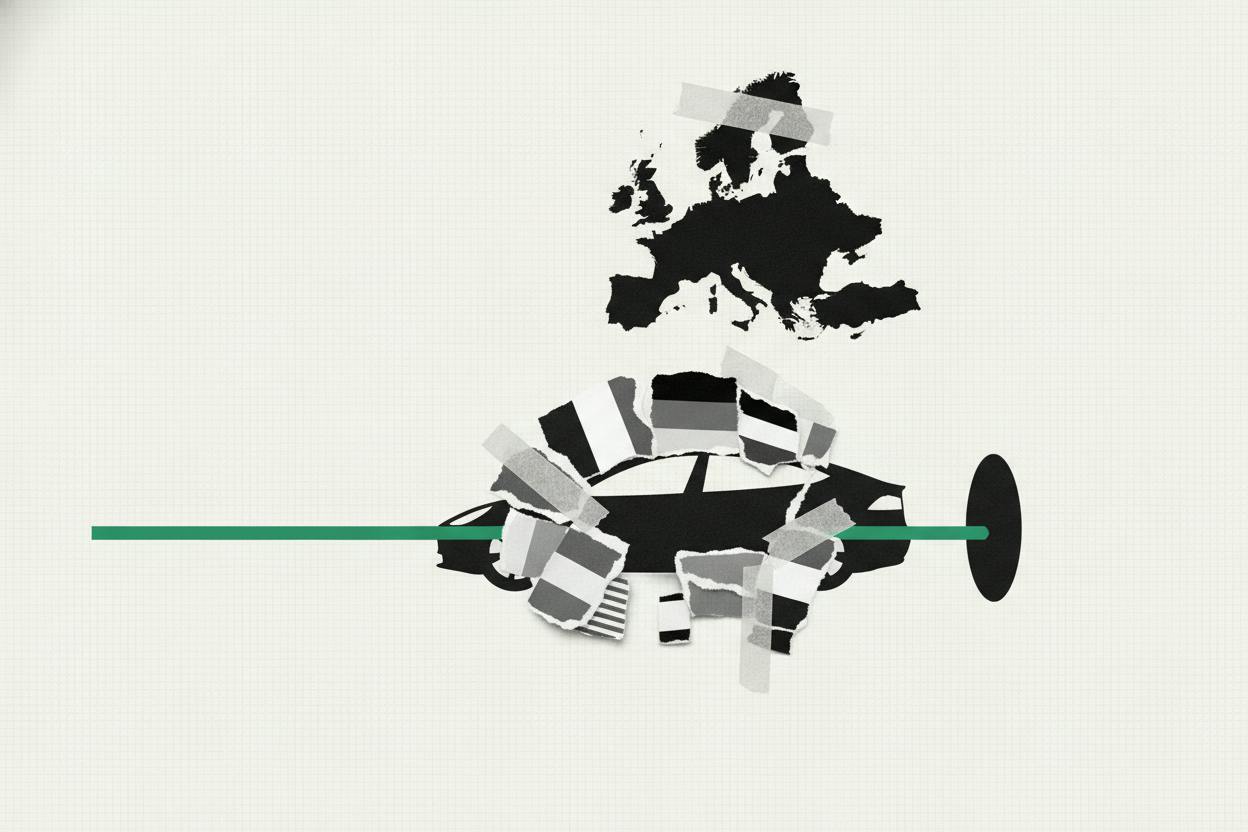
Gulf stock markets delivered a mixed picture on Tuesday as investors weighed the prospect of renewed US-Iran diplomacy against a supply shock that is already hitting energy trade. Qatar's benchmark fell 0.5%, Saudi Arabia's index slipped 0.4%, while Dubai managed a modest 0.2% gain.
The divergence reflects a market trying to price two very different timelines at once: a diplomatic track that may or may not ease tensions, and a physical disruption that is already affecting the flow of liquefied natural gas (LNG) through the Strait of Hormuz, a narrow waterway that remains closed.
What's moving the markets
In Qatar, the drop was led by Qatar National Bank, one of the country's largest lenders, which fell 0.9%. The country is a major LNG exporter, and the closure of the strait directly threatens its ability to ship gas to customers in Asia and Europe. That pressure is weighing on the broader Qatari market.
Saudi Arabia's index slipped 0.4%, with Saudi Arabian Mining Company (often known as Ma'aden) dropping 1.9% and state oil giant Saudi Aramco edging 0.2% lower. The miner's decline may reflect broader risk-off sentiment, while Aramco's small move suggests oil prices are not surging as much as some might expect given the supply disruption.
Dubai, by contrast, managed to rise 0.2%, helped by gains in some financial and property names. The emirate is less directly exposed to energy exports than its neighbours, which may explain its relative resilience.
Two forces pulling investors
The core tension for Gulf markets is that diplomacy and disruption are moving on different tracks. On one hand, renewed talks between the US and Iran raise the possibility of easing tensions and reopening the Strait of Hormuz, which would restore normal trade flows. On the other, the strait remains closed right now, and that is a hard fact that no negotiation has yet changed.
For investors, this creates a tricky environment. Markets hate uncertainty, and the combination of a potential diplomatic breakthrough and an ongoing supply shock makes it hard to price assets with confidence. Energy stocks, in particular, are caught between the prospect of lower risk premiums and the reality of higher shipping costs and disrupted supply.
The Strait of Hormuz is one of the world's most critical energy chokepoints. A significant share of global oil and LNG passes through it, so any closure has immediate implications for energy prices and for the economies that depend on those exports. The fact that it remains shut is a reminder that geopolitical risk can translate directly into market moves.
What it means for everyday investors
For ordinary investors, the key takeaway is that regional markets are not moving in lockstep. The divergence between Qatar, Saudi Arabia and Dubai shows that local factors—such as exposure to LNG or banking—matter as much as the broader geopolitical picture.
If you hold funds or ETFs that track Gulf markets, it's worth understanding that these indices are not a single bet. A fund heavy in Qatari energy names will behave very differently from one focused on Dubai's real estate and finance sector.
The situation also highlights how quickly supply disruptions can affect energy prices. Even as talks continue, the physical reality of a closed strait is already influencing trade flows. Investors should watch for any news about the strait's reopening, as that would likely trigger a sharp repricing in energy stocks and currencies across the region.
For those with broader portfolios, the Gulf story is a reminder that geopolitical events can have outsized effects on specific sectors and regions, even when global markets seem calm. Keeping an eye on energy prices and diplomatic headlines can help you understand why certain holdings might be moving.
As always, it's important to remember that market moves like these are normal reactions to uncertainty. They do not necessarily signal a long-term trend, and they are not a reason to make hasty decisions. A diversified portfolio is designed to weather such volatility.
In the coming days, investors will likely focus on any updates from the US-Iran talks, as well as shipping data that could indicate when the strait might reopen. Until then, expect Gulf markets to remain sensitive to every headline.