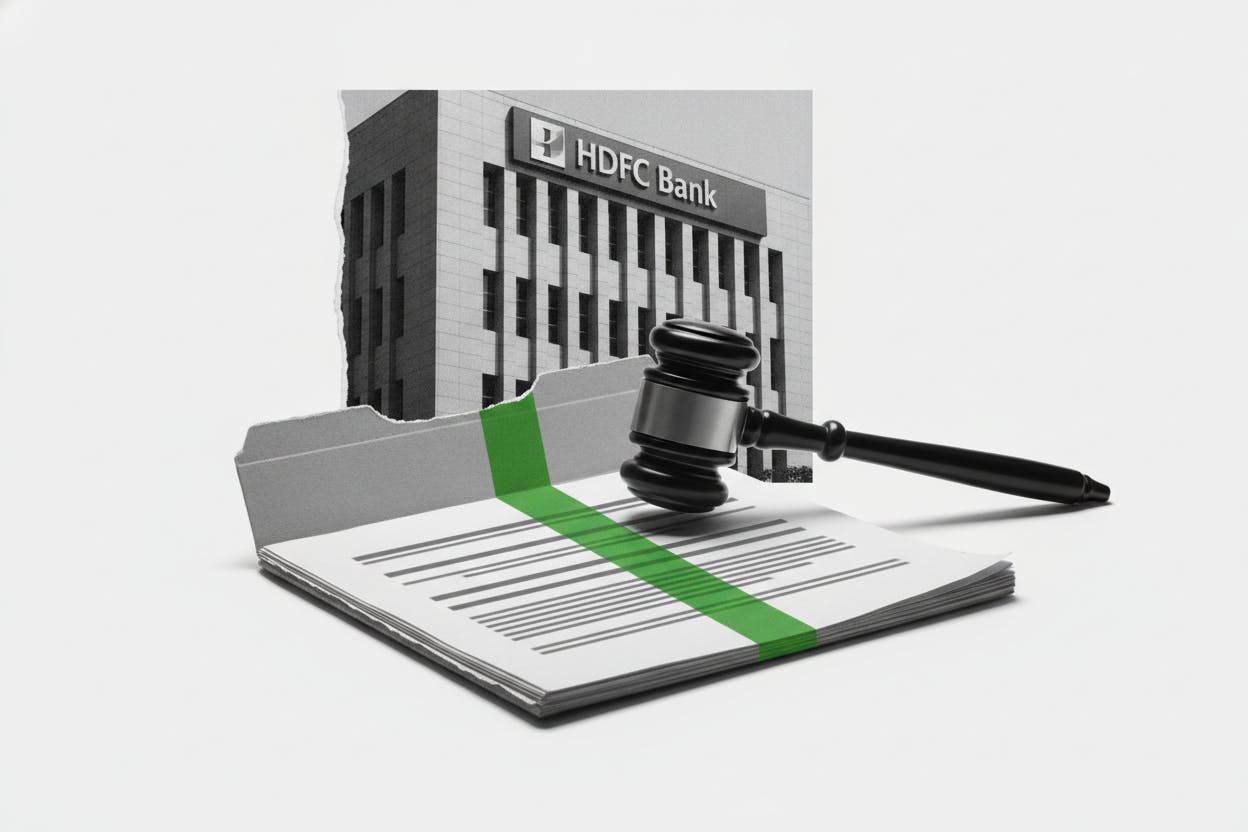
HDFC Bank has announced that an external legal review found no evidence to support the ethical concerns raised by former chairman Atanu Chakraborty when he resigned in March. The development clears the way for India's largest private lender to proceed with its application to the Reserve Bank of India (RBI) to reappoint CEO Sashidhar Jagdishan, whose term expires in October.
Chakraborty's sudden exit had rattled investor confidence, with the bank losing nearly 14% of its market value in the weeks following his resignation, according to Reuters. The RBI issued an unusual public statement to calm investors and depositors, underscoring the gravity of the situation.
What the Review Found
HDFC Bank hired two external law firms—Wilson Sonsini, a US-based firm, and Wadia Ghandy, an Indian firm—to conduct a thorough review. The firms examined board records and interviewed witnesses, but ultimately told stock exchanges they could not substantiate Chakraborty's claims regarding "values and ethics." They also found no evidence that he objected to board decisions related to the so-called "Dubai matter," a dispute involving delayed action after some officials allegedly mis-sold high-risk Additional Tier-1 bank bonds to investors in Dubai.
The report noted that despite repeated requests, Chakraborty did not participate in an interview with the investigators. With the review now closed, Reuters reported that the bank can move forward with its CEO reappointment request, which had been delayed while awaiting the findings.
Why This Matters for Investors
For HDFC Bank shareholders, the key overhang has been the RBI's October deadline for CEO reappointment. Big banks don't just trade on earnings—when leadership and governance are in question, investors often demand a "governance discount," meaning they are willing to pay less for each dollar of profit due to uncertainty about how strategy and regulators will view the firm.
This clean bill of health reduces that uncertainty. The RBI is the gatekeeper for senior roles at Indian lenders, and a smooth approval process for Jagdishan could allow HDFC Bank's valuation to once again track fundamentals like loan growth, profit margins, and credit quality, rather than boardroom headlines.
Investors should note that governance controversies can have lasting effects, as seen in other cases like Lululemon's boardroom fight or Honda's CEO board vote. However, HDFC Bank's proactive legal review and the absence of substantiated claims may help restore confidence.
What to Watch Next
Investors will now focus on the RBI's decision on Jagdishan's reappointment. If approved, the bank can return to normal operations without the distraction of a leadership vacuum. Key metrics to watch include loan growth, net interest margins, and asset quality, which are the true drivers of HDFC Bank's performance.
The broader context also matters: India's banking sector is navigating a period of strong credit demand, but also regulatory scrutiny. The RBI has been tightening norms on everything from risk management to governance, making compliance a critical factor for lenders. HDFC Bank's ability to resolve this issue swiftly could set a positive tone for its future dealings with regulators.
For everyday investors, the takeaway is that governance issues can create short-term volatility, but a thorough, independent review can help clarify the situation. While no personalized advice is offered here, understanding the importance of regulatory approvals and board stability is key when evaluating bank stocks.