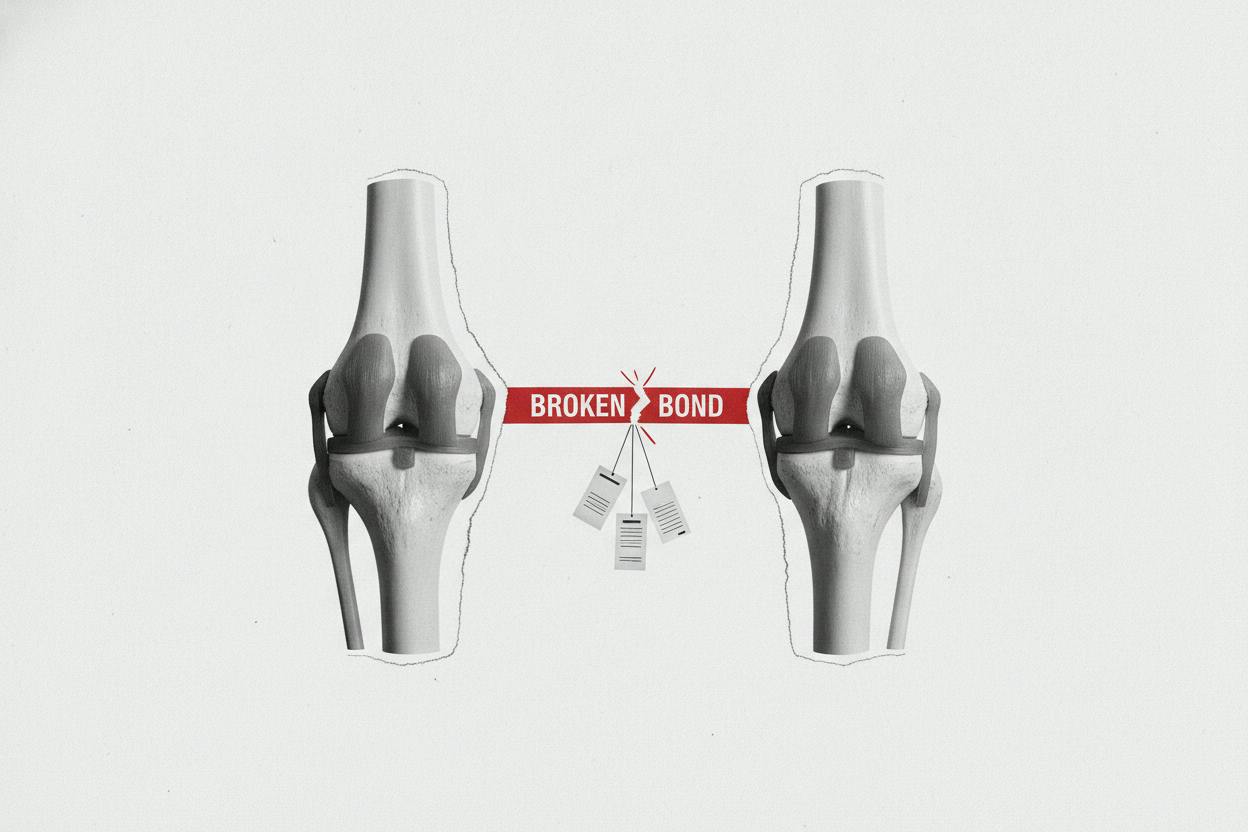
Healthcare stocks took a hit on Friday as two company-specific headlines weighed on the sector. The biggest driver was a report from the Financial Times that Johnson & Johnson's proposed orthopedics tie-up with Smith & Nephew had collapsed. According to the report, the two sides couldn't agree on who would run the combined business, scuttling a deal that investors had been watching closely.
Separately, Bristol-Myers Squibb flagged a patient death in an early-stage drug trial, adding to the negative sentiment. While early-stage trial setbacks are not uncommon in the pharmaceutical industry, they can still spook investors, especially when they involve a drug with significant commercial potential.
What the collapsed deal means
The J&J-Smith & Nephew deal was widely seen as a potential consolidation play in the orthopedics market, which includes products like joint replacements, trauma devices, and spinal implants. A merger would have combined J&J's scale with Smith & Nephew's specialized portfolio, potentially creating cost savings and pricing power in a competitive space.
When such a deal falls apart, investors often reassess the so-called takeover premium that had been baked into the stock price. That premium reflects the expectation that an acquirer would pay a higher price per share. With the deal off the table, those hopes fade, and shares can give back some of their recent gains.
The disagreement over leadership is a classic deal-breaker. In mergers, especially those between two large companies, the question of who runs the combined entity is often as contentious as the financial terms. When both sides have strong existing management teams, a failure to agree on the top job can derail months of negotiations.
Why healthcare stocks are sensitive to such news
Healthcare is a defensive sector, meaning it tends to be less volatile than the broader market because demand for medical products and services is relatively stable regardless of the economy. However, that stability doesn't make it immune to company-specific shocks. A single high-profile deal collapse or a negative clinical trial result can ripple through the sector, especially if it raises questions about growth prospects.
For investors, the key takeaway is that healthcare stocks are not a monolith. The sector includes everything from giant pharmaceutical companies to medical device makers, and each subsector has its own dynamics. Orthopedics, for instance, has been facing pricing pressure and competition from smaller, innovative players. A merger between J&J and Smith & Nephew would have been a major consolidation move, and its failure leaves the competitive landscape largely unchanged.
Bristol-Myers' trial setback, meanwhile, highlights the inherent risk in drug development. Early-stage trials are designed to test safety and dosing, and deaths are rare but not unheard of. When they occur, they can delay development timelines and raise questions about the drug's viability. For a company like Bristol-Myers, which relies on a pipeline of new drugs to offset patent expirations on existing blockbusters, such setbacks are closely watched.
What investors should watch next
Looking ahead, investors will likely focus on whether J&J and Smith & Nephew revisit a deal in some form, or whether other players step in. M&A activity in healthcare has been robust in recent years, driven by companies seeking growth through acquisitions rather than relying solely on organic research and development. If this deal is truly dead, it could open the door for other suitors or for the companies to pursue different strategies.
For Bristol-Myers, the next milestone will be the release of more detailed trial data, which could clarify the severity of the setback. Investors will also be watching for any regulatory actions or changes to the drug's development timeline.
In the broader context, healthcare stocks have been navigating a mixed environment. Interest rates and inflation have influenced valuations across the sector, as they have for the rest of the market. Higher rates tend to pressure growth stocks, including biotech, because future earnings are discounted more heavily. However, healthcare's defensive qualities can also attract investors during periods of market uncertainty.
For everyday investors, the lesson is to remember that single-stock news can move the sector, but it doesn't necessarily change the long-term fundamentals of the industry. Diversification across subsectors and companies can help mitigate the impact of such events.
As the day's trading wrapped up, the healthcare sector's dip served as a reminder that even in a defensive corner of the market, surprises happen. Whether it's a merger that falls apart or a trial that hits a snag, the news cycle can be unforgiving. But for those with a long-term horizon, these short-term swings are often just noise.