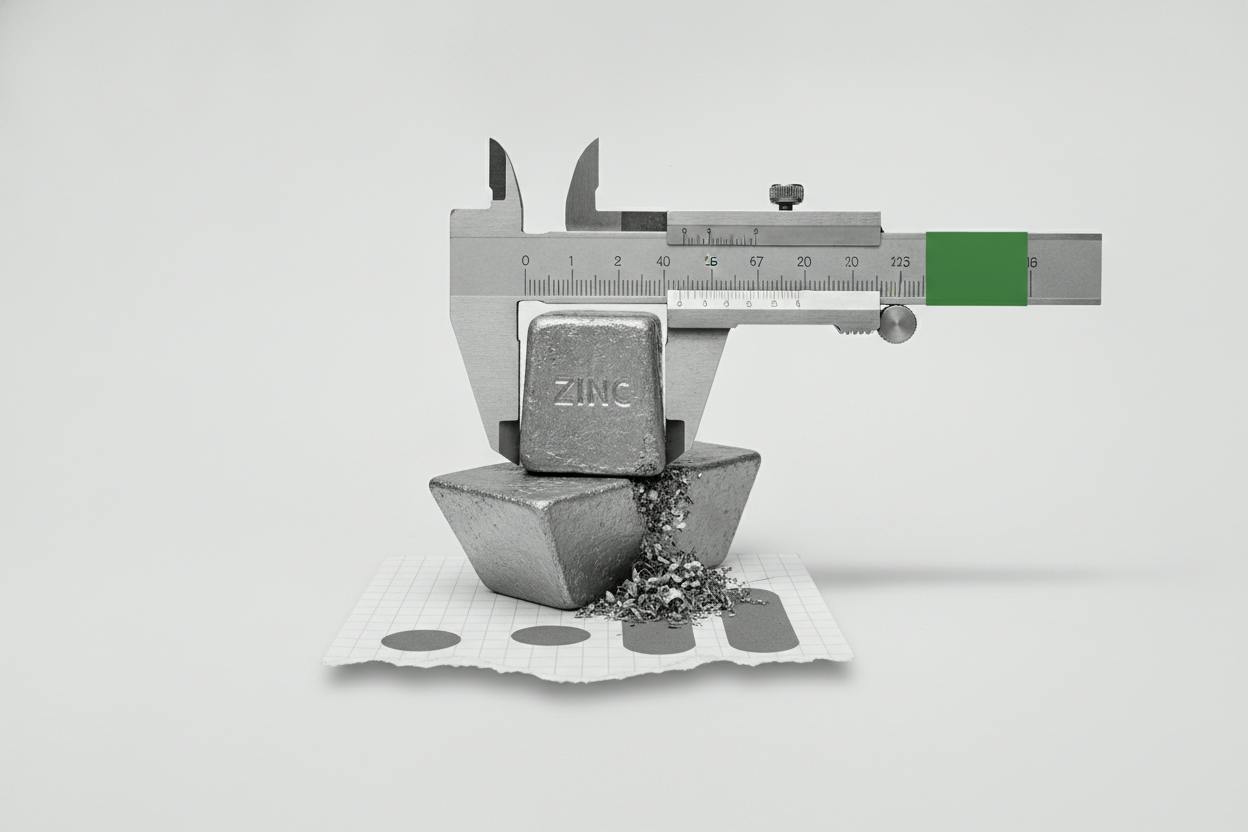
Hindustan Zinc, a major Indian miner controlled by the Vedanta Group, reported that its quarterly profit more than doubled, and it used the momentum to slash its cost forecast for fiscal 2027. The company now expects its cost of producing zinc to fall to $825–850 per ton, down from an earlier projection of $975–1,000. The revision reflects both improving operational efficiency and a brighter outlook for metal prices.
What's behind the numbers?
The profit surge comes from two directions. On the price side, zinc has been supported by tighter global supply. Reuters noted that several mines are closing and ore grades are declining, which is expected to create a roughly 180,000-ton deficit in refined zinc in 2026. That shortfall is helping to keep prices elevated, benefiting producers like Hindustan Zinc.
On the cost side, the company has been cutting its own expenses. In the latest quarter, its cost of producing zinc fell 29% from a year earlier to $703 per ton. That drop was driven by higher output, better ore grades, and increased income from by-products, including sulfuric acid. Management has pointed to these factors as key levers for keeping costs down.
Why the cost forecast matters
For a mining company, the cost of production is a central measure of health. It tells investors how much it costs to get a ton of metal out of the ground and ready for sale. When costs fall, profit margins widen even if prices stay flat. Hindustan Zinc's new forecast suggests the company expects those efficiency gains to continue into fiscal 2027.
The revised range of $825–850 per ton is notably lower than the previous $975–1,000. That is a significant improvement, and it signals that management is confident in its ability to sustain lower costs. It also gives the company a bigger cushion if zinc prices were to weaken.
What it means for investors
For everyday investors, this is a reminder that a miner's fortunes depend on two things: the price of the metal it sells and the cost of producing it. Hindustan Zinc is benefiting from both right now. The expected global deficit in refined zinc is a supportive backdrop for prices, while the company's own cost-cutting is boosting its bottom line.
Investors should note that the company's outlook is tied to global supply and demand dynamics. If the deficit materialises as expected, zinc prices could stay firm. But if mines reopen or demand weakens, prices could come under pressure. Similarly, cost savings can be eroded by inflation in energy, labour, or other inputs.
It's also worth remembering that Hindustan Zinc is part of the Vedanta Group, a diversified natural resources conglomerate. That means its performance is linked to broader commodity cycles and the group's overall strategy. For those holding the stock, keeping an eye on global zinc inventories and mine closures will be important.
The broader picture
The zinc market is just one piece of the global commodities puzzle. As economies transition to cleaner energy, demand for metals like zinc—used in galvanising steel and in batteries—could grow. But supply constraints, from mine depletion to regulatory hurdles, are a persistent challenge.
Hindustan Zinc's cost forecast cut is a positive signal, but it's not a guarantee of future performance. Commodity prices are notoriously volatile, and cost estimates can change. Investors should treat this as one data point in a larger picture, not a reason to make a hasty decision.
For those interested in the broader metals and mining sector, the company's results also highlight how operational efficiency can offset price swings. As always, diversification and a long-term view remain key principles for most investors.



