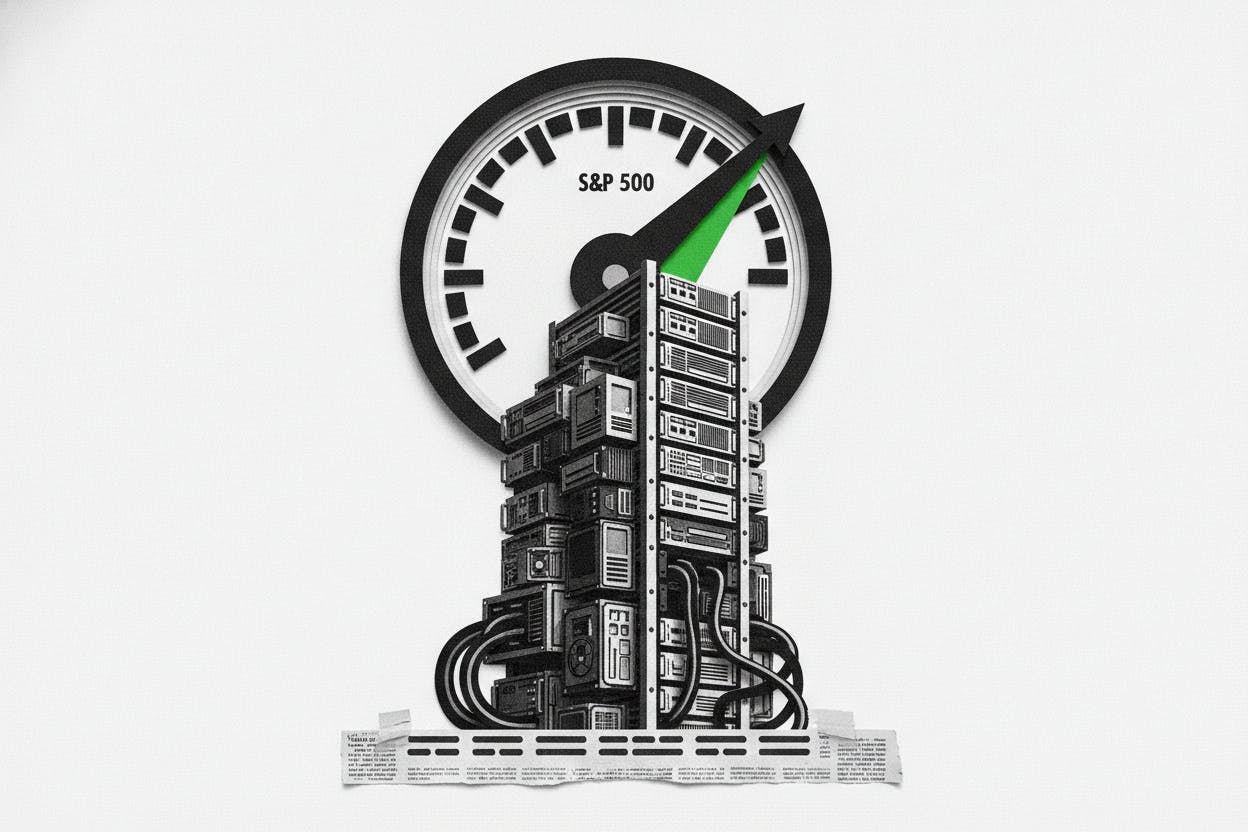
HSBC, one of Europe's largest banks, has raised its year-end target for the S&P 500 to 8,100, up from a previous 7,650. The move signals confidence that the US stock market's rally has more room to run, driven by corporate profits and continued investment in artificial intelligence infrastructure.
The new target implies a gain of roughly 4.9% from the index's last close, and it places HSBC alongside other major banks that have also issued bullish outlooks. Goldman Sachs, Morgan Stanley, and Citigroup have all set year-end targets above 8,000, reflecting a broad consensus on Wall Street that the bull market remains intact.
Why HSBC is optimistic
HSBC's core argument rests on earnings. The bank expects earnings per share for S&P 500 companies to rise by more than 25% in the second half of 2026, a projection that would mark a significant acceleration from recent growth rates. Much of that expected growth is tied to companies spending heavily on data centers and other AI-related infrastructure, a trend that has been a major driver of the market's recent gains.
This isn't an isolated view. Other firms have also pointed to AI as a key growth engine. For example, Computacenter recently lifted its 2026 profit outlook on the back of AI data center demand, and OpenAI's latest model helped lift Asian chip stocks, underscoring how AI spending is rippling through the global economy.
HSBC also downplayed several risks that have worried some investors. It dismissed the possibility of Federal Reserve interest rate hikes, arguing that inflation is likely to stay contained. It also played down geopolitical tensions and concerns that a wave of initial public offerings (IPOs) could drain liquidity from the market.
What this means for investors
For everyday investors, a higher target from a major bank is a signal that professional money managers see more upside ahead. But it's important to remember that these targets are forecasts, not guarantees. The S&P 500 could easily fall short of or exceed these levels depending on how the economy and corporate earnings evolve.
HSBC's focus on earnings is a reminder that, in the long run, stock prices tend to follow profits. If companies can deliver the kind of earnings growth HSBC expects, the market's valuation may be justified. However, if earnings disappoint, the index could struggle to reach these targets.
The bank's dismissal of risks like Fed hikes and geopolitics is notable, but it doesn't mean those risks have disappeared. Central bank policy remains a wildcard, and any surprise move could rattle markets. Similarly, geopolitical events can disrupt supply chains and investor sentiment in ways that are hard to predict.
For those with diversified portfolios, the takeaway is to stay the course. Chasing a specific index target is rarely a sound strategy. Instead, focus on your own financial goals and time horizon. If you're investing for the long term, short-term forecasts from banks are less important than the underlying health of the companies you own.
The broader picture
HSBC's upgrade is part of a wave of bullish sentiment among major financial institutions. The fact that several banks are converging on similar targets suggests a degree of confidence in the market's direction, but it also raises the question of whether expectations have become too high. When everyone is bullish, there's less room for error.
Investors should also consider the role of AI in driving these forecasts. While AI spending has been a powerful tailwind, it's not guaranteed to continue at the same pace. Companies could pull back on capital expenditures if the economic outlook weakens or if the returns on AI investments don't materialize as quickly as hoped.
In the meantime, the market continues to climb, and HSBC's new target adds to the chorus of optimism. For now, the rally appears to have solid footing, but as always, it's wise to keep a long-term perspective and not get caught up in short-term predictions.



