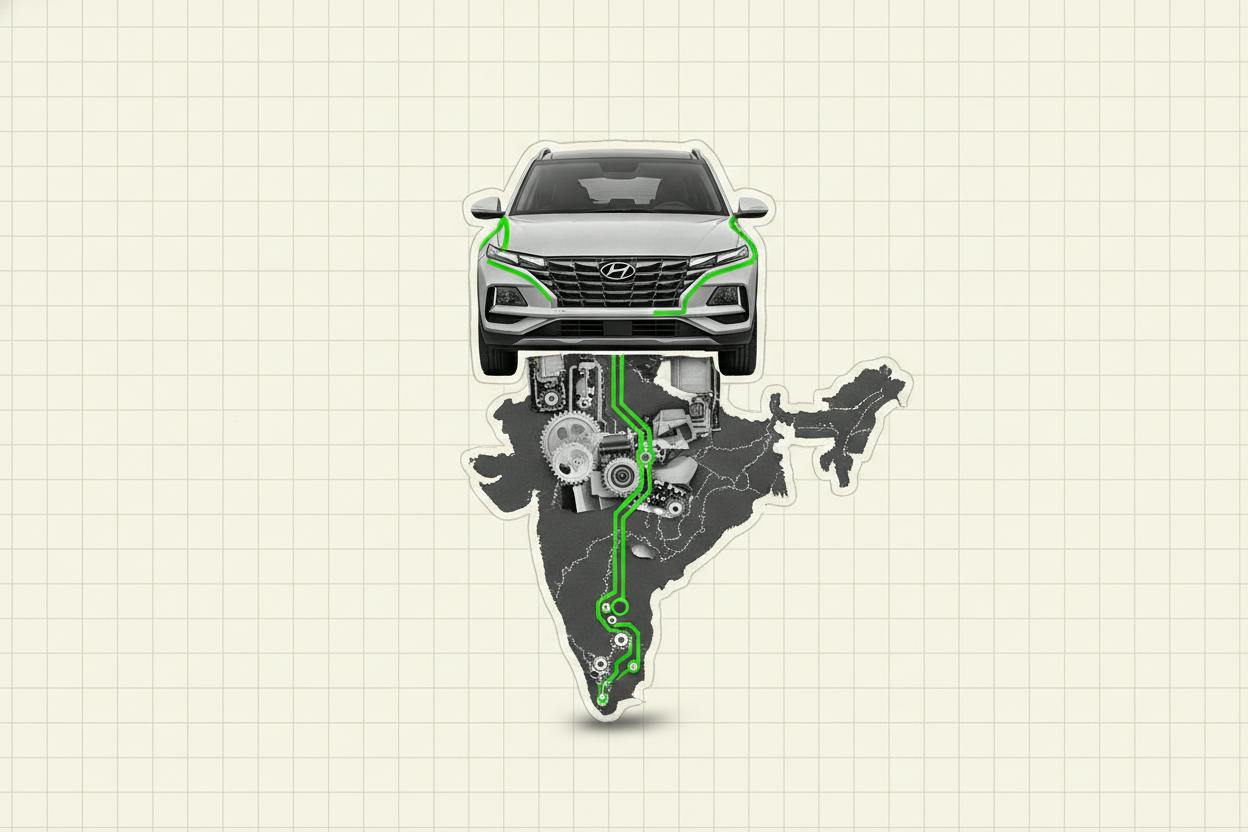
Hyundai Motor is making a bold bet on India's automotive future. The South Korean automaker plans to invest $15.5 billion in the country through 2032, focusing on expanding manufacturing capacity, building out local research and development, and strengthening its supply chain network. The announcement comes as Hyundai and its sister brand Kia already have a combined production capacity of more than 1.4 million vehicles per year in India.
What's driving the investment?
India is one of the world's fastest-growing major car markets, with a rising middle class and increasing demand for personal mobility. For global automakers, India offers both a large domestic market and a potential export hub. Hyundai has been a major player in India for decades, and this investment signals a long-term commitment to deepening its presence.
The plan includes expanding existing manufacturing plants and potentially building new ones, as well as investing in local engineering and design capabilities. By developing a more robust local supply chain, Hyundai aims to reduce its reliance on imported components, which can lower costs and protect against supply chain disruptions. This is a common strategy for automakers looking to compete in price-sensitive markets like India.
Why does this matter for investors?
For everyday investors, this is a story about where global auto giants see future growth. Hyundai's decision to pour billions into India suggests that the company expects strong demand there for years to come. That's a positive signal for the Indian economy and for companies tied to its auto sector, including local suppliers and dealers.
However, it's important to note that Hyundai is not alone in this race. Other global automakers, as well as domestic Indian players, are also expanding. Competition is fierce, and success is not guaranteed. Investors should watch how Hyundai executes its plan and whether it can maintain its market share against rivals.
For those with exposure to Hyundai through stock or ADRs, this investment could be a long-term growth driver, but it also carries risks. Large capital expenditures can weigh on short-term profits, and any slowdown in Indian car sales could hurt returns.
India's auto market: a global hotspot
India is currently the world's third-largest car market by sales, behind China and the United States. The country has been a bright spot for automakers as other regions mature or face economic headwinds. The government has also been pushing for more local manufacturing through initiatives like 'Make in India,' which offers incentives for companies to produce domestically.
Hyundai's investment aligns with this trend. By building more cars and components in India, the company can benefit from lower labor costs, favorable policies, and proximity to other emerging markets in Asia and Africa. This is similar to how many tech companies have expanded their operations in India to tap into both local demand and global supply chains.
What to watch next
Investors will be watching several things in the coming years. First, how quickly Hyundai can ramp up production and whether it introduces new models tailored to Indian buyers, especially in the electric vehicle (EV) segment. EVs are a key growth area, and Hyundai has already launched some EV models in India, but the market is still in its early stages.
Second, the company's ability to build a resilient supply chain. Global automakers have faced chip shortages and other disruptions in recent years, and a strong local supply chain could be a competitive advantage.
Finally, keep an eye on how this investment affects Hyundai's financials. The company will need to balance its spending in India with returns for shareholders. If the bet pays off, it could boost earnings for years to come. If not, it could become a drag.
The bigger picture
Hyundai's move is part of a broader trend of global companies investing heavily in India. From tech to manufacturing, multinationals are looking to diversify their supply chains and tap into India's large, young population. This is a story that resonates beyond just the auto industry.
For investors, it's a reminder that emerging markets like India offer significant growth potential, but also come with risks, including currency fluctuations, regulatory changes, and political uncertainty. As always, diversification is key.
In the meantime, Hyundai's $15.5 billion commitment is a clear signal that it sees India as a cornerstone of its future strategy. Whether that bet pays off will be one of the key stories to watch in the global auto industry over the next decade.