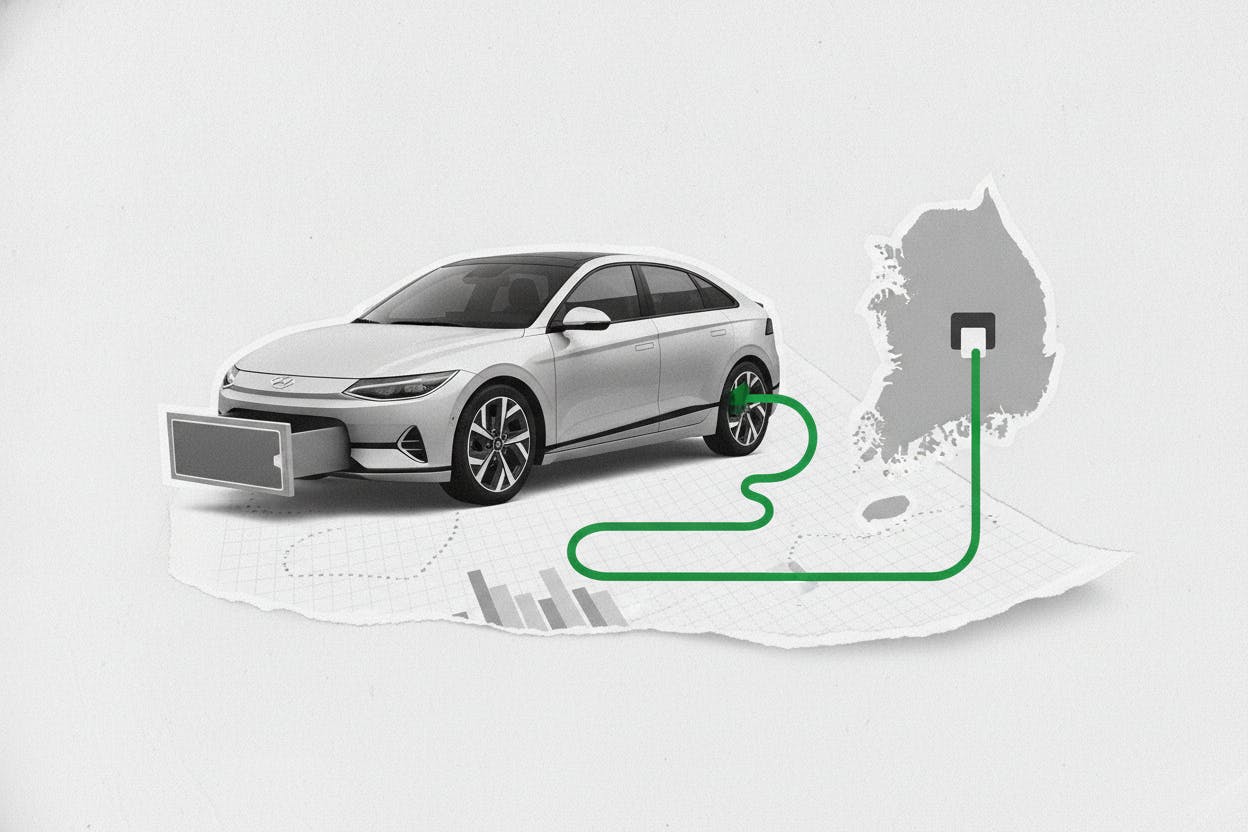
Hyundai Motor Group, South Korea's largest automaker, saw its shares surge nearly 5% after announcing the global rollout of its AllDayEnergy vehicle-to-everything (V2X) service. The service allows electric vehicles (EVs) to store electricity during off-peak hours and sell it back to the power grid when demand—and prices—are higher.
The stock jump came as investors welcomed the company's expansion beyond car manufacturing into the energy sector, a move that could create a new revenue stream and strengthen Hyundai's position in the EV market.
What Is V2X and Why Does It Matter?
Vehicle-to-everything (V2X) technology enables an EV to communicate and exchange power with the electrical grid, a home, or other devices. In simple terms, it turns an EV battery into a mobile energy storage unit. Owners can charge their car when electricity is cheap—usually at night—and then sell that stored power back to the grid during peak hours, potentially earning money or reducing their electricity bills.
Hyundai's AllDayEnergy service is designed to manage this process automatically, optimizing when to charge and discharge based on grid conditions and electricity prices. The company says the system can also power a home during outages, adding a layer of energy security for users.
This is not a completely new concept—other automakers like Nissan and Ford have offered similar vehicle-to-grid (V2G) features—but Hyundai's global rollout signals that the technology is moving from pilot projects to mainstream adoption.
Hyundai's Broader Energy Push
The V2X launch is part of Hyundai's wider strategy to become a player in the clean energy ecosystem, not just a carmaker. The company has invested in solar and hydrogen fuel cell technology, and it sees EVs as a key part of the future energy grid.
South Korea has been pushing for greater adoption of renewable energy and electric vehicles, but the country still relies heavily on fossil fuels. Hyundai's move could help stabilize the grid by providing a distributed network of batteries that can absorb excess power when supply is high and release it when demand spikes.
The announcement comes amid a broader rally in South Korean stocks, with the KOSPI index recently surging on AI chip stock gains. Hyundai's nearly 5% share price increase outpaced the broader market, reflecting investor enthusiasm for the company's new direction.
What It Means for Investors
For everyday investors, Hyundai's V2X service represents a potential new profit center for the company. If widely adopted, it could generate recurring revenue from energy trading and grid services, reducing Hyundai's reliance on vehicle sales alone. It also makes Hyundai's EVs more attractive to buyers, who could offset some of the cost of the car through energy savings or income.
However, the success of the service depends on several factors: regulatory support, grid infrastructure, and consumer adoption. Many countries are still developing rules for V2X transactions, and not all power grids are equipped to handle two-way energy flows. Hyundai will need to navigate these hurdles to turn the concept into a meaningful business.
Investors should also watch for competition. Other automakers and energy companies are exploring similar models, and Tesla has long offered its own energy storage products. Hyundai's first-mover advantage in the global V2X market could give it an edge, but the field is likely to get crowded.
For now, the stock's jump shows that the market sees potential in Hyundai's energy pivot. The company's next step will be to prove that AllDayEnergy can scale and generate real profits.
Broader Market Context
Hyundai's announcement comes at a time when global energy markets are volatile, with oil prices recently hitting five-week highs on Middle East tensions. Meanwhile, South Korea's factory-gate inflation has stayed hot, prompting the central bank to flag more rate hikes. In this environment, any move that reduces reliance on fossil fuels and creates new revenue streams is likely to be viewed favorably by investors.
The V2X service also aligns with global trends toward electrification and grid modernization. As more countries set targets for EV adoption, the ability to use car batteries as grid assets could become increasingly valuable.
Hyundai's shares are now trading near recent highs, and analysts will be watching for updates on AllDayEnergy's rollout and adoption rates. If the service gains traction, it could provide a significant boost to Hyundai's earnings and stock price over the long term.



