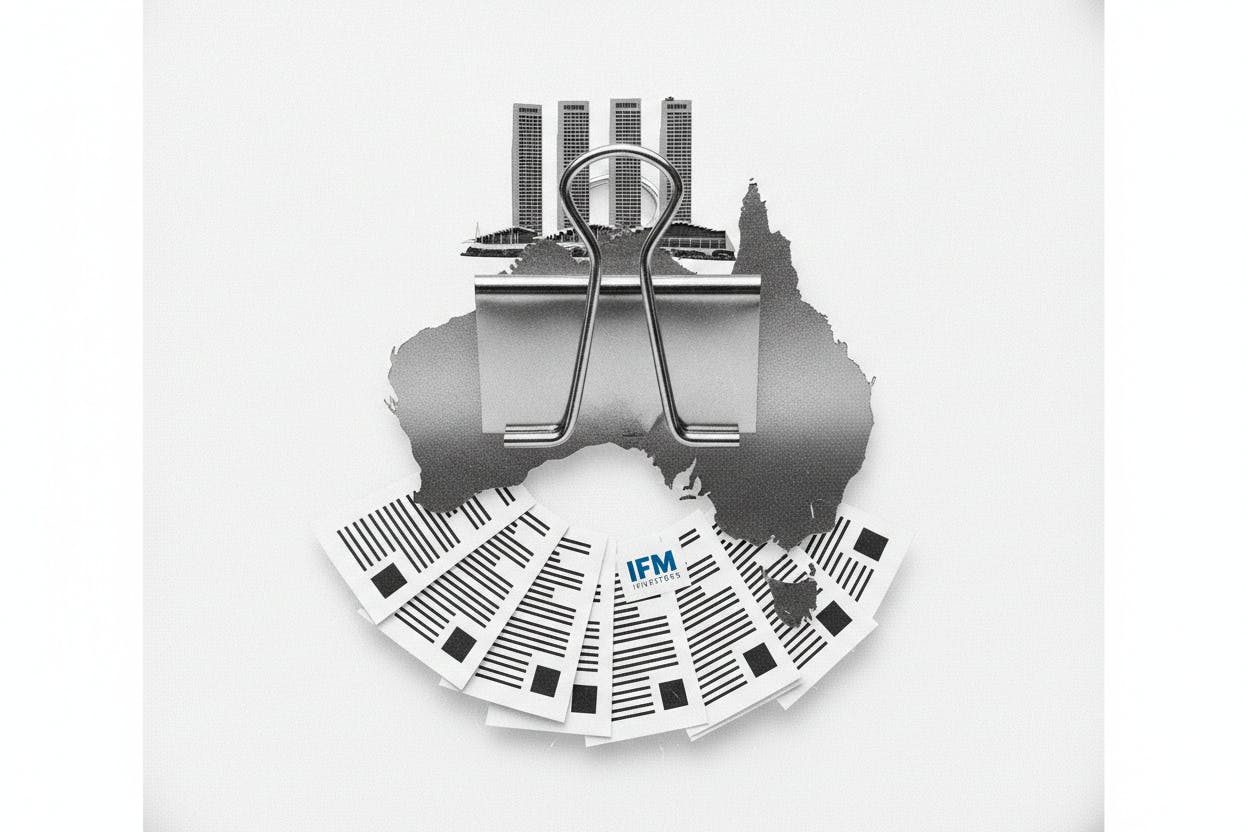
IFM Investors, one of Australia's largest asset managers with A$291.6 billion in funds under management, has opened a new office in Singapore as part of a push to grow its private-markets business across Asia. The firm says the hub will focus on expanding its private credit activities in the region.
Private credit refers to loans that are made directly between a lender and a borrower, rather than through public bond markets. These loans are often negotiated privately and can be tailored to a company's specific needs. For large institutional investors like pension funds, private credit offers a way to earn potentially higher returns than traditional bonds, though it comes with less liquidity and often higher risk.
Why Singapore?
Singapore has established itself as a major financial hub in Asia, attracting asset managers from around the world. For IFM, having a physical presence there means being closer to potential borrowers and investment opportunities across Southeast Asia and the broader region.
Being on the ground can speed up the process of sourcing deals and conducting due diligence. It also allows the firm to structure loan terms more quickly and build relationships with companies and other financial institutions in the region. IFM said the Singapore office will help it do more local deal sourcing and execution.
The move comes as many global asset managers are looking to Asia for growth. With large pools of capital seeking higher yields, private credit has become an increasingly popular asset class. IFM, which is owned by Australian pension funds, is positioning itself to tap into this demand.
What does this mean for investors?
For everyday investors, this news is a reminder that large institutional players are increasingly moving into private markets. While most individual investors cannot directly access private credit deals, they may be indirectly exposed through their pension or superannuation funds. IFM's ownership by Australian pension funds means that its investment decisions can ultimately affect the retirement savings of many Australians.
The expansion into Asia also reflects a broader trend of asset managers diversifying geographically. As developed markets become more competitive, regions like Asia offer new opportunities for growth. This can be positive for investors if it leads to better returns, but it also introduces new risks, such as currency fluctuations and geopolitical uncertainties.
For those who follow the markets, the move is a signal that private credit remains an attractive area for institutional investors. It also highlights the growing importance of Asia in the global financial landscape. As more money flows into the region, it could affect everything from local bond markets to corporate borrowing costs.
Broader context
IFM's decision to open in Singapore is part of a wider trend of asset managers expanding their Asian footprint. Other firms have also been increasing their presence in the region, drawn by its economic growth and rising wealth. The Singapore office will allow IFM to compete more effectively with other global players in the Asian private credit market.
The firm's focus on diversified credit suggests it is looking to spread risk across different types of loans and borrowers. This approach can help mitigate the risk of any single default having a major impact on the portfolio. For institutional investors, diversification is a key strategy to manage risk while seeking returns.
IFM's move also comes at a time when interest rates are relatively high in many parts of the world. Higher rates can make private credit more attractive because lenders can charge more for loans. However, they also increase the cost of borrowing for companies, which could lead to higher default rates in the future.
Investors will be watching how IFM's Asian expansion plays out. The success of the Singapore office will depend on the firm's ability to find good investment opportunities and manage risks effectively. For now, the move signals confidence in the region's long-term growth prospects.



