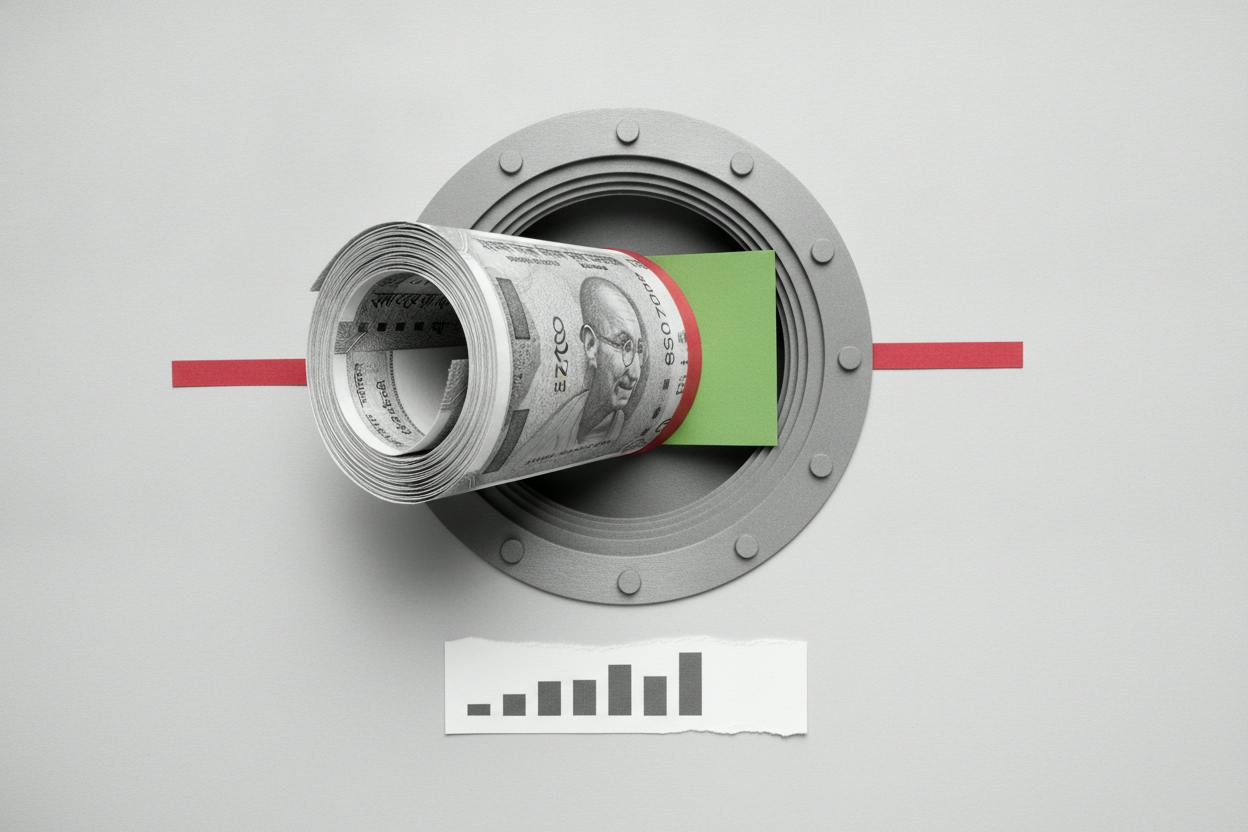
India's banking system is suddenly swimming in cash. A record 9.7 trillion rupees (about $115 billion) of surplus liquidity has built up after banks took heavy advantage of the Reserve Bank of India's (RBI) foreign-currency deposit scheme. The central bank now faces what analysts are calling a 'problem of plenty'—too much money sloshing around, which it must carefully mop up.
How did we get here?
The RBI, India's central bank, runs a program that encourages banks to bring in foreign currency deposits from non-resident Indians. Under this scheme, banks can swap those dollars with the RBI for rupees. When they do, the RBI credits the banks with rupee balances, which directly increases the amount of cash in the banking system.
This time, the take-up was massive. Banks raised $127.23 billion through the scheme, and much of that was converted into rupees. The result: a record surplus of 9.7 trillion rupees—far more than the system usually holds.
To put that in perspective, a normal level of surplus liquidity in India is often around 1 to 2 trillion rupees. A surplus of nearly 10 trillion is extraordinary and signals that banks have far more cash than they need for day-to-day lending and reserve requirements.
Why a surplus is a problem
You might think that a cash-rich banking system is a good thing—and in some ways it is. It means banks have plenty of funds to lend, which can support economic growth. But too much liquidity can also create headaches.
When banks are flush with cash, they tend to park that money in short-term instruments, which pushes down short-term interest rates. That can make it harder for the RBI to keep its policy rate—the repo rate—aligned with actual market rates. If short-term rates fall too far below the repo rate, it can distort the transmission of monetary policy, making it harder for the central bank to control inflation or support growth as it intends.
Excess liquidity can also fuel speculative activity in financial markets, from stocks to real estate, and put downward pressure on the rupee if banks start dumping dollars. The RBI has to walk a tightrope: it wants to keep the system stable, but it also doesn't want to choke off the benefits of the foreign-currency inflows.
What tools does the RBI have?
The RBI has several ways to absorb surplus liquidity. The most common is the reverse repo window, where banks park excess cash with the central bank and earn interest. But with such a large surplus, the RBI may need to use more aggressive tools, such as selling government bonds from its own holdings (a process called open market sales) or conducting longer-term reverse repo auctions.
Another option is to raise the cash reserve ratio (CRR)—the share of deposits banks must keep with the RBI—which would lock up some of that cash. However, changing the CRR is a blunt instrument and can be disruptive, so the RBI typically prefers more flexible tools.
The central bank has already signaled that it is prepared to act. In recent weeks, it has conducted variable rate reverse repo auctions to drain liquidity, and it may step up these operations if the surplus persists.
What it means for investors
For everyday investors, the key takeaway is that this surplus is likely to keep short-term interest rates low for a while. That's good news if you're a borrower—especially if you have a floating-rate loan tied to short-term benchmarks. But it's less good for savers, as bank deposit rates may stay subdued.
For bond investors, the surplus could support prices of short-dated government bonds, as banks look for safe places to park their cash. However, the RBI's efforts to absorb liquidity could eventually push yields higher, so the picture is mixed. As we've noted in our coverage of India's bond market dynamics, yields are also being influenced by global factors like oil prices.
For equity investors, the surplus is generally supportive in the short term, as it keeps financial conditions easy. But if the RBI has to drain liquidity aggressively, that could tighten conditions later. The recent slide in Indian stocks shows how sensitive markets are to these cross-currents.
Looking ahead
The RBI's next move will be closely watched. It has already shown it can manage large inflows—the record $136 billion raised through the scheme has boosted India's foreign exchange reserves to historic highs. That gives the central bank a strong buffer against external shocks.
But the 'problem of plenty' is a delicate one. The RBI must absorb the surplus without causing undue volatility in money markets or undermining its policy stance. Investors should watch for announcements about reverse repo auctions, open market sales, or any changes to the CRR.
In the meantime, the surplus is a reminder that central banks often have to manage the opposite of a crisis—too much money. For India, that's a good problem to have, but it's still a problem that requires careful handling.