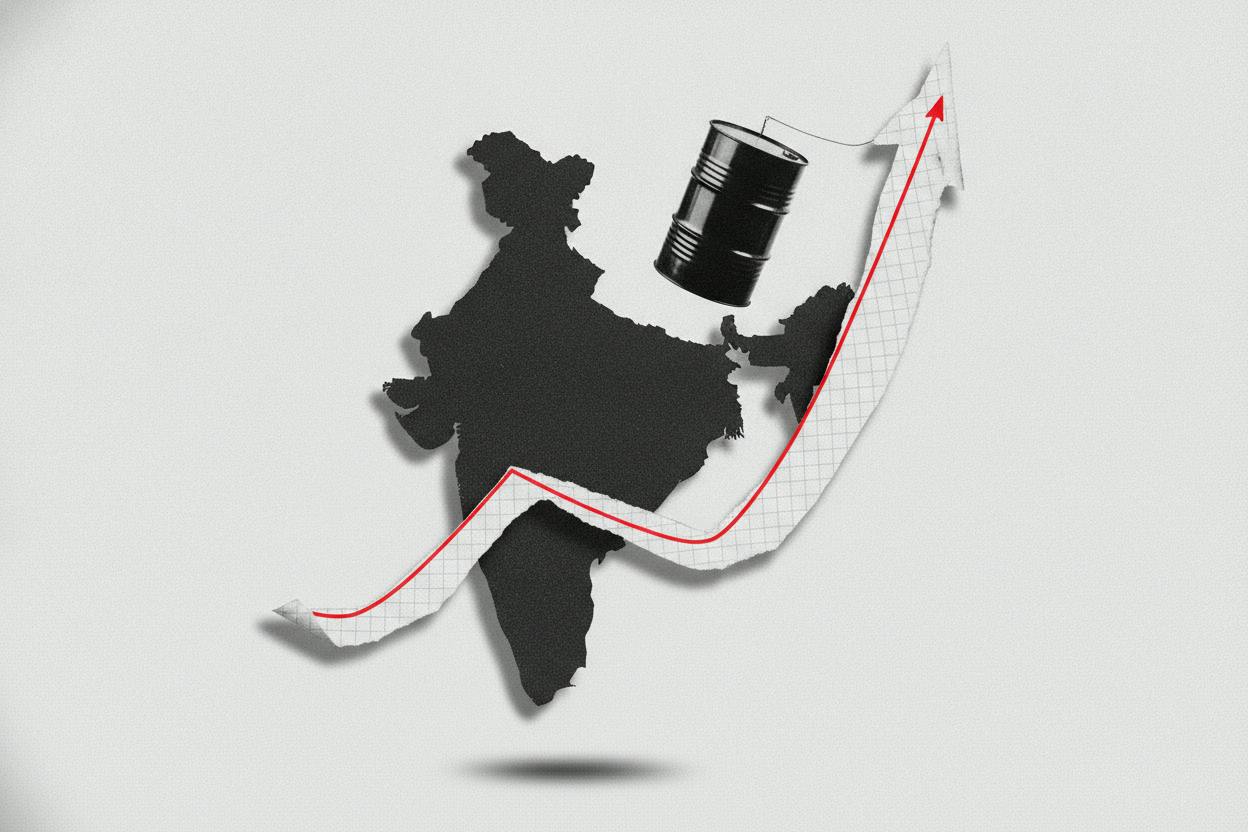
India's government-bond market found its footing on Tuesday, but the calm was fragile. With Brent crude holding above $100 a barrel, the rupee hovering near 95.22 per US dollar, and a 233 billion rupee state-loan auction scheduled for the day, traders were in a wait-and-see mood. The Federal Reserve's policy decision, due Wednesday, added another layer of uncertainty.
The benchmark 6.94% 2036 bond yield eased to about 7.4732% by late morning in Mumbai, a modest move that masked deeper concerns. For India, expensive oil and a weak currency are a familiar and uncomfortable combination: both feed directly into inflation, which can push interest rates higher and raise the government's borrowing costs.
Why oil and the rupee matter for bonds
India imports most of its crude oil, so when global prices climb, the cost of everything from fuel to transport rises. That shows up in inflation readings, and the central bank, the Reserve Bank of India (RBI), has a mandate to keep inflation in check. If price pressures persist, the RBI may feel compelled to tighten monetary policy further, even if the Fed decides to pause its own rate hikes.
A weaker rupee compounds the problem. It makes imported goods more expensive in local currency terms, adding to inflationary pressure. It also makes Indian assets less attractive to foreign investors, who may pull money out of the bond market, further pressuring yields.
Reuters noted that demand for bonds has looked thin, especially for longer maturities. That's a concern because both federal and state borrowing plans lean toward longer-dated debt. When supply of long-dated bonds rises but buyers prefer shorter paper, dealers often demand an "auction concession" — extra yield to compensate for the interest-rate risk of holding bonds that could lose value if rates climb.
The state-loan auction test
Tuesday's auction of 233 billion rupees in state loans is a key test. If it clears smoothly, it could ease some anxiety. But if demand is weak, underwriters may have to warehouse more price-sensitive risk, pushing yields higher. That would leave a larger "term premium" built into long maturities, meaning the government and states would have to pay more to borrow.
This dynamic can keep India's long-end yields elevated even on quiet trading days. Until the supply calendar eases or demand returns, states may find themselves paying a premium to fund their budgets.
What to watch next
Investors are also watching the RBI for any signal that it might tighten policy again if crude stays high and the rupee weakens further. While the Fed's decision is the immediate focus, the RBI's stance will be crucial for Indian bond markets in the coming weeks.
For everyday investors, the takeaway is that bond yields and prices move inversely. When yields rise, bond prices fall, which can hurt the value of bond funds and fixed-income portfolios. If you hold long-duration bonds, you're more exposed to interest-rate swings. Conversely, if you're a saver, higher yields can eventually mean better returns on new fixed deposits or bond investments.
The broader market context is also worth noting. Indian equities have been under pressure recently, with shares dipping as oil nears $115 and the Fed decision looms. The bond market's moves are part of the same story: global inflation, central bank policy, and commodity prices are all intertwined.
In the meantime, the auction result and the Fed's announcement will give traders fresh clues. If the Fed signals a pause, it could ease some pressure on emerging markets like India. But if oil stays above $100 and the rupee keeps sliding, the RBI may have to act, and that would keep bond yields elevated.
For now, the market is holding its breath, waiting for the next piece of the puzzle.