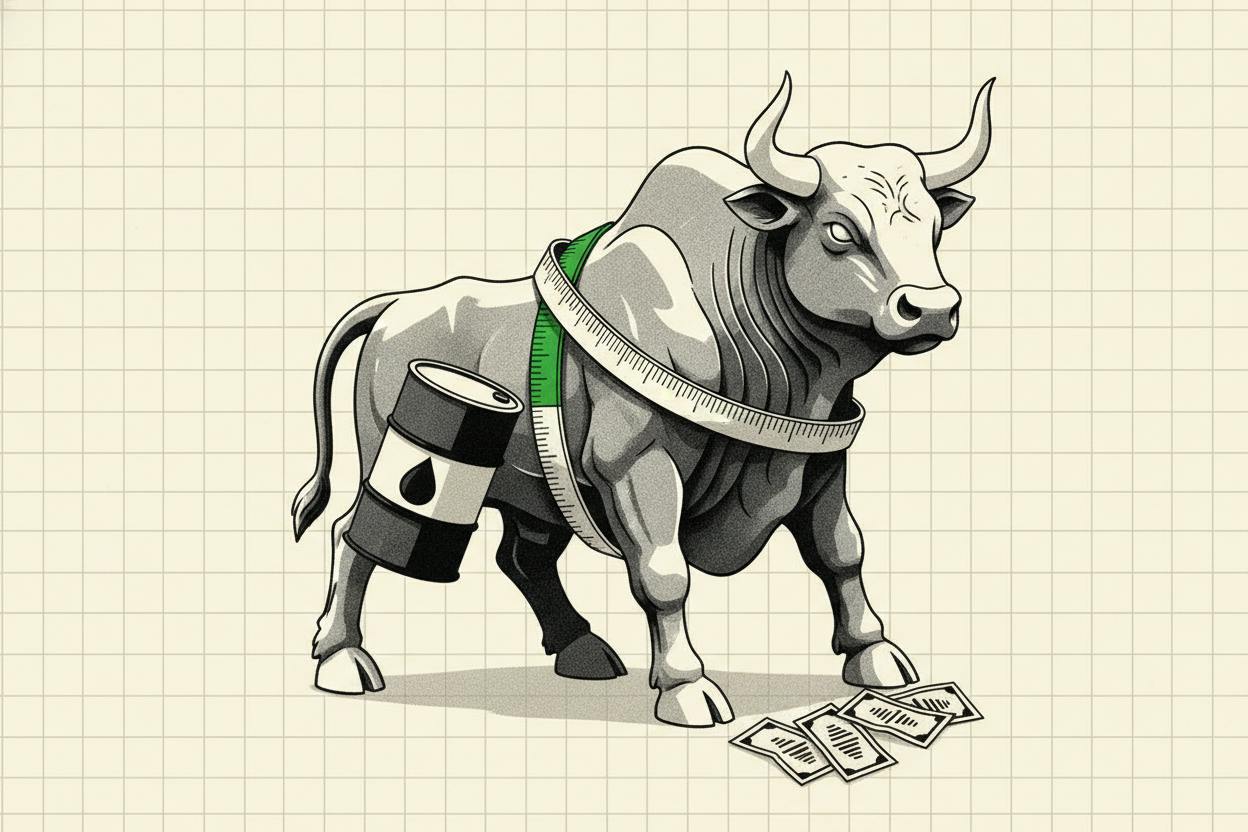
Indian stocks slipped on Friday, with the Nifty 50 index falling 0.61%, after data showed October inflation had breached the Reserve Bank of India's (RBI) comfort zone. The rise in consumer prices, combined with firmer Brent crude oil, has put fresh pressure on a market that had been riding a wave of foreign investment.
What happened
October's inflation reading came in above the RBI's 2%-6% target band, a level that policymakers have repeatedly said they are committed to defending. The breach raises the odds that the central bank will keep interest rates higher for longer, which can weigh on corporate borrowing costs and consumer spending.
At the same time, Brent crude prices have been climbing, adding to India's import bill. As one of the world's largest oil importers, India is especially sensitive to energy costs. Higher oil prices can feed directly into inflation, making it harder for the RBI to bring price growth back under control.
Why it matters
For everyday investors, the combination of higher inflation and pricier oil is a double-edged sword. On one hand, it can squeeze company profit margins, particularly in sectors like airlines, logistics, and consumer goods that rely heavily on fuel or raw materials. On the other, it may prompt the RBI to hold interest rates steady or even hike them, which tends to make bonds more attractive relative to stocks and can slow economic momentum.
Despite these headwinds, foreign investors have continued to pour money into Indian equities, with November inflows topping roughly $8 billion. That suggests overseas buyers still see long-term value in India's growth story, even as short-term risks mount. The resilience of these inflows has helped cushion the market from sharper declines, as seen in foreign buying cushioning Indian stocks in recent weeks.
What investors should watch
Going forward, the key question is whether inflation will stay above the RBI's target or ease in the coming months. Food prices, which make up a large part of India's consumer price index, are often volatile and can swing with the monsoon season. A good harvest could help cool prices, while any supply disruptions could push them higher.
Oil prices are another wildcard. If Brent crude continues to climb, it will not only add to inflation but also widen India's trade deficit, putting additional pressure on the rupee. A weaker rupee makes imports more expensive and can further stoke price pressures.
Investors will also be watching the RBI's next policy meeting for any signals on how it plans to respond. The central bank has a difficult balancing act: it wants to support growth, but it also has a legal mandate to keep inflation within the 2%-6% band. If inflation stays above that range, the RBI may feel compelled to act, even if that means slower economic growth.
What it means for your money
For those with money in Indian stocks or mutual funds, the recent dip is a reminder that markets don't move in a straight line. Inflation and oil are two of the biggest risks to the Indian economy, and both are currently flashing warning signs. That doesn't mean you should panic or sell, but it does mean being prepared for more volatility.
Diversification remains a key tool. Holding a mix of asset classes—stocks, bonds, and perhaps some international exposure—can help smooth out the bumps when one market or sector struggles. For long-term investors, short-term dips can also create opportunities, but it's important to focus on your own financial goals and time horizon rather than trying to time the market.
The broader Asian context also matters. Indian stocks are not moving in isolation; regional markets have been reacting to global forces like US tech jitters and oil price swings. For instance, Malaysia stocks slipped for a fourth day as Nvidia-related concerns rippled through Asia, showing how interconnected these markets have become.
Ultimately, Friday's decline is a single day's move. The bigger picture is that India's economy continues to grow at a healthy clip, and foreign investors are still betting on its long-term potential. But with inflation above target and oil prices rising, the path ahead may be bumpier than the smooth ride investors enjoyed earlier this year.
As always, keep an eye on the data. The next inflation report, oil price movements, and the RBI's policy stance will all offer clues about where Indian markets are headed. For now, the message is clear: stay informed, stay diversified, and don't let short-term noise derail your long-term plan.



