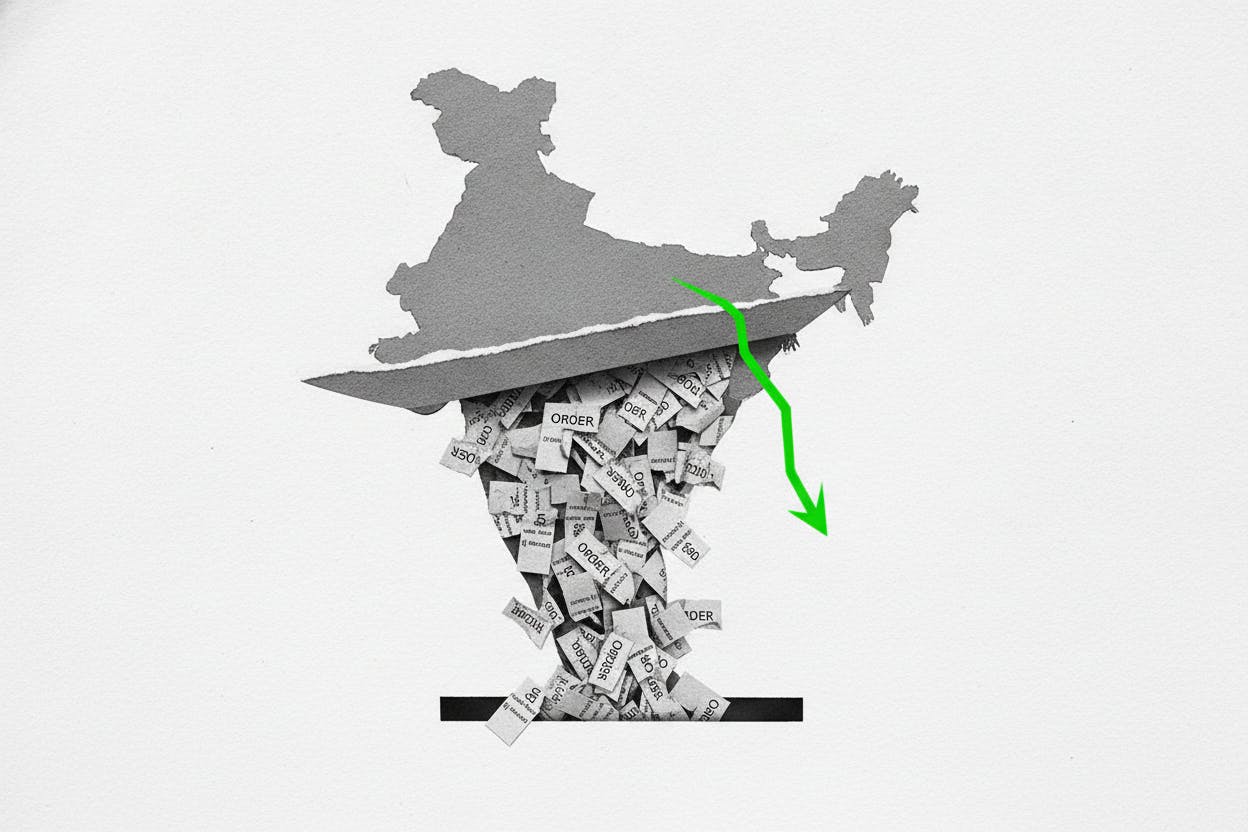
Indian shares ended lower on Monday, with the Nifty 50 slipping 0.39% and the Sensex losing 0.4%, as a rise in global oil prices and worries about higher US interest rates dampened risk appetite. But the day's most dramatic moves came in the final minutes of trading, when a routine index rebalancing by MSCI intersected with India's newly introduced closing-price mechanism, producing sharp auction swings in a handful of stocks.
What happened in the closing auction?
MSCI, the index provider whose benchmarks are tracked by billions of dollars in global funds, periodically adjusts the constituents and weights of its indices. These rebalancing events are well-known to traders, who often try to position ahead of the changes. On Monday, the latest MSCI rebalancing took effect, and its impact was amplified by India's relatively new closing-price process.
India's exchanges recently changed how they determine the official closing price of a stock. Instead of relying solely on the last traded price, they now use a closing auction—a short window at the end of the session where buy and sell orders are matched to set a single closing price. This mechanism is designed to reduce manipulation and make closing prices more reflective of true supply and demand. However, when a large, predictable flow like an MSCI rebalancing hits the market at the same time, the auction can become volatile, with prices swinging sharply as traders scramble to adjust positions.
That is exactly what happened on Monday. Several stocks saw unusually large price moves in the final seconds of trading, as the forced buying or selling from index funds collided with the auction's thinner liquidity. While the overall market decline was modest, the closing auction's swings were anything but.
Why oil and US rates matter for India
The broader market weakness was driven by two familiar headwinds. First, oil prices climbed, and India is especially sensitive to crude costs. The country imports roughly 85% of its oil, so a sustained rise in prices can push up inflation, widen the trade deficit, and put pressure on the rupee. Higher oil also complicates the central bank's job, as it may need to keep interest rates higher for longer to contain price pressures.
Second, renewed fears that the US Federal Reserve might keep interest rates elevated—or even hike again—weighed on global sentiment. Higher US rates tend to pull capital away from emerging markets like India, as investors can earn attractive risk-free returns in the US. That dynamic can weaken the rupee and put additional pressure on Indian equities.
These concerns are not new. In recent weeks, Asian markets have been mixed as oil prices jumped and China tightened its property rules, adding to global uncertainty. For India, the combination of high oil and firm US rates is a particularly uncomfortable one, as it squeezes both corporate margins and foreign investment flows.
What it means for investors
For everyday investors, the key takeaway is that index rebalancing events can create temporary distortions in stock prices, especially when they coincide with new market mechanisms like India's closing auction. These swings are often mechanical rather than a reflection of a company's underlying fundamentals. Long-term investors should be cautious about reading too much into a single day's closing auction moves, as prices may revert once the forced flows subside.
At the same time, the broader decline highlights India's vulnerability to global forces. Oil prices and US monetary policy are two factors that can move Indian markets significantly, and both are currently pointing to caution. Investors with exposure to Indian equities should keep an eye on crude prices and any signals from the Fed, as these will likely continue to drive sentiment in the near term.
For those looking to understand the mechanics, the interaction between MSCI rebalancing and the new closing auction is a topic worth studying, as it can lead to outsized moves on rebalancing days. Similarly, inflation warnings from Fed officials have kept global stocks flat and left the rate path uncertain, a backdrop that is likely to persist.
In the end, Monday's session was a reminder that markets are never just about the headline index number. The real story often lies in the details—like a closing auction that turns a routine rebalancing into a wild ride for a few stocks. For investors, staying informed about these mechanics can help avoid being caught off guard by what looks like a sudden price move but is really just the market's plumbing at work.



