India is taking a step toward modernizing its bond market with a pilot test of tokenized corporate bonds. State-run Rural Electrification Corporation (REC) plans to raise up to 5 billion rupees (about $60 million) in a sale that will only be open to investors using the Reserve Bank of India's (RBI) digital currency wallets.
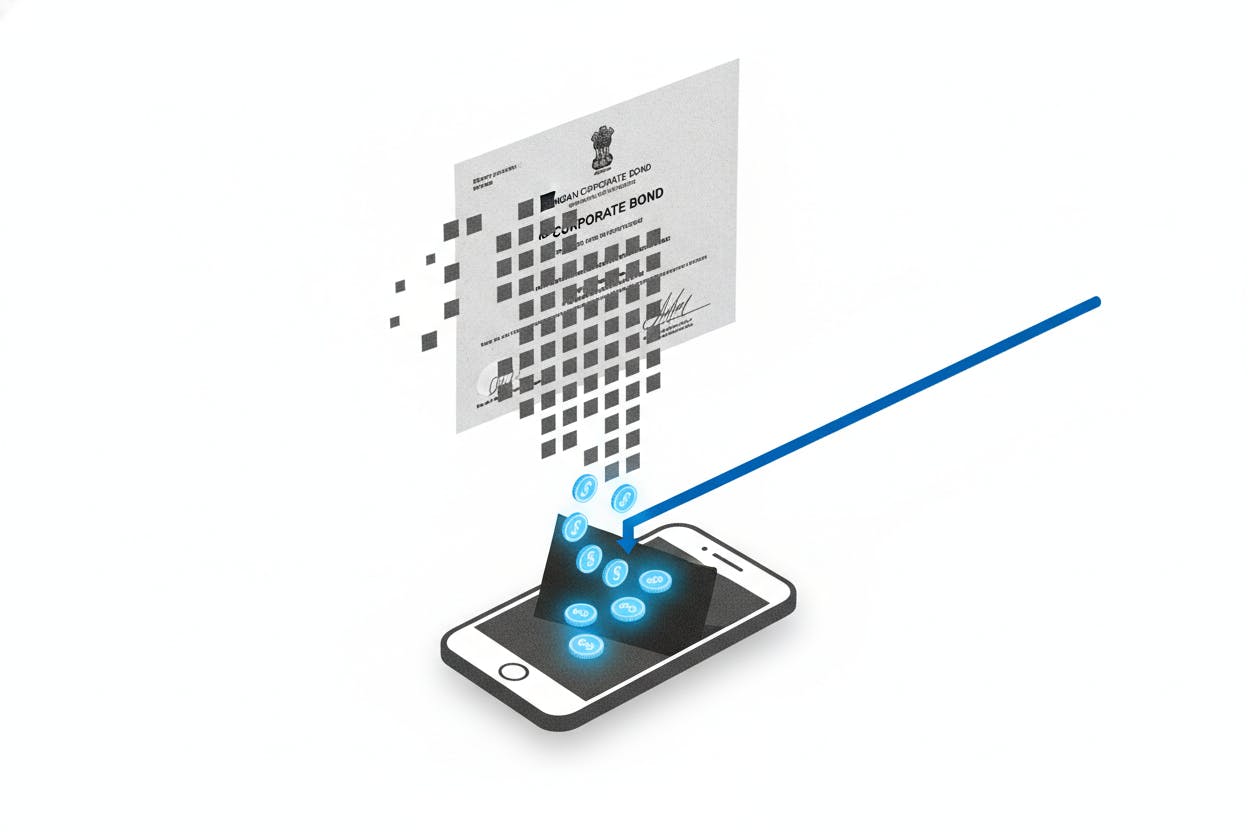
Tokenized bonds are traditional bonds that are represented as digital tokens on a blockchain or similar distributed ledger. In this pilot, the bonds will be issued and settled using the RBI's central bank digital currency (CBDC), known as the digital rupee. The idea is to make the process faster and more transparent, potentially cutting settlement times from days to near-instant.
What is a tokenized bond?
Think of a tokenized bond as a regular corporate bond—a loan from an investor to a company that pays interest and repays the principal at maturity—but with the ownership recorded digitally rather than in a traditional registry. This digital record can be transferred more easily and settled more quickly.
In this case, the RBI's digital currency is used to buy the bonds. The digital rupee is a central bank digital currency, meaning it is a digital form of official money issued by the RBI, not a private cryptocurrency like Bitcoin. It is designed to be as safe as physical cash but with the convenience of digital payments.
By combining tokenized bonds with a CBDC, the RBI and REC are testing whether the entire lifecycle of a bond—from issuance to settlement—can happen on a digital platform, reducing paperwork and operational risks.
Why this pilot matters
India's bond market is large and growing, but it still relies on older infrastructure for settlement. Currently, corporate bond trades typically take one or two days to settle, and the process involves multiple intermediaries. Tokenization could streamline that, making it cheaper and faster for issuers and investors alike.
The pilot is limited to 5 billion rupees, which is a small fraction of REC's overall borrowing. REC is a government-owned company that finances power projects across India, and it regularly raises money through bonds. This pilot is a test case, not a full-scale shift.
Investors who want to participate must use RBI digital currency wallets, which are part of the central bank's broader CBDC pilot that has been running since 2022. The RBI has been gradually expanding the digital rupee's use cases, and this bond pilot is one of the more ambitious experiments so far.
The move also aligns with global trends. Central banks and financial institutions worldwide are exploring tokenized assets and instant settlement. For example, Australia's central bank has been seeking feedback on tokenized settlement, though it has ruled out a retail CBDC for now. India's approach is notable because it combines a wholesale CBDC with a real corporate bond issuance.
What it means for investors
For everyday investors, this pilot is unlikely to change anything immediately. The sale is restricted to institutional investors and those with RBI digital currency wallets, which are not yet widely available to the public. But the long-term implications could be significant.
If tokenized bonds become mainstream, they could make bond investing more accessible and efficient. Settlement would be faster, which reduces the risk that a trade fails. It could also lower costs for issuers, potentially leading to better yields for investors. However, these benefits are still speculative at this stage.
Investors should also watch how the RBI handles the broader digital rupee rollout. The central bank has been cautious, and this pilot is part of a gradual process. There are also ongoing discussions about the RBI's management of liquidity, as India's banking system is currently awash in cash, and the central bank has been urged to use tools like FX swaps to drain excess funds. That environment could affect bond yields and the attractiveness of new issues.
For now, the REC pilot is a small but meaningful experiment. It shows that Indian authorities are serious about modernizing financial infrastructure, even as they proceed carefully. For investors, it's a reminder that the bond market is evolving, and digital innovation could eventually change how bonds are bought and sold.
As with any pilot, there will be lessons learned. If successful, the RBI and REC may expand the program to larger issuances and more participants. If not, they will adjust. Either way, this is a story worth following for anyone interested in the future of finance.