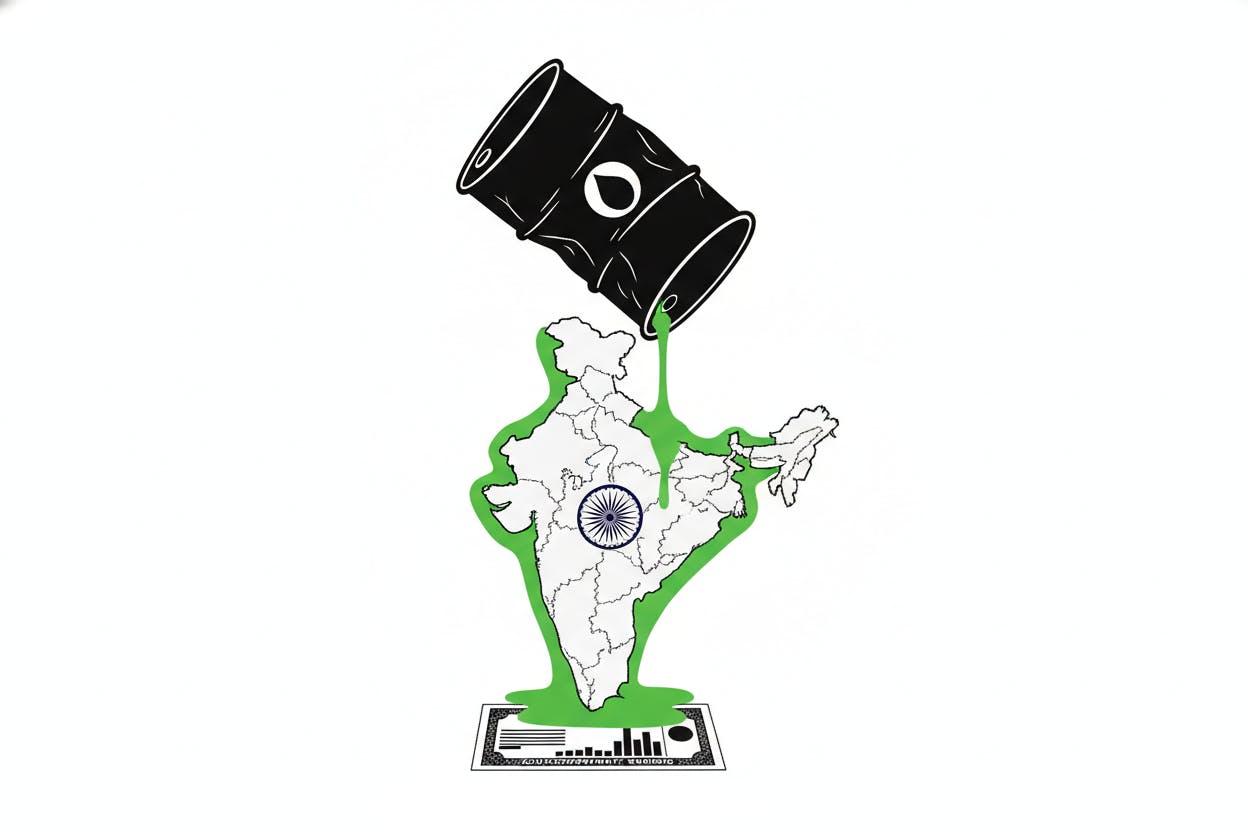
Indian financial markets got a broad boost on Monday after crude oil prices tumbled, lifting stocks, the rupee, and government bonds in a coordinated rally. The benchmark Sensex index rose 0.9%, while the rupee strengthened 0.8% against the US dollar, according to Reuters. The moves came after oil prices fell over the weekend following a pause in US-Iran strikes, which had previously stoked fears of supply disruptions in the Middle East.
Why oil matters so much for India
India is one of the world's largest importers of crude oil, buying roughly 85% of its needs from overseas. When oil prices rise, the country's import bill swells, putting pressure on the trade deficit and the current account. That typically weakens the rupee and raises inflation, which can hurt corporate profits and consumer spending.
Conversely, a drop in oil prices is a major tailwind. Lower crude costs reduce the government's subsidy burden, improve the fiscal deficit outlook, and help the central bank keep interest rates in check. For investors, that combination often translates into higher stock valuations and a stronger currency.
Monday's rally was a textbook example of that dynamic. The rupee's gain was particularly notable, as it had been under pressure in recent weeks amid geopolitical uncertainty. A stronger rupee also helps contain imported inflation, especially for items like edible oils and fertilizers that are linked to crude prices.
Bonds get a reprieve
Indian government bonds also benefited from the oil slide. Lower crude prices reduce the risk of higher inflation, which in turn makes it easier for the Reserve Bank of India to keep policy rates steady or even cut them down the line. That prospect pushed bond yields lower, meaning prices rose.
This is a welcome reversal for bond investors, who had been bracing for tighter monetary conditions if oil stayed elevated. The move also helps the government's borrowing program, as lower yields reduce the cost of servicing debt.
For context, Indian bonds had already been under pressure from global rate hikes and domestic inflation concerns. The oil price drop offers some breathing room, though investors will be watching whether the geopolitical situation remains calm.
What it means for investors
For everyday Indian investors, Monday's rally is a reminder of how sensitive local markets are to global oil prices. A sustained decline in crude could support further gains in stocks, especially in sectors like automobiles, paints, and aviation, which are heavy users of petroleum-based inputs.
However, the situation remains fragile. The US-Iran tensions are far from resolved, and any escalation could quickly reverse the oil price drop. Investors should also note that the rally came after a period of weakness: Indian stocks had been on a five-day losing streak before Monday, as concerns over oil and global growth weighed on sentiment.
The broader market backdrop also matters. While India's economy is relatively insulated compared to other emerging markets, it is not immune to global trends. A slowdown in major economies like the US or Europe could still dampen demand for Indian exports and corporate earnings.
For now, the oil price decline provides a clear positive catalyst. But investors should keep an eye on geopolitical developments and central bank policy signals in the weeks ahead.
Looking ahead
Market participants will be watching for any further news on US-Iran relations, as well as upcoming economic data from India and abroad. The RBI's next monetary policy meeting is also on the horizon, and lower oil prices could give the central bank more flexibility.
In the meantime, the rally in Indian assets underscores the powerful link between energy costs and emerging market performance. For investors, it's a useful reminder to factor in commodity price risks when building a diversified portfolio.