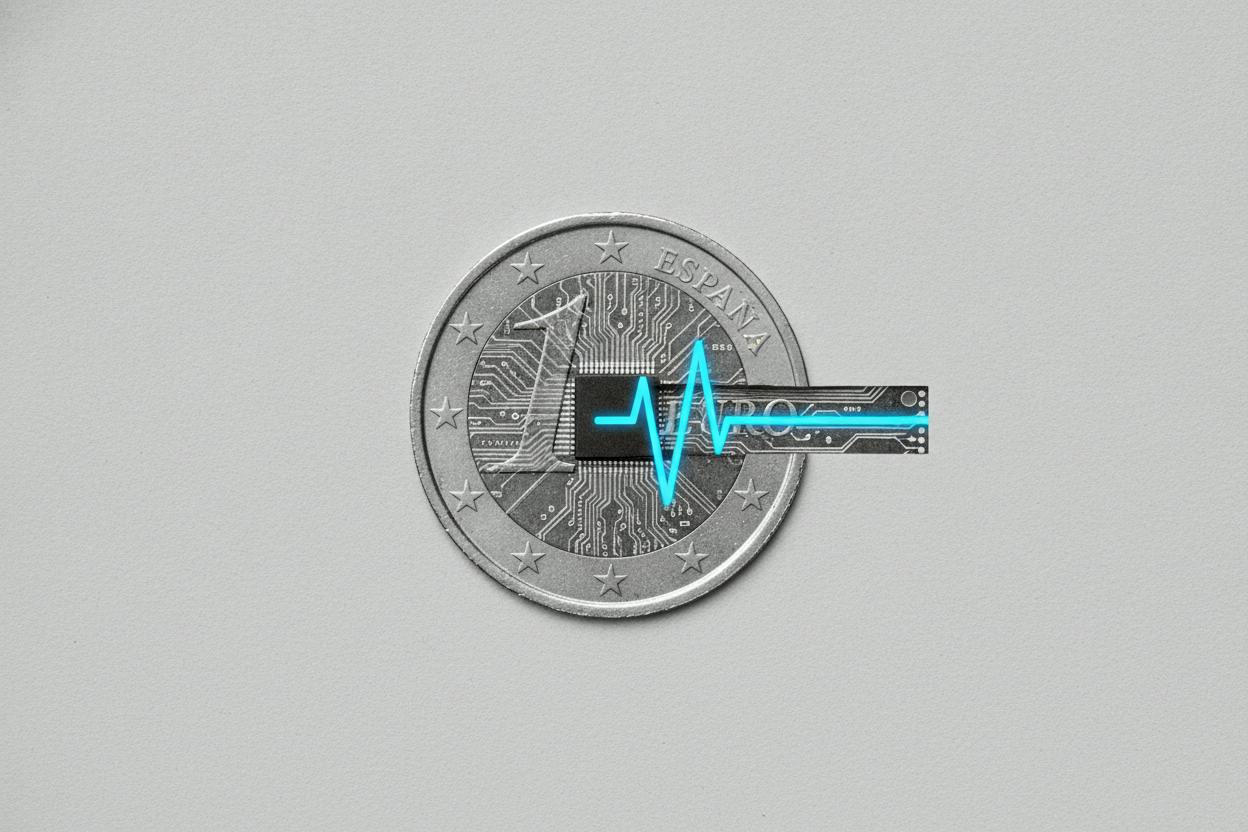
Spanish companies are sending a dual message to investors: they have enough confidence to return cash to shareholders, and they are also willing to bet on the next wave of technology. This week, two of the country's most prominent firms—BBVA and Indra—moved forward with share buybacks, while Indra also put €10 million into a quantum computing startup, according to a report in Cinco Días.
What's happening?
Indra, a Spanish defense and technology company, said it has completed its share buyback program after repurchasing 0.16% of its outstanding shares. A share buyback is when a company uses its own cash to buy its stock from the market, reducing the number of shares in circulation. This often signals that management believes the shares are undervalued and that the company has strong finances.
Meanwhile, BBVA, one of Spain's largest banks, announced it is starting the second tranche of its buyback program, which is worth up to €1 billion. The bank had already completed an earlier phase of the program.
In a separate move, Indra invested €10 million in Qilimanjaro Quantum, a Spanish quantum computing startup. The investment is part of a Series A funding round that has raised €19.6 million in its first close, according to Cinco Días. Quantum computing is an emerging field that uses the principles of quantum mechanics to process information in ways that traditional computers cannot. While still in early stages, it has potential applications in cryptography, drug discovery, and complex simulations.
Why it matters
Share buybacks are a way for companies to return value to shareholders. By reducing the number of shares outstanding, each remaining share represents a larger slice of the company's earnings, which can boost the stock price. They also signal that management is confident about future cash flow.
For everyday investors, buybacks can be a positive sign, but they are not without criticism. Some argue that companies should invest in growth or pay higher dividends instead. However, in a mature company with limited growth opportunities, buybacks can be an efficient way to reward shareholders.
Indra's investment in Qilimanjaro Quantum is a different kind of signal. It shows that the company is looking beyond its traditional defense and technology business to position itself in cutting-edge fields. Quantum computing is still years away from widespread commercial use, but companies that invest early may gain a competitive edge if the technology matures.
This is not an isolated trend. Quantum computing is attracting attention from both startups and established firms, as they seek to secure intellectual property and talent in a field that could reshape industries.
What it means for investors
For investors in Spanish stocks, the buyback announcements from BBVA and Indra are a reminder that these companies are generating enough cash to return money to shareholders. BBVA's €1 billion buyback is a significant program, and the bank's decision to proceed with the second tranche suggests it remains confident in its capital position.
Indra's buyback, while smaller, still reflects a company that is managing its balance sheet carefully. The fact that it is also investing in quantum computing shows a willingness to spend on innovation, which could pay off in the long run but also carries risk.
For those interested in the broader tech investment landscape, the Qilimanjaro funding round is a sign that early-stage startups are still able to attract capital, even in a challenging funding environment. However, quantum computing is a highly specialized and capital-intensive field, and many startups in this space may not survive to commercialization.
Investors should also note that buybacks and startup investments are not mutually exclusive. Companies can do both, as Indra is demonstrating. The key is to watch whether these moves create long-term value or simply boost short-term stock prices.
As always, it's important to consider your own financial goals and risk tolerance. Buybacks can be a sign of financial health, but they are not a guarantee of future returns. And investments in emerging technologies like quantum computing are speculative by nature.
In the coming months, investors will likely watch whether BBVA completes its buyback program and whether Indra's quantum bet starts to show tangible results. Buybacks remain a popular way for companies to reward shareholders, and many firms across Europe are using them to signal confidence.
For now, the message from Spain is clear: these companies are comfortable returning cash while also planting seeds for the future.