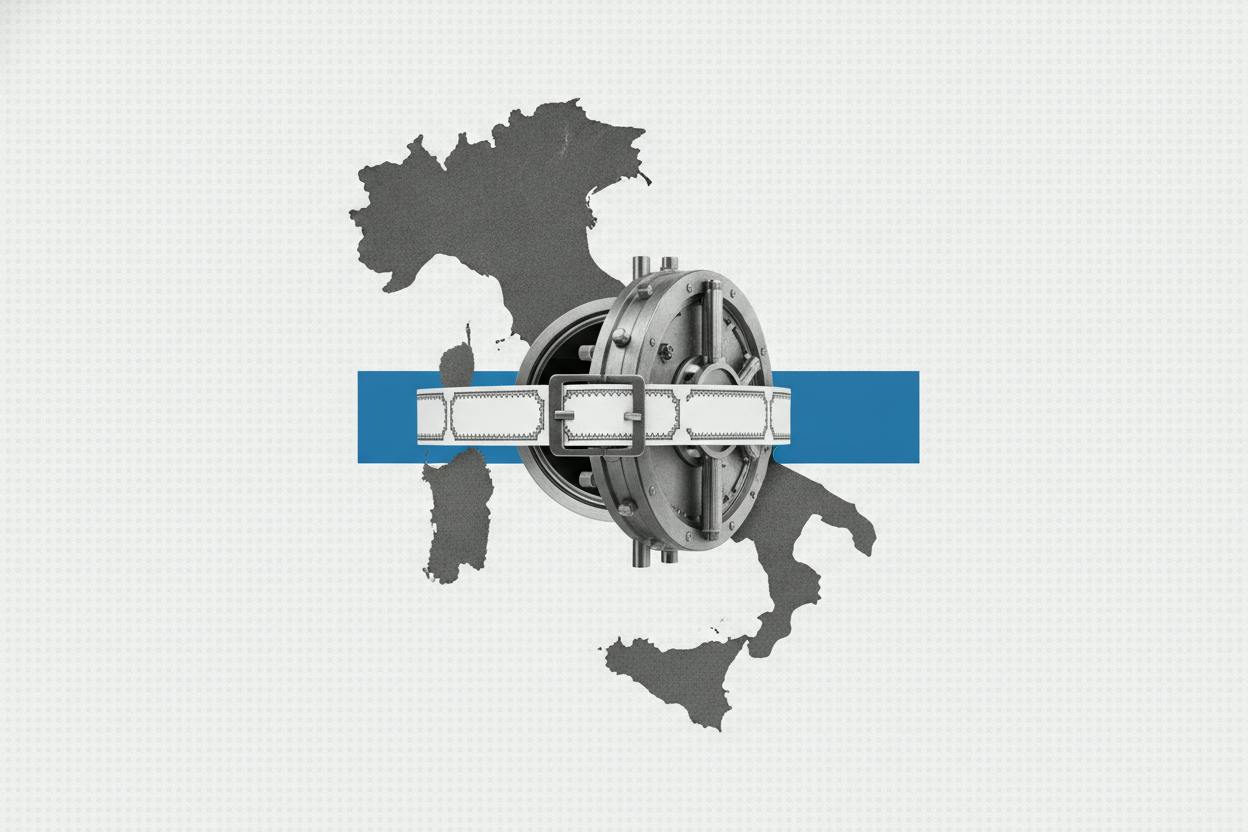
Italy is walking a tightrope between fiscal discipline and banking drama. The government in Rome has pledged to keep its budget deficit below the European Union's 3% ceiling this year, a promise that carries weight in a bloc where high-debt countries are often under scrutiny. At the same time, a high-stakes takeover fight over Monte dei Paschi di Siena (MPS) is pulling the country's banking agenda back into the spotlight.
What's happening with Italy's budget?
The EU's 3% deficit limit is a cornerstone of the bloc's fiscal rules, designed to keep government borrowing in check and protect the stability of the eurozone. Italy has a history of struggling to meet this target, given its large public debt—one of the highest in Europe relative to its economy. By promising to stay under the limit this year, Rome is signaling to markets that it intends to keep its finances on a credible path.
For everyday investors, this matters because Italy's fiscal credibility affects borrowing costs across the eurozone. If investors trust Rome's numbers, they demand lower yields on Italian government bonds, which in turn supports the broader European bond market. A slip back into excessive deficits could reignite concerns about debt sustainability, pushing yields higher and potentially rattling European stocks.
The Monte dei Paschi takeover battle
Meanwhile, Monte dei Paschi di Siena—the world's oldest bank, founded in 1472—is defending itself against a takeover bid from Intesa Sanpaolo, Italy's largest banking group. MPS has reportedly pitched a defense plan to fend off the offer, a move that could reshape the country's banking landscape.
MPS has been a problem child for Italy for years. The bank was bailed out by the state in 2017, leaving the government as its largest shareholder. Since then, it has undergone several restructuring efforts, but its profitability and balance sheet remain under pressure. Intesa Sanpaolo, on the other hand, is a well-capitalized lender with a strong retail franchise. A takeover would create a banking giant with significant market share, but it also raises questions about competition, job losses, and the government's role as a shareholder.
The defense plan from MPS suggests the bank's management believes it can stand alone, perhaps by improving efficiency or finding a different partner. But in the world of European banking, consolidation is a recurring theme, and smaller lenders often struggle to compete with larger rivals that can spread costs over a bigger base.
What it means for investors
For investors, the Monte dei Paschi saga is a reminder that Italy's banking sector is still in flux. Banks are a key part of the Italian economy, and their health affects everything from consumer lending to the stability of the financial system. A successful takeover could lead to a stronger, more efficient bank, but it could also mean branch closures and reduced competition, which might affect customers.
On the budget front, Italy's pledge is a positive signal, but it's not a guarantee. The government faces pressure to spend on everything from tax cuts to infrastructure, and meeting the 3% target will require discipline. Investors will be watching Italy's fiscal numbers closely in the coming months, as any deviation could trigger market volatility.
For those with exposure to European stocks or bonds, these developments are worth monitoring. The outcome of the MPS bid could influence sentiment toward Italian banks, while the budget promise helps set the tone for the country's borrowing costs. As always, it's important to remember that these are complex issues, and no single event should drive investment decisions.
Broader context
Italy's situation is part of a larger European story. The EU has been tightening its fiscal rules after a period of relaxed spending during the pandemic, and countries like Italy are under pressure to show they can manage their debts. At the same time, the banking sector across Europe is undergoing a wave of consolidation, as lenders seek scale to compete with global rivals and invest in digital technology.
Recent developments elsewhere, such as UK banks testing tokenized deposits, highlight how the industry is evolving. While Italy's challenges are unique, the broader trend of banks adapting to new realities is a global one.
For now, all eyes are on Rome and on the Monte dei Paschi boardroom. The coming weeks could bring clarity on both fronts, and investors will be ready to react.