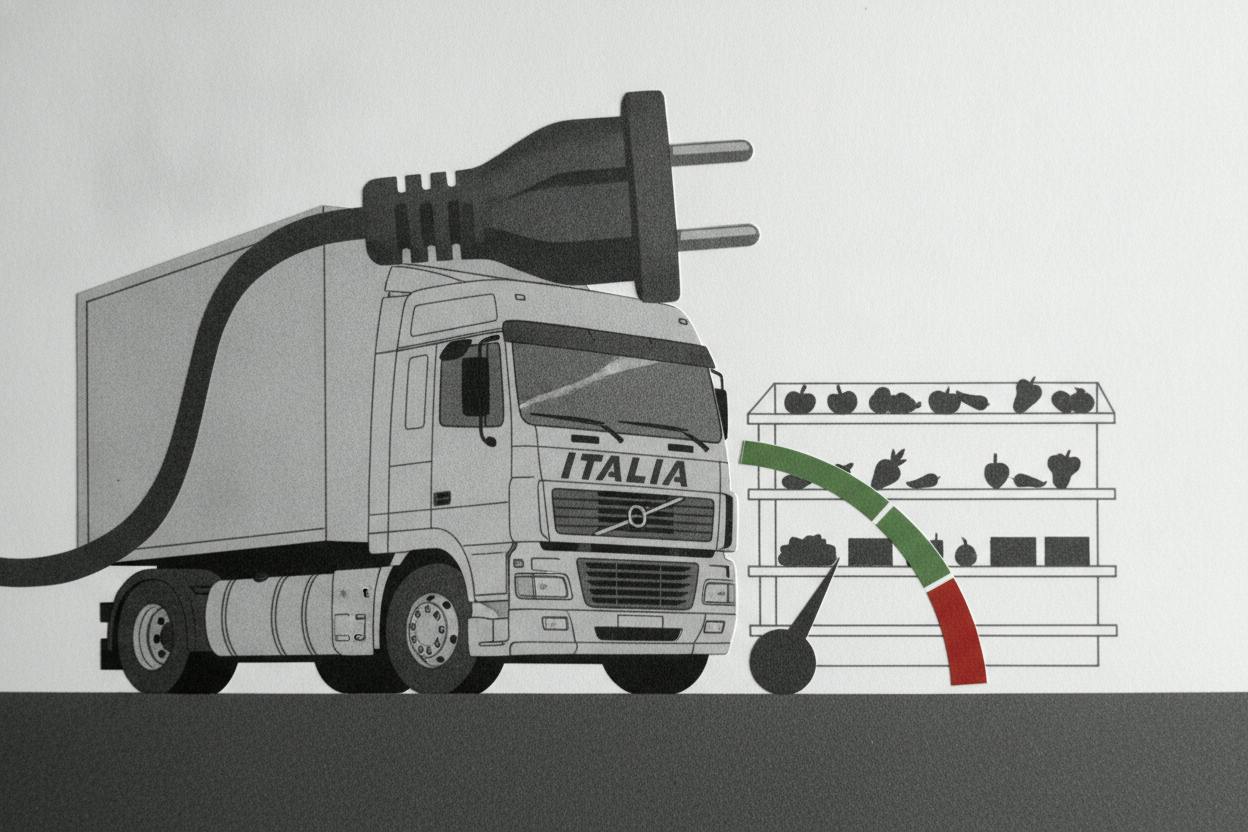
Italian truckers are slowing food deliveries across the country as protests over high fuel and living costs enter their second week, and retailers say the disruption is already leaving some store shelves short. The protests, which have seen drivers block roads and slow traffic at key distribution hubs, are the latest sign of how Europe's energy crunch is moving from household budgets into the real economy.
The timing is awkward for Rome. The government is trying to ease the burden of energy costs, and Energy Minister Gilberto Pichetto Fratin said steps agreed with the European Union last week should trim Italy's wholesale electricity prices by about 10% once they take effect in January. But that relief is still months away, and in the meantime the mechanics are simple: fewer trucks on the road means thinner inventories, more spoilage for fresh goods, and extra costs for retailers and farmers that can feed back into prices.
Why the protests matter
Truckers are feeling the squeeze from diesel prices that have climbed sharply over the past year, along with higher costs for food, housing, and just about everything else. Their protests are a reminder that energy shocks don't stay contained in the energy sector. They ripple through supply chains, raising costs for businesses and eventually showing up in the prices consumers pay at the checkout.
For retailers, the immediate problem is empty shelves. Fresh produce, dairy, and other perishable goods are the most vulnerable because they can't sit in warehouses for long. Farmers are also feeling the pain, as produce that can't be moved quickly may end up wasted. That's why the government pulled the issue into politics, with a cabinet meeting in Rome focused on potential aid for truck drivers and farmers.
The protests come against a broader backdrop of energy-driven inflation across Europe. In the UK, for example, inflation has jumped to 3.5% as energy costs bite, and the Bank of England is weighing another rate hike. In Germany, investor sentiment has slipped as energy prices bite. Italy is not alone, but its high public debt and slow growth make it especially vulnerable to energy shocks.
What it means for investors
For bond investors, the protests are a reminder that energy shocks can move quickly from household budgets to supply chains and then into fiscal decisions. Italy's government is already spending heavily to cushion the blow, and more aid for truckers and farmers would add to the bill. That raises questions about how Rome funds itself in a higher-cost world.
So far, the market seems to be taking it in stride. Orders for the Treasury's BTP Valore retail bond reached €12.1 billion after three days, with the sale running through Friday. Strong demand for BTP Valore suggests Italy is raising more money from domestic households, not just from overseas buyers who can pull back quickly when headlines turn. When more government bonds sit with retail savers, fewer of them trade day to day, which can damp short-term swings in the yield spread between Italian bonds (BTPs) and German Bunds.
That matters with fresh supply on the calendar: the Treasury will outline the next BTP Short and BTPei auctions on October 27. If domestic demand stays firm, it can make funding conditions look more resilient even while strikes and subsidy talks add political noise. As we noted in our earlier coverage of the BTP Valore bond sale, retail demand can be a stabilising force for Italian debt.
For equity investors, the story is more about the real economy. Companies that rely on trucking to move goods—especially food producers, supermarkets, and logistics firms—could see higher costs and disrupted operations in the near term. Energy stocks, meanwhile, may benefit from higher fuel prices, though that's a mixed blessing for the broader market. As we've seen in other markets, energy stocks often move with oil and gas prices, and any sustained rally in fuel costs could keep inflation pressures alive.
The bigger picture is that Italy, like much of Europe, is caught between high energy costs and the need to keep the economy moving. The EU's promised measures to cut wholesale power prices by 10% are a step in the right direction, but they won't take effect until January. In the meantime, the truckers' protests are a stark illustration of how energy costs can spill over into everyday life—and into the calculations of investors trying to gauge where inflation and interest rates are headed.
For ordinary investors, the key takeaway is that energy shocks are not just a story about oil and gas prices. They affect everything from the cost of your groceries to the value of your bond portfolio. Watching how Italy handles this crisis—and how its borrowing costs respond—can offer clues about the health of the broader European economy.