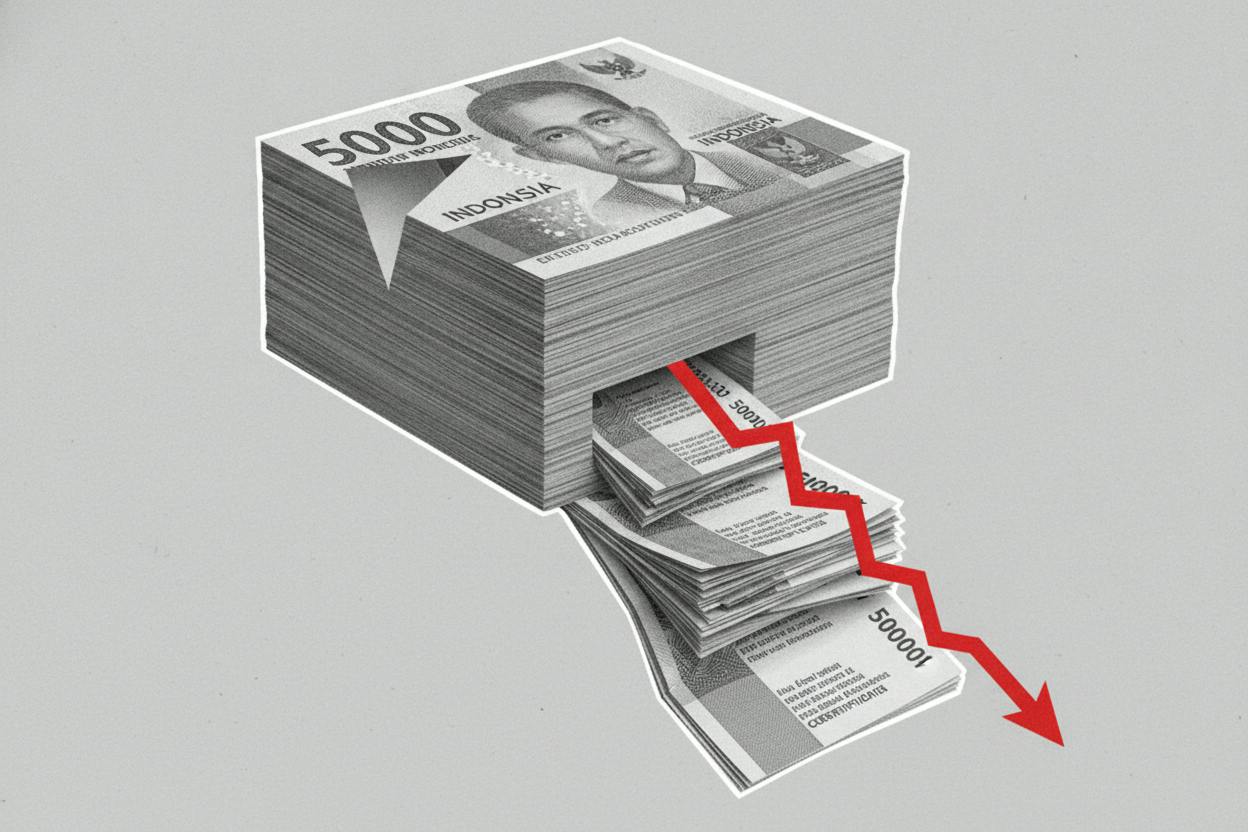
Indonesia's stock market is having its roughest stretch in months. The Jakarta Composite Index is on track for its worst week since late June after the Indonesia Stock Exchange slashed the minimum share price to 1 rupiah from 50 on Monday, a rule change that finally allowed long-trapped sellers to exit their positions.
The immediate trigger was mechanical, not fundamental. Under the old 50-rupiah floor, shares that fell to that level essentially stopped trading in any meaningful way — there was no legal price at which willing sellers could meet willing buyers. Once the exchange lowered the floor to 1 rupiah, that logjam broke, and a backlog of sell orders rushed into the market all at once.
Why a price floor matters
Minimum price rules are common in smaller and emerging markets. They are designed to keep very low-priced shares from becoming pure speculation, and to protect the market's overall quality. But they create a side effect: when a stock hits the floor, it can become effectively frozen. Investors who want out cannot sell without accepting a price below the legal minimum, so they simply wait.
That waiting creates pent-up supply. The moment the floor is lowered, that supply is released. This is why the selloff looks dramatic even though no single company reported bad news. It is a plumbing issue — the market is repricing stocks that had been artificially pinned at 50 rupiah.
The dynamic is familiar to investors who follow small-cap and micro-cap markets. When a trading restriction is lifted, the first few sessions often see outsized volume and sharp price swings before a new equilibrium is found. The direction of the move depends on whether the underlying businesses are fundamentally sound or whether the floor was masking deeper problems.
What it means for investors
For everyday investors, the key takeaway is that this week's decline is not necessarily a verdict on Indonesia's economy. It is largely a technical adjustment. Stocks that were stuck at the old floor are now finding their true market-clearing price, and that process can be painful in the short term.
That said, the selloff does carry real implications. A market that suddenly has many more low-priced shares can attract speculative trading, and it can also weigh on sentiment if investors interpret the drop as a sign of weakness. Regional peers have faced similar pressure recently, with Korean stocks slipping as bond yields stay elevated, a reminder that emerging markets are sensitive to global rate conditions.
Investors watching Indonesia should focus on a few things in the coming sessions:
- Volume and breadth: Is the selling concentrated in previously frozen names, or is it spreading to large, liquid stocks? The former is a technical cleanup; the latter would be more concerning.
- Foreign flows: Emerging markets rely heavily on foreign institutional money. Sustained outflows would suggest the rule change has dented confidence beyond the mechanics.
- Follow-up rules: Exchanges sometimes pair a lower price floor with tighter disclosure or delisting standards. Any additional measures could change the risk profile of small-cap names.
It is also worth remembering that price floors are not unique to Indonesia. Regulators in several markets use similar tools, and changes to them are usually announced in advance. The fact that this cut took effect on a Monday suggests the exchange wanted to rip the bandage off quickly rather than let uncertainty build.
The bigger picture
Indonesia's market has been a popular destination for investors seeking growth in Southeast Asia, home to a large young population and a fast-digitising economy. But liquidity in smaller stocks has long been a challenge, and rules like the 50-rupiah floor were partly a response to that. Lowering the floor to 1 rupiah may improve tradability over time, even if the transition is volatile.
For now, the Jakarta Composite's worst week since late June is a story about market structure as much as market sentiment. Investors who understand that distinction are less likely to overreact to the headlines — and better positioned to judge whether the selling creates opportunity or signals a deeper shift.