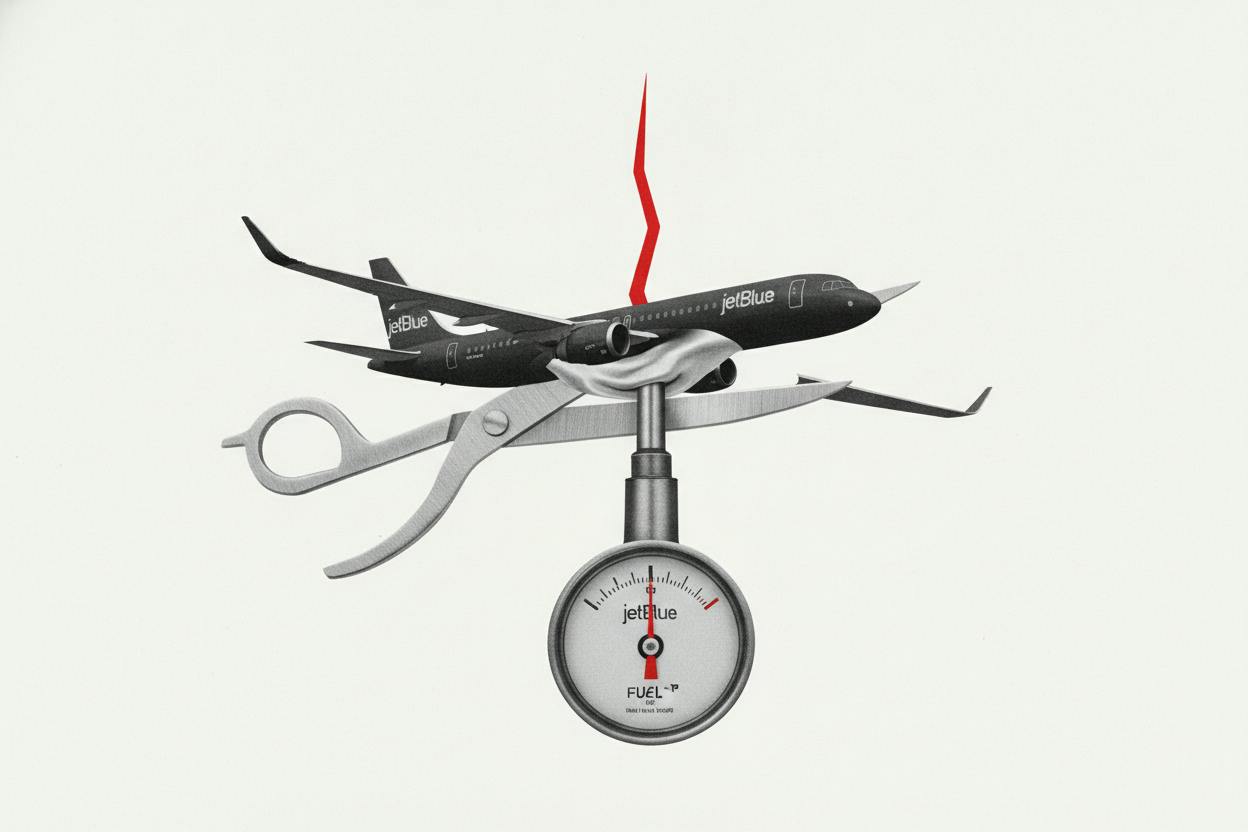
JetBlue Airways has trimmed its third-quarter flying plans, citing a jump in jet fuel costs and a summer marred by weather and air-traffic control disruptions. The New York-based carrier now expects capacity — the number of seats it puts into the market — to grow between 1.5% and 3.5% in the third quarter, down from its previous forecast of 3% to 6%.
At the same time, the airline raised its forecast for jet fuel costs to $3.96 per gallon, up from an earlier estimate of $3.49. That means each flight is now significantly more expensive to operate, squeezing margins at a time when airlines are already grappling with higher labor and maintenance expenses.
Why capacity matters
Capacity is a key metric for airlines because it directly affects supply and pricing. When an airline adds more seats, it can capture more demand, but it also risks flooding the market and driving down fares. By pulling back on capacity, JetBlue is signaling that it sees more value in keeping supply tight than in chasing growth.
The airline also lifted its outlook for revenue per available seat mile (RASM), a common measure of how much money an airline makes for each seat flown one mile. That suggests JetBlue believes it can charge higher fares or fill its planes more profitably, even with fewer flights.
When fuel prices rise, airlines have two main levers: raise ticket prices or reduce flying. JetBlue appears to be doing a bit of both. By cutting capacity, it can push up load factors and pricing power, helping to offset the higher fuel bill.
What's behind the fuel spike?
Jet fuel prices have been climbing in recent months, driven by a combination of global supply concerns and seasonal demand. The jump in crude oil prices has been felt across the industry, and airlines have been passing on some of those costs to passengers through higher fares and fuel surcharges.
JetBlue's revised fuel forecast of $3.96 per gallon is a notable increase and reflects the reality that energy costs are likely to stay elevated for the rest of the year. For context, the airline industry typically spends billions on fuel annually, so even a small per-gallon increase can have a big impact on profitability.
The summer also brought operational headaches. Severe weather and air-traffic control staffing shortages led to flight cancellations and delays, which can be costly for airlines. These disruptions not only hurt revenue but also increase expenses, as airlines have to rebook passengers and reposition aircraft.
What it means for investors
For everyday investors, JetBlue's update is a reminder that airlines operate in a volatile environment where fuel prices and operational hiccups can quickly change the financial picture. The stock may react to the news, but the bigger takeaway is that the airline is being cautious about its near-term growth.
Investors should watch whether JetBlue can maintain its pricing power in the face of higher costs. If the airline can raise fares enough to offset fuel, its margins may hold up. But if demand softens or competition intensifies, the higher fuel bill could eat into profits.
JetBlue's move also reflects a broader trend in the airline industry, where carriers are increasingly focused on profitability over growth. Many airlines have been trimming capacity in recent years to keep fares firm and improve their financial health.
For those with airline stocks in their portfolio, it's worth keeping an eye on fuel prices and how carriers respond. A sustained rise in oil could pressure the entire sector, while a pullback in prices could provide some relief.
JetBlue's revised guidance is a clear signal that the airline is prioritizing financial discipline over expansion. Whether that strategy pays off will depend on how the rest of the quarter unfolds.