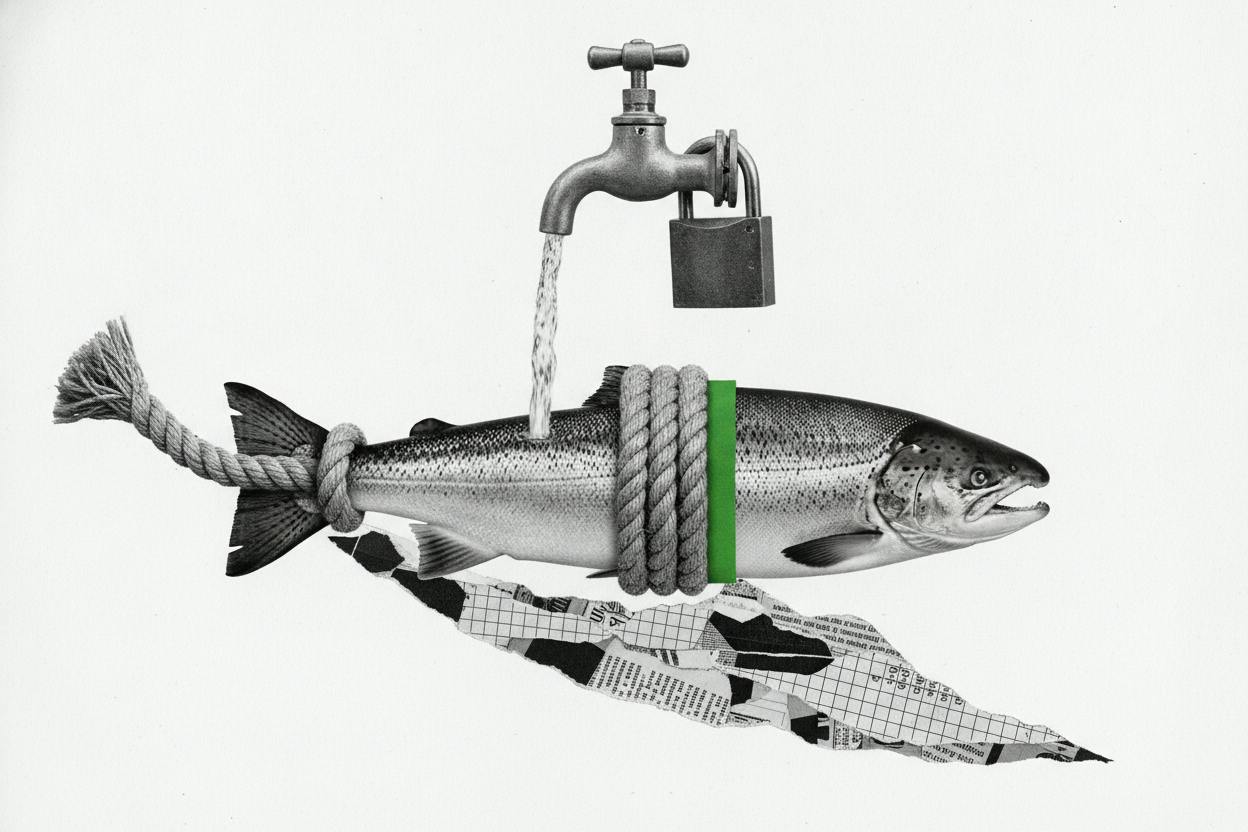
Norwegian-listed salmon farmer Kaldvik has secured a crucial extension on its debt, with lenders agreeing to push key maturities out to June 2030. But the deal comes with a condition: the company must complete a €97 million equity raise this quarter.
The refinancing, announced by Kaldvik, involves four banks—Arion Bank, DNB, Landsbankinn, and Nordea—which have amended the company's facilities. The amendments extend maturities to June 2030 and lift total lending commitments to €232 million. As part of the agreement, Kaldvik will repay €15 million of its term loan at closing, leaving €102 million outstanding. Its revolving credit facility—a flexible line of credit that can be drawn and repaid as needed—will increase to €130 million from €90 million.
Why the equity raise matters
The equity raise is a key part of the deal. Kaldvik needs to raise €97 million from shareholders this quarter to satisfy the banks' conditions. This is a significant ask, and it will likely dilute existing shareholders. For everyday investors, dilution means their ownership stake shrinks, and earnings per share could be spread thinner. However, the alternative—failing to secure the refinancing—could have been far worse, potentially forcing the company into a distressed situation.
Salmon farming is a capital-intensive business. Companies in this sector often carry substantial debt to fund operations, from feeding and maintaining fish to upgrading facilities. When interest rates rise or market conditions weaken, refinancing becomes more challenging. Kaldvik's move to extend maturities gives it breathing room, but the equity raise is a clear sign that lenders want the company to strengthen its balance sheet.
What this means for investors
For investors, the key takeaway is that Kaldvik's banks are willing to support the company, but they want shareholders to share the burden. The increased revolving credit facility provides more flexibility, which could help Kaldvik manage its working capital needs. However, the equity raise will likely put downward pressure on the stock in the short term, as new shares are issued.
It's also worth noting that this is a common pattern in the fishing and aquaculture industry. Companies often use a mix of debt and equity to finance growth, and refinancing deals like this are routine. The fact that the banks extended maturities to 2030 suggests they see the company as viable over the long term, but the equity condition indicates they want a stronger equity cushion.
Investors should watch how the equity raise is structured—whether it's a rights issue, a private placement, or another method—and how existing shareholders are treated. A rights issue, for example, allows current shareholders to buy new shares at a discount, which can soften the dilution impact. A private placement, on the other hand, might bring in new investors but could be more dilutive.
Broader context
Kaldvik's situation is not unique. Many companies across Europe are navigating higher borrowing costs and tighter credit conditions. Banks are becoming more selective, often demanding equity injections or asset sales before agreeing to extend debt. This trend is particularly pronounced in sectors with high capital intensity, like aquaculture, energy, and real estate.
For salmon farmers specifically, the industry has faced headwinds from rising feed costs, biological challenges, and fluctuating salmon prices. Companies like Kaldvik are also exposed to currency movements, as they sell in global markets but incur costs in local currencies. The refinancing gives Kaldvik a more stable financial footing, but the equity raise is a reminder that the company's future depends on both operational performance and market conditions.
Looking ahead, investors will likely focus on the success of the equity raise and the company's ability to meet its repayment obligations. The extended maturity to 2030 provides a longer runway, but it doesn't eliminate the need for disciplined financial management. As with any investment, it's important to weigh the risks and opportunities, and to consider how this news fits into the broader picture of the company's strategy and the sector's outlook.