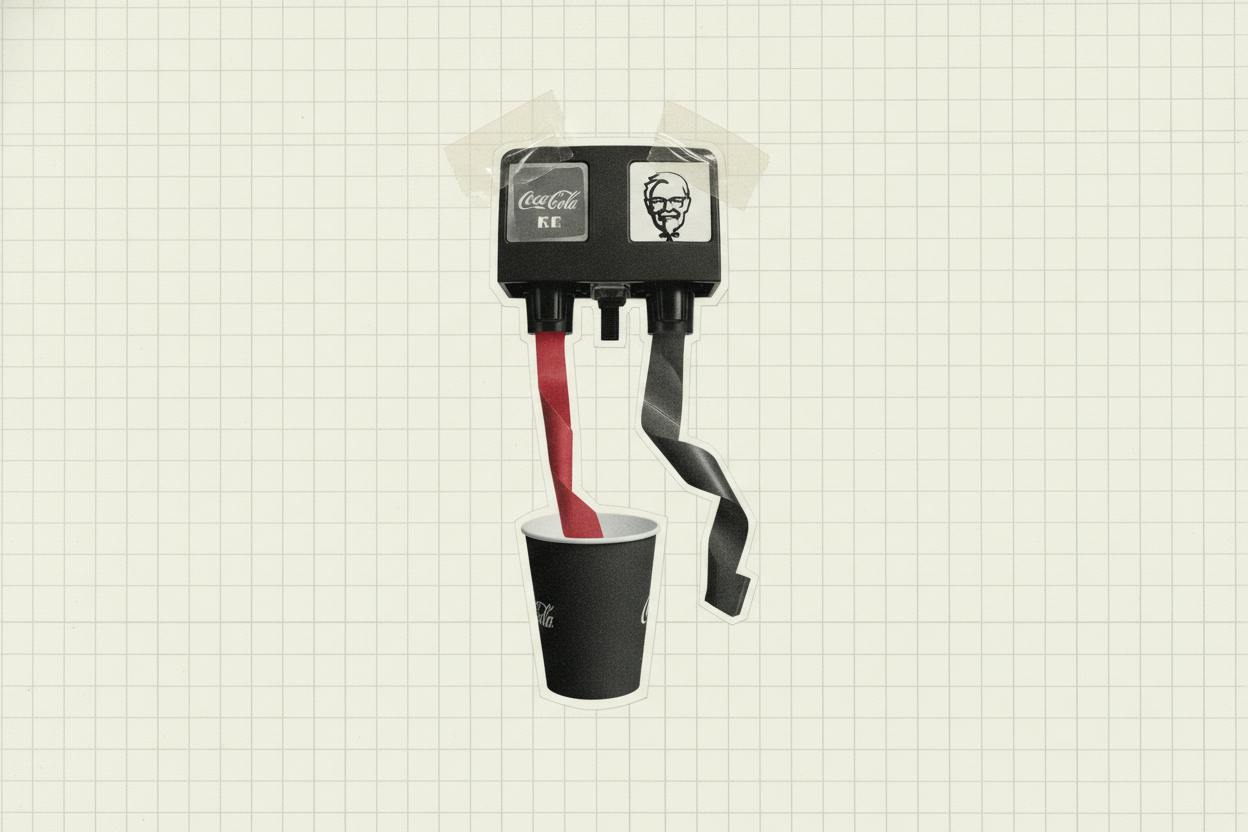
KFC is switching its US beverage supplier from Pepsi to Coca-Cola, ending a partnership that dates back roughly four decades. The changeover will roll out across KFC's 3,718 US locations and is expected to be complete by spring 2027, according to Reuters. Financial terms of the agreement were not disclosed.
The move is more than a logo swap on a cup. Fast-food chains typically sign exclusive contracts with a single beverage supplier, committing to that company's syrups while the supplier helps fund equipment, signage, promotions and combo-meal bundles. Once a chain standardizes its fountains and menu around one brand, switching again is costly and disruptive — which is why these deals tend to be sticky and long-lasting.
How the Pepsi-KFC relationship began
PepsiCo's ties to KFC go back to when PepsiCo owned the chicken chain outright. Even after KFC was spun out into what is now Yum Brands in 1997, Pepsi kept supplying drinks to KFC's US restaurants. That arrangement is now coming to an end.
PepsiCo noted that it has renewed other Yum relationships, including deals covering Taco Bell and KFC's international locations. But losing the US KFC system is an awkward development for a company already working to stabilize its North America business. Reuters reported that higher costs and weak snack demand have weighed on PepsiCo's North America results, and CEO Ramon Laguarta has said the timeline for growth and margin recovery is stretching out.
For Coca-Cola, the win adds a high-traffic restaurant chain to its "away-from-home" business — sales made through restaurants, stadiums and other venues rather than grocery stores. Those sales tend to be steady and predictable because they are tied to concentrate volumes rather than one-off retail promotions.
What it means for investors
Exclusive fountain agreements can matter more to a beverage company's long-term outlook than a single quarter's volume bump. They generate recurring concentrate sales, put the brand in front of customers at the moment they order combos, and are difficult for rivals to dislodge once equipment and menus are standardized. That helps explain why picking up KFC's US system looks like a long-duration gain for Coca-Cola, even with a rollout that stretches into 2027.
For PepsiCo, the loss is small in absolute terms but persistent. Losing restaurant servings can chip away at "volume and mix" — how much the company sells and which products it sells — at a time when investors are already focused on whether its North America recovery can rebuild growth and margins. PepsiCo has been trimming its profit outlook and planning deeper cost cuts, as covered in our report on PepsiCo's cost-cutting plans. The KFC switch adds another data point to that turnaround story.
The broader context is a competitive fight for away-from-home channels. Restaurant chains, convenience stores and entertainment venues are valuable because they lock in repeat purchases and brand exposure. Beverage makers compete hard for these accounts, often offering equipment, marketing support and favorable terms to win them. When a chain as large as KFC changes suppliers, it signals that the battle for these channels remains intense.
Investors will likely watch a few things next: the pace of the US rollout, whether Coca-Cola discloses any financial impact, and whether PepsiCo's other Yum relationships — particularly Taco Bell and KFC International — remain intact. Any further shifts in these contracts could affect how the market views both companies' North America strategies.
For everyday investors, the takeaway is that seemingly small supplier changes can reveal larger trends in brand loyalty, pricing power and the health of consumer-facing businesses. While the dollar value of the KFC deal is undisclosed, the strategic implications for Coca-Cola and PepsiCo are worth noting as both companies navigate a competitive landscape.