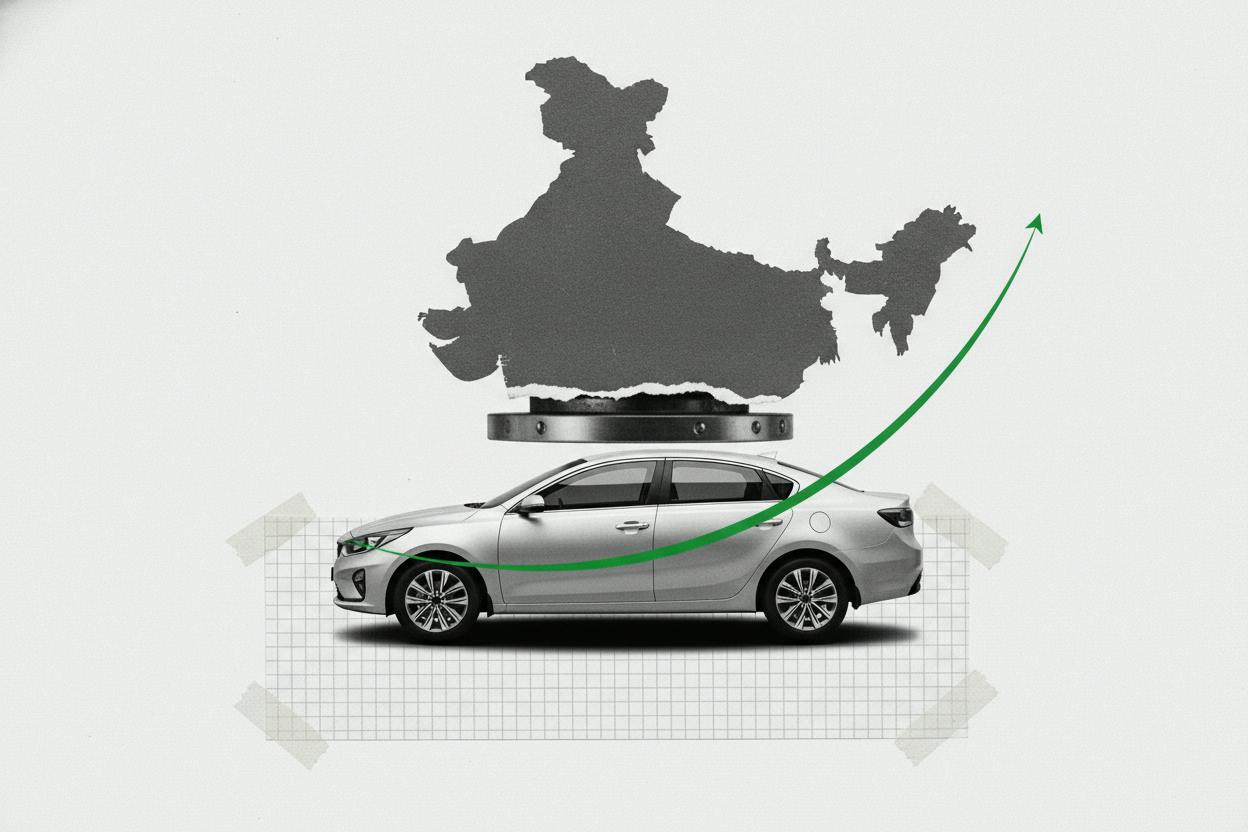
Kia is betting big on India. The South Korean automaker's local arm, Kia India, has proposed building a second factory in the southern state of Andhra Pradesh, a project that would cost roughly $2 billion and boost its annual production capacity to 630,000 vehicles from the current 430,000.
The plan was unveiled at a Confederation of Indian Industry (CII) summit in Visakhapatnam, where company officials said the new plant could create around 12,000 jobs. Kia hasn't given a timeline yet, but the move signals a long-term commitment to a market that has become a global auto manufacturing hotspot.
Why India?
India is now the world's third-largest car market, behind only China and the United States. That scale, combined with a growing middle class and rising exports, makes it an attractive place to build cars—not just for local buyers but for shipment to other regions.
Kia already operates a plant in Anantapur, also in Andhra Pradesh, where it builds models like the Seltos and Sonet. That factory serves both Indian customers and export markets, and the new facility would likely follow the same dual-purpose model.
The company isn't alone in expanding. Suzuki Motor, through its Indian subsidiary Maruti Suzuki, is planning about $8 billion of investment in 2025. Toyota and Honda are also pushing to increase local output. The message is clear: global automakers see India as a manufacturing base that can serve both domestic demand and international orders.
What it means for investors
For investors, Kia's capacity expansion is about more than just growth—it's about cost efficiency. Auto plants carry heavy fixed costs, including machinery depreciation, salaried labor, and overhead. When a factory runs at high utilization, those costs are spread over more vehicles, lowering the cost per car.
If Kia can keep the new capacity busy, higher volumes could improve its bargaining power with parts suppliers, who may offer better prices for larger, steadier orders. That could help Kia defend its margins in a competitive market where rivals are also adding supply.
But there's a flip side. Building new capacity is a bet that demand will show up. If Indian sales or export orders don't grow fast enough, empty production lines can push unit costs up—just as Maruti Suzuki and other brands are also expanding. That could squeeze profitability across the industry.
Kia's move also comes at a time when India's financial markets are drawing global attention. The country's weight in MSCI's emerging markets index recently got a boost, and foreign investors have been steadily buying Indian stocks. A stronger manufacturing base could support that trend, though auto stocks are often sensitive to interest rates and consumer spending.
For everyday investors, the key takeaway is that Kia's expansion is a sign of confidence in India's long-term growth story. But it's also a reminder that capacity build-outs carry execution risk. Watch how quickly Kia ramps up production and whether it can keep its plants running at healthy utilization rates.
As India's bond market awaits inflation data and global automakers pour billions into local production, the country's role in the global auto industry is only set to grow. Whether that translates into profits for Kia and its rivals will depend on demand—and on how well they manage the costs of all that new capacity.